Historic Buildings of Massachusetts

  • About
  • Index by Town
  • CT
  • About
  • Index by Town
  • CT

Category: Houses

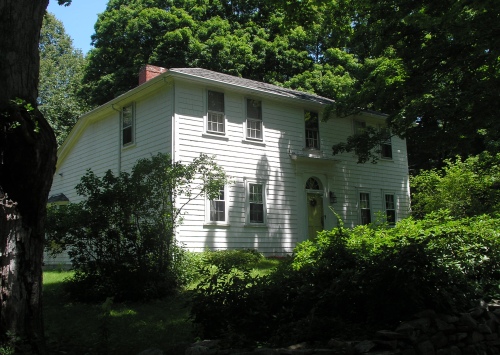
Charles Burnett-Warner Oland House (1815)
by Dan/July 21, 2010January 21, 2020/Federal, Houses, Southborough

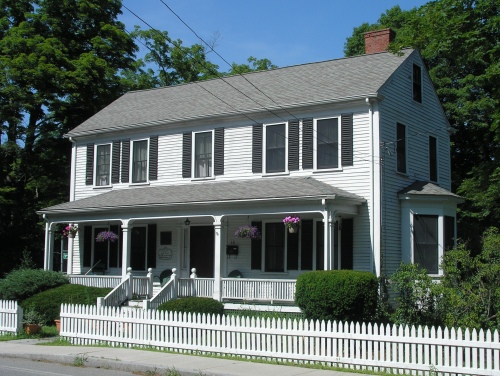
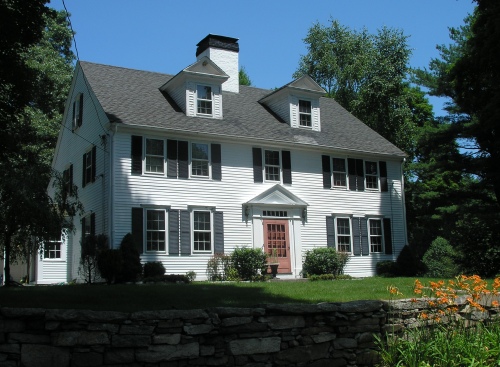
In 1783, Charles Ripley Burnett, farmer and rope maker, married Lovina Mathews, a descendant of the earliest settlers of Southborough. The couple lived in the Matthews Homestead, known as the garrison house, on Gilmore Road, in the Southville section of Southborough. Their son, Charles R. Burnett Jr., married Keziah Pond in 1815 and soon built a house, adjacent to his father’s, on Gilmore Road. It was here that Charles and Keziah‘s son, Joseph Burnett, was born in 1820. He would become a prominent businessman and chemist. In the twentieth century, the Burnett House became the summer home of actor Warner Oland and his wife, artist Edith Gardener Shearn. Born in Sweden, Oland is most remembered for his role as Charlie Chan in the 1930s. He and his wife also translated plays by August Strindberg. Oland died while visiting Sweden in 1938 and his ashes are buried in Southborough. The stone marker is from his Southborough home, called Smoke Tree Farm.
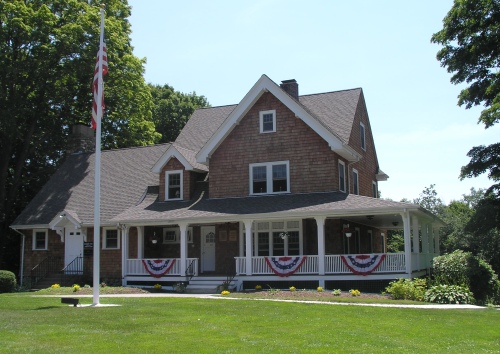
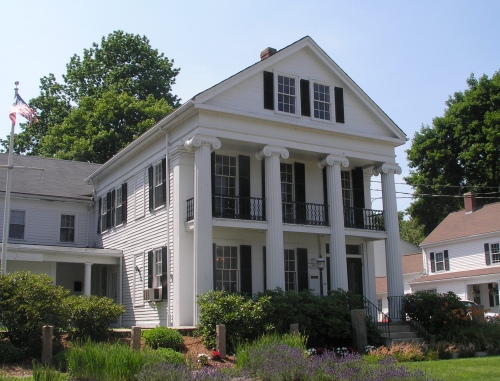
Southborough Community House (1906)

by Dan/July 20, 2010June 3, 2012/Houses, Shingle Style, Southborough

William A. White, a Boston lawyer, built a shingle-style home on Main Street in Southborough in 1906. In 1921, the house was acquired by White’s friend, Charles F. Choate, who donated it to the Southborough Village Society, a village improvement society organized in 1922. Called the Community House, the building became a focal point for local activities and even had a bowling alley at one time. When he gave the house to the Society, Choate stipulated that it be shared with the Leo L. Bagley Post of the American Legion. Choate hired architect Charles M. Baker to design a one-and-a-half story east wing (1921-1922) to serve as the Post’s headquarters.

Goin Bailey House (1839)

by Dan/July 9, 2010January 22, 2020/Greek Revival, Houses, Natick

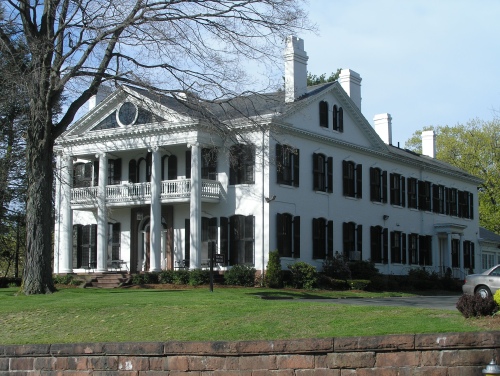
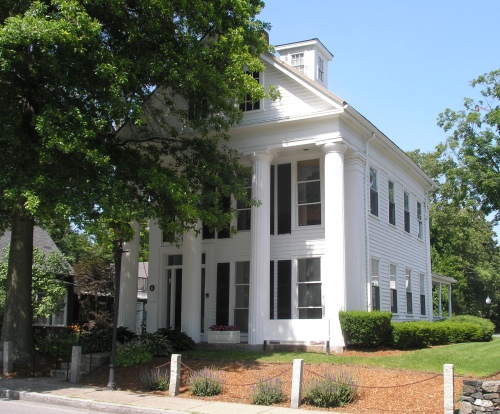
In 1782, Eliakim Morrill (the model for the character Uncle Fly Sheril in Harriet Beecher Stowe’s novel Oldtown Folks) built a tavern in South Natick, which he operated for seventeen years. He was followed by several other owners, until Goin Bailey took charge of it in 1849. In 1872, the original building burned and Bailey built a new hotel on the site, known as Bailey’s Hotel. After Goin Bailey’s death, in 1875, his son Almond Bailey ran the hotel, until 1907, when Mrs. R.G. Shaw bought the building and renovated it under the name of the Old Natick Inn. In 1930, she razed the old hotel and hired Charles Gorely to landscape a park in its place, which she gave to the town in 1932. Adjacent to Shaw Park is the Greek Revival house, built by Goin Bailey in 1839. When Moses Eames built a similar Greek Revival house in the same year on nearby Pleasant Street, he sought to distinguish his home from the Bailey House by adding a cupola and using Doric instead of the Bailey House’s Ionic columns. The Bailey House was occupied by Goin Bailey’s widow after his death and it now contains offices. Continue reading “Goin Bailey House (1839)”

Rev. Horatio Alger, Sr. House (1824)

by Dan/July 8, 2010January 22, 2020/Greek Revival, Houses, Natick

Located on Pleasant Street in South Natick, not far from the Stowe House, is the house occupied by Rev. Horatio Alger, Sr. during the period when he served as minister at Eliot Church. Alger was the father of the popular author, Horatio Alger, Jr. Rev. Alger had been the minister at West Church in Marlborough from 1845 to 1859, before moving to Natick, where he died in 1881. The Alger House was built by Oliver Bacon about 1824 (Bacon had acquired the land from the Bigelow family). In 1869, Bacon sold it to H.H. Hunnewell, a wealthy businessman, philanthropist and horticulturist. Hunnewell bought the house to provide a residence for Rev. Alger, who lived there until he died. In 1909, Hunnewell deeded it to the church as a parsonage.

Sam Lawton House (1798)

by Dan/July 7, 2010January 22, 2020/Houses, Natick, Vernacular

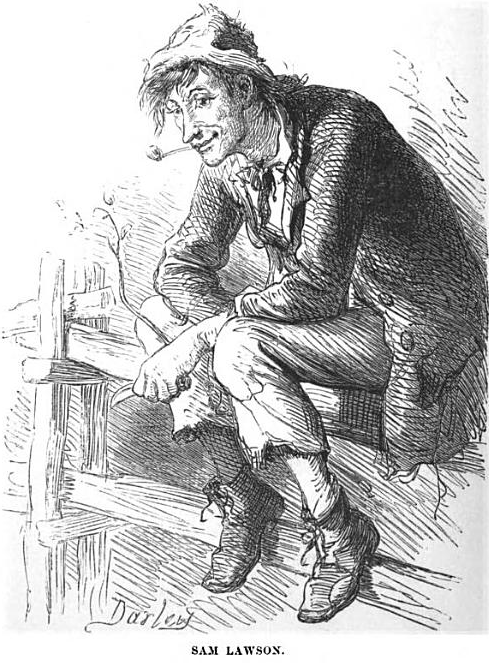
In her 1869 novel, Oldtown Folks (1869), Harriet Beecher Stowe presents the lives of people in a old Massachusetts town, based primarily on reminiscences of real individuals by her husband, Prof. Calvin Ellis Stowe, who grew up in South Natick. One of the prominent characters in Oldtown Folks is Sam Lawson, who also appears as the narrator in another work by Stowe, Sam Lawson’s Oldtown Fireside Stories (1872). Sam Lawson was based on Sam Lawton, an actual resident of South Natick. As written in Proceedings of the reunion of the descendants of John Eliot “The Apostle to the Indians” at Guilford, Conn., Sept. 15, 1875; Second Meeting at South Natick, Mass., July 3, 1901, and the 250th anniversary of the founding of So. Natick, July 4th, 1901 (1901),

Near the tavern, about where Cooper’s drug store now stands, was the store, where was sold everything from hoe handles up to cambric needles, where the post office was kept, and where was a general exchange of news. There Sam Lawton, the village gossip and do-nothing, whose name Mrs. Stowe has changed in her story to Lawson, used to sit on a convenient barrel and swap stories with the farmers whose wagons stood hitched around the door, while their wives and daughters were shopping among the dress goods and ribbons.
“Sam Lawson” is the most unique character in the Oldtown story, and is also one of the most true to life. Those who remember the real Samuel Lawton say the sketch of him is not at all exaggerated.

In an article called “South Natick in Fact and Fiction,” (The New England Magazine, Vol. 23, no. 2. Oct. 1904, Edith A. Sawyer writes that

The “Sam Lawson,” or Lawton, house stands on Eliot street, between the Parson Lothrop house on the one hand and the tavern-site on the other, and not far from the Bacon Free Library. The basement, Sam used for his blacksmith shop. He occupied this place from 1798 to 1812, when he sold it, and leased a small one-story house with basement below, nearly opposite. Here he lived until his removal to Newton Lower Falls, in 1828, where he died.

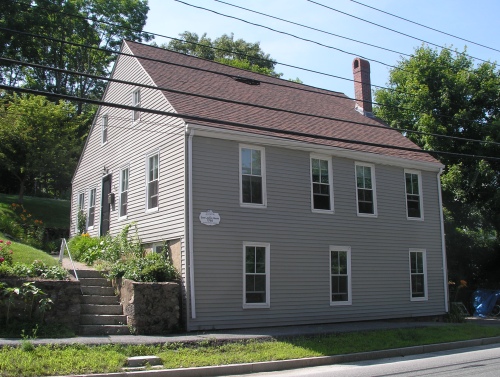
The Sam Lawton House was purchased in 1812 by Benjamin Bird of Needham, who was also a blacksmith, and was occupied by his family after his death in 1836. In 1867 the house was sold to William Selfe. When Eliot Street was widened in the 1870s, the house was moved back 16 feet from the street to its present location.

Harriet Beecher Stowe House, Natick (1816)

by Dan/July 6, 2010January 22, 2020/Federal, Houses, Natick

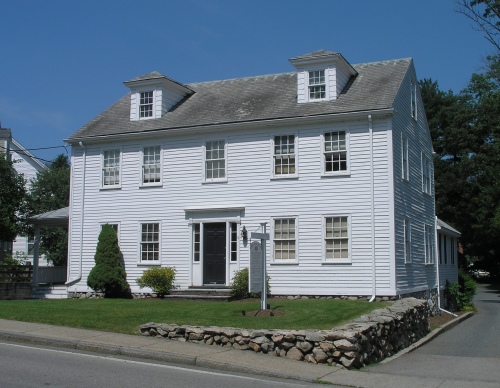
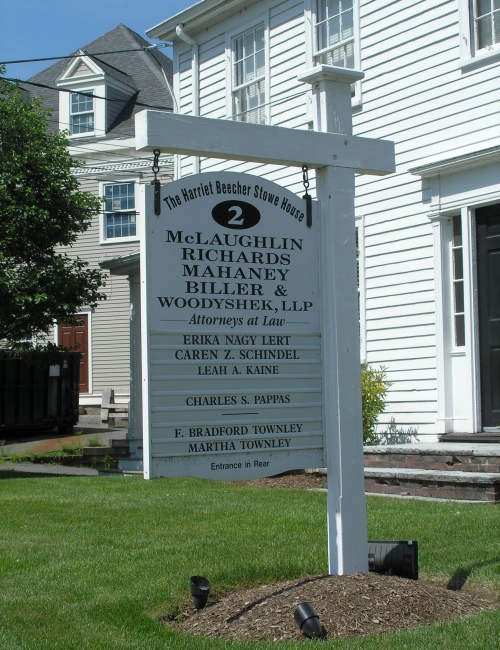
The sign in front says “The Harriet Beecher Stowe House,” but the historic structure at 2 Pleasant Street in South Natick, which now serves as lawyers’ offices, was not a residence of the author of Uncle Tom’s Cabin. Instead, it was built during the childhood of her husband, Calvin Ellis Stowe, who had grown up in the neighborhood. Stowe was born in Natick in 1802, but the death of his father in 1808 left Calvin, his mother and brother in need of financial support. They went to live with the family of Calvin’s grandfather, Col. William Bigelow, in Natick and, with the help of local ministers, Calvin was able to graduate from Bowdoin College with honors in 1824. By the 1830s, Calvin was teaching sacred literature at Lane Theological Seminary in Cincinnati, Ohio. After the death of his first wife, Eliza Tyler, in 1836, he married her best friend in Cincinnati, Harriet Elizabeth Beecher, daughter of the Seminary‘s president, Lyman Beecher. The couple later made visits to the house at Pleasant Street in Natick. It had been built in 1816 by Dr. Alexander Thayer, on land he had acquired from Col. Bigelow. Dr. Thayer, who had married Bigelow’s daughter, built the house for his father-in-law. Thayer’s son, Alexander Wheelock Thayer, later became the author of a famous biography of Beethoven.

Drawing on reminiscences of her husband and in-laws and possibly the written source, “A Brief Account of the Customs and Manner of Living in the Days of our Forefathers” in Oliver N. Bacon’s A history of Natick (1856), Harriet Beecher Stowe wrote the novel, Oldtown Folks, published in 1869, and the story collection, Oldtown Fireside Stories, published in 1872. According to the Genealogy of the Bigelow family of America (1890), Stowe’s grandfather, William Bigelow

was the original character described by Harriet Beecher Stowe in the story of “Old Town Folks” as “Deacon Badger,” his wife Hepsibah is described as “Grandmother Badger,” and those who remember them say that their characters were most accurately depicted. William, the eldest son, is described as “Uncle Bill,” Hepsibah (the mother of Prof. Calvin E. Stowe), was known as “Susy,” while Eunice figured as “Aunt Lois,” and Abigail as “Aunt Keziah.”

Calvin Stowe was also an author. His book, Origin and history of the Books of the Bible was published in 1868. Continue reading “Harriet Beecher Stowe House, Natick (1816)”

David Ames, Jr. House (1826)

by Dan/May 29, 2010January 21, 2020/Federal, Houses, Springfield

David Ames, Jr., a Springfield paper manufacturer, was the son of Col. David Ames, first superintendent of the Springfield Armory. The David Ames Jr. House, at 241 Maple Street, on Ames Hill in Springfield, was built in 1826-7 and was the work of Chauncey Shepard, a prominent local architect and builder. In 1867, Solomon J. Gordon, a New York City lawyer, purchased the property and Shepard was hired to remodel the house he had built forty-one years earlier. Gordon lived in the house until his death in 1891. Today the house is known as Young House and is part of the campus of the MacDuffie School.

Posts navigation

Older posts
Newer posts
Privacy Policy

Categories

  • Architectural Style (943)
    • Art Deco (9)
    • Byzantine (3)
    • Colonial (177)
    • Colonial Revival (85)
    • Craftsman (6)
    • Egyptian Revival (1)
    • Federal (190)
    • Foursquare (6)
    • Gothic (67)
    • Greek Revival (100)
    • Italianate (82)
    • Mission Revival (2)
    • Mission/Spanish Colonial (1)
    • Modern (2)
    • Neoclassical (56)
    • Octagon (3)
    • Postmodern (1)
    • Queen Anne (46)
    • Renaissance Revival (26)
    • Romanesque Revival (53)
    • Second Empire (26)
    • Shingle Style (12)
    • Stick Style (13)
    • Tudor Revival (8)
    • Vernacular (49)
    • Victorian Eclectic (15)
  • Building Type (943)
    • Apartment Buildings (8)
    • Banks (18)
    • Churches (119)
    • Collegiate (32)
    • Commercial (102)
    • Hotels (16)
    • Houses (508)
    • Industrial (23)
    • Libraries (22)
    • Lighthouses (1)
    • Military (15)
    • Monuments (1)
    • Museums (12)
    • Organizations (39)
    • Outbuildings (17)
    • Public Buildings (50)
    • Schools (23)
    • Stations (5)
    • Synagogues (1)
    • Taverns (21)
    • Theaters (9)
  • Town (943)
    • Adams (11)
    • Agawam (4)
    • Amherst (50)
    • Boston (64)
    • Boylston (6)
    • Cambridge (30)
    • Clinton (21)
    • Concord (15)
    • Cummington (1)
    • Danvers (14)
    • Deerfield (31)
    • Gloucester (18)
    • Granville (10)
    • Great Barrington (2)
    • Hadley (9)
    • Hancock (15)
    • Harvard (32)
    • Holyoke (47)
    • Lenox (5)
    • Lexington (8)
    • Longmeadow (32)
    • Marblehead (40)
    • Marlborough (4)
    • Natick (22)
    • Newton (2)
    • Northampton (68)
    • Peabody (4)
    • Pittsfield (20)
    • Salem (110)
    • Saugus (4)
    • Sheffield (4)
    • South Hadley (8)
    • Southborough (8)
    • Southwick (4)
    • Springfield (67)
    • Stockbridge (19)
    • Stow (1)
    • Sturbridge (18)
    • Sudbury (7)
    • Waltham (11)
    • Watertown (1)
    • Wayland (8)
    • West Springfield (14)
    • Westfield (46)
    • Weston (2)
    • Worcester (26)
  • Uncategorized (1)

Recent Comments

  • Wilber Blackson on South Hadley
  • Tami Speiden on Stockbridge
  • DexGuru on Stockbridge

Tags

Alcott Amherst College Asher Benjamin Back Bay Baptist Beacon Hill Big E Black Heritage Trail bowfront Bulfinch Catholic Congregational Episcopal Freedom Trail Gambrel H.H. Richardson Harvard Hawthorne Historic Deerfield Isaac Damon lit Longfellow mansard Methodist Mount Holyoke Museum Museums NPS Old Sturbridge Village PEM Revolutionary War row houses saltbox Samuel McIntire Shakers Smith College SPNEA Springfield Armory Stephen C. Earle Storrowton Underground Railroad UU Washington William Fenno Pratt Witch Trials

Meta

  • Log in
  • Entries feed
  • Comments feed
  • WordPress.org
Proudly powered by WordPress | Theme: ShowMe by NEThemes.