Historic Buildings of Massachusetts

  • About
  • Index by Town
  • CT
  • About
  • Index by Town
  • CT

Category: Gloucester

Sargent House Museum (1782)
by Dan/March 2, 2021/Colonial, Gloucester, Houses

Sargent House Museum

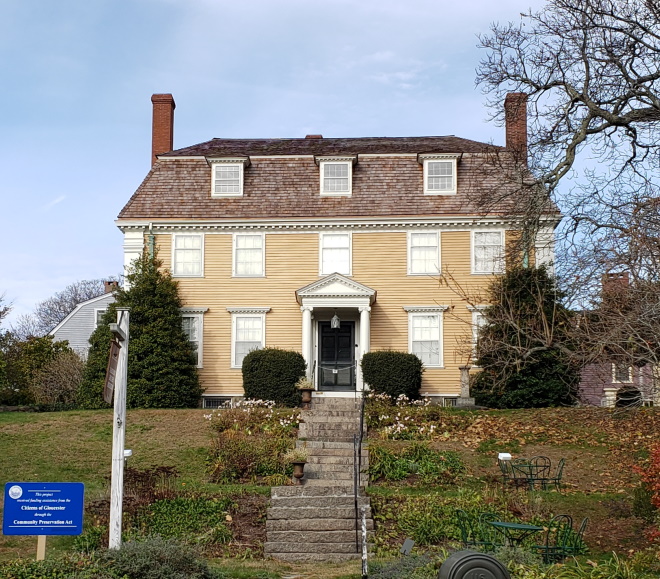
The Sargent House Museum is located at 49 Middle Street in Gloucester. Also known as the Sargent-Murray-Gilman-Hough House, the home was built in 1782 for Judith Sargent Murray (1751-1820), an author and early advocate for women’s rights, and her first husband, Capt. John Stevens, a merchant in the West Indies trade. Her second husband was John Murray, a founder of the Universalist Church in America. The museum has a collection of American furniture and art, including paintings by Sargent family descendant John Singer Sargent.
Aaron Bray House (1869)

by Dan/July 29, 2020/Gloucester, Houses, Italianate

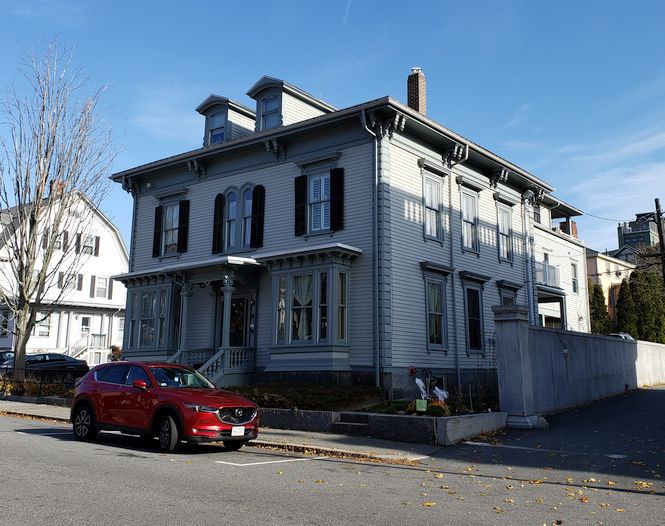
Dale Avenue in Gloucester was laid out in the 1860s. One of the first houses to be erected on the new street was 19 Dale Avenue, built between 1869 and 1872. The Italianate residence was originally the home of Aaron W. Bray, an agent for the New England Fish Company at Dodd’s Wharf on Duncan’s Point. Bray had died by 1890 and the house was then occupied through at least 1900 by Albert S. Maddocks, an apothecary with a shop on Main Street.

George Perkins House (1879)

by Dan/July 11, 2020July 11, 2020/Gloucester, Houses, Stick Style

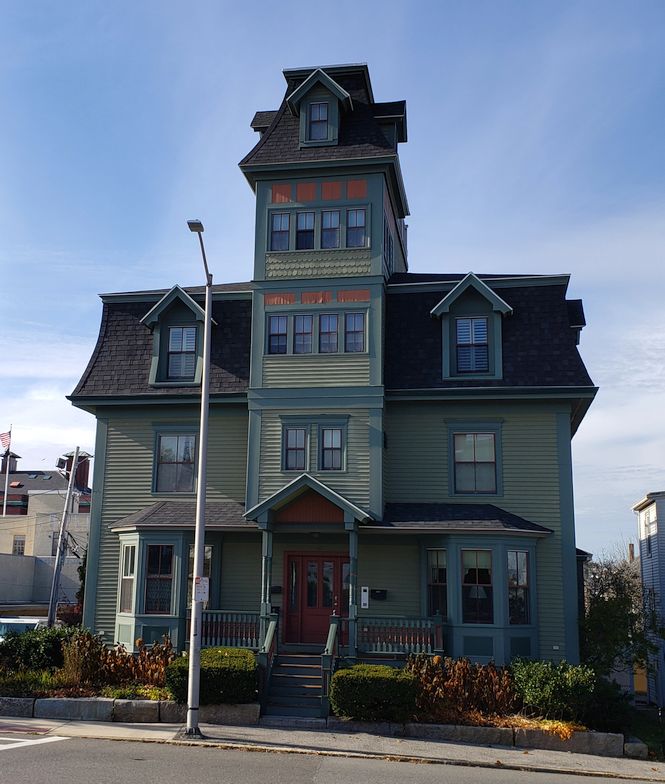
An example of Stick style architecture, the house at 50 Pleasant Street in Gloucester was built in 1879-1880 for George H. Perkins. He was head of George Perkins & Son, fish dealers, whose office was located at Perkins’ Wharf. Perkins later served as Vice President of the First National Bank from 1890 to 1900. The house is now subdivided into several condo units.

Continue reading “George Perkins House (1879)”

Capt. Harvey Coffin Mackay House (1842)

by Dan/May 4, 2020/Gloucester, Greek Revival, Houses

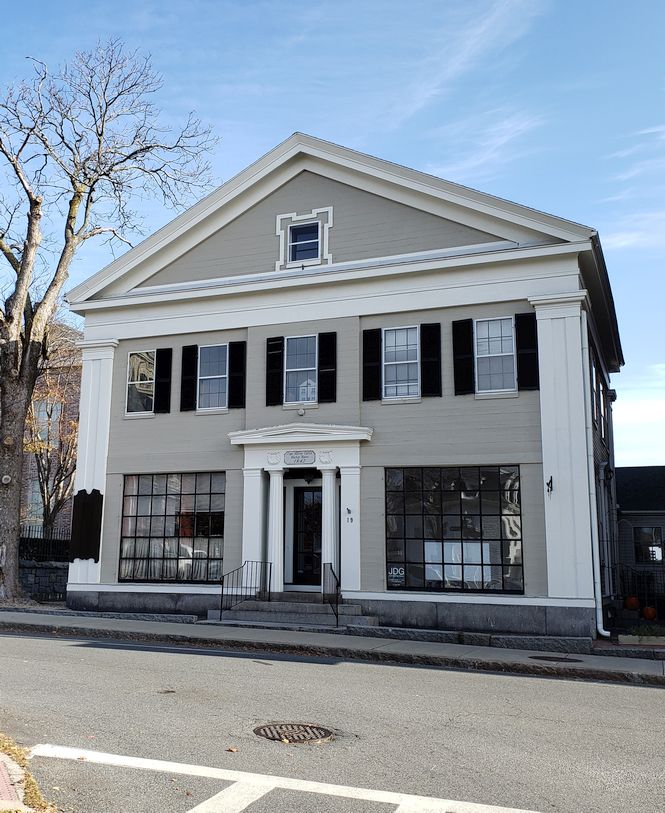
Capt. Harvey Coffin Mackay (1786-1869) was a master of packet boats that sailed between Boston and England and sailing vessels that traded in other parts of the world. His original name was Joshua Gee Whittemore Jr., but he changed it to Harvey Coffin Mackay in 1813. He married Sally Somes in 1816. Mackay was Captain of the ship Boston, which made its first passenger voyage to Liverpool in May, 1828. He was in command of the ship on May 26, 1830, when it was struck by lightning and sank after catching fire.

Capt. Mackay’s house in Gloucester, located at 19 Pleasant Street, was built in 1842. From 1889 to 1907, the house was owned by Dr. Joseph Everett Garland (1851-1907), who had his surgery in the attached ell. The house is now used for commercial purposes and the windows on the first floor were enlarged at some point.

Babson-Alling House (1740)

by Dan/April 16, 2020April 16, 2020/Colonial, Gloucester, Houses

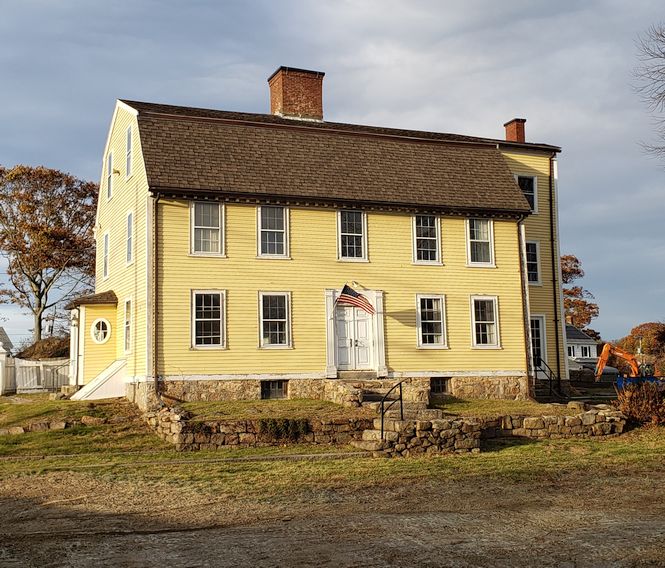
The Cape Ann Museum in Gloucester purchased the Babson-Alling House in February 2019 and the historic home is currently undergoing restoration to become part of a new museum campus that will include a new storage and programming facility, slated to open in June 2020. Located at the modern address of 243/245 Washington Street, the house was built in 1740 by Joseph Allen (1681-1750) or his son, William Allen (1717-1815), at what was then the town center, called the Green, adjacent to the White-Ellery House, also owned by the museum. In 1765, William Allen sold the house to Isaac Smith (1719-1797), a wealthy Boston merchant and slave owner who was the uncle of Abigail Adams. Scipio Dalton was an enslaved person who is thought to have lived in the attic of the house. He eventually gained his freedom from Smith in 1783 after a period of indenture.

Smith sold the house in 1779 to John Low, Jr. (1754-1801), a merchant and lieutenant in the militia. The house passed to his daughter, Eliza Gorham Low (1786-1862), who married Nathaniel Babson (1784-1836), a merchant and ship captain, in 1809. The house was eventually inherited by their son Gustavus Babson (1820-1897). Most of his brothers became seafarers, but Gustavus was a successful farmer on the property. He married his first cousin, Susan Stanwood Low (1820-1880). Their daughter, Ann Prentiss Babson Alling, moved to the house after the death of her husband in 1894 and maintained the property with her brother Nathaniel. Her daughter, Elizabeth L. Alling, also lived in the house for many years. The house may have been a stop on the Underground Railroad before the Civil War.

Continue reading “Babson-Alling House (1740)”

Thomas Saunders House (1764)

by Dan/April 14, 2020/Colonial Revival, Gloucester, Houses, Libraries

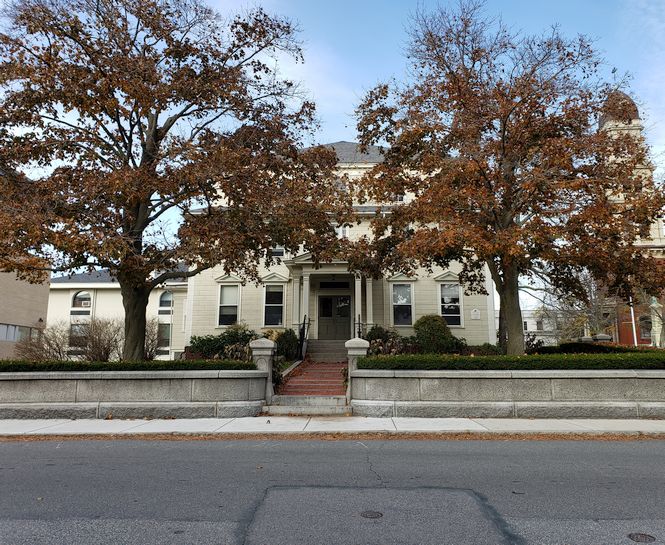
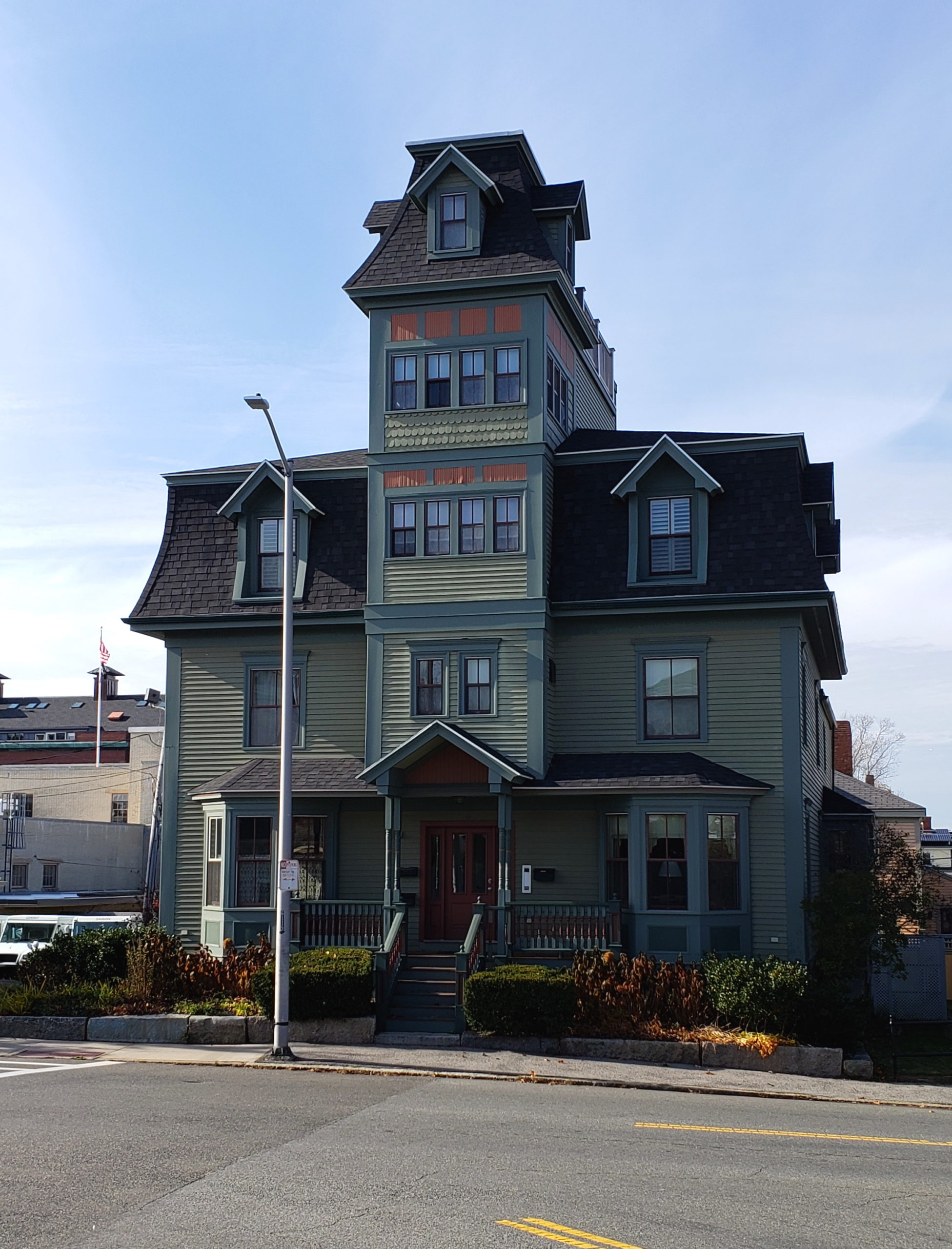
The house at the corner of Middle Street and Dale Avenue in Gloucester was built in 1764 by Thomas Saunders, a merchant, utilizing plans probably brought over from England. The house has been much altered over the years. A later owner, Capt. John Beach, an emigrant from England, added a third story and an octagonal cupola to the house after a neighbor across Middle Street blocked his view of the harbor. The cupola was removed in 1827 due to issues with leaking. Sadly, there are no images of what the cupola looked like. The house’s seventh owner, William A. Pew, moved the structure 13 feet to the west and added an Italianate tower to the front of the house, which he remodeled as a fine Victorian mansion. All but the base of the tower was lost in 1934 when it was altered to become the building’s entry porch. Samuel E. Sawyer bought the house in 1884 in order to donate it to become the home of the Gloucester Lyceum and Sawyer Free Public Library. The Lyceum had been established in 1830 and its library, with support from Sawyer, was first established by 1854 and became a free library by 1871. The library lacked a permanent home until Sawyer donated the Saunders House in 1884. The building would have a new wing added in 1913 and a modern library extension was added to the north of the house in 1975-1976. The Library is also home to a series of WPA murals painted in the 1930s by Frederick L. Stoddard. Continue reading “Thomas Saunders House (1764)”

Capt. Samuel Somes House (1796)

by Dan/April 2, 2020/Federal, Gloucester, Houses

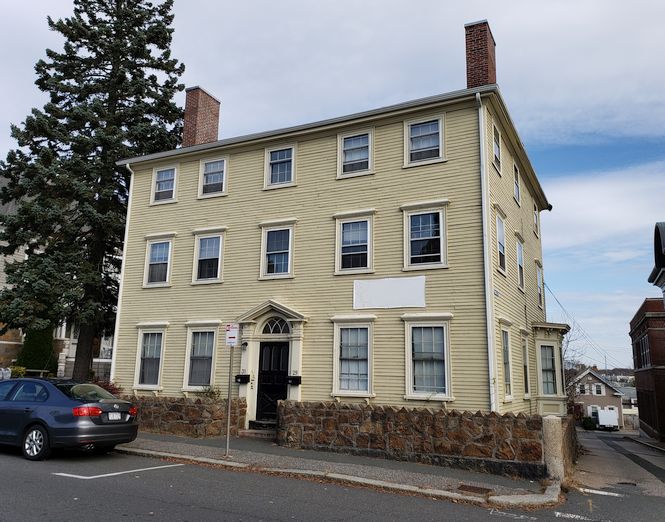
The house at 29-31 Pleasant Street in Gloucester was built in 1796 for Abigail, the widow of Capt. Samuel Somes. They had a son who was also Capt. Samuel Somes. There is some confusion between different sources about who built the house. It is associated in the Massachusetts Cultural Resource Information System with local housewright Col. Jacob Smith, originally from Ipswich, who also designed the Capt. Elias Davis House, which is located just across Federal Street and is part of the Cape Ann Museum. The Museum’s website says that the Somes House was a copy of the Davis House and was designed by Jacob Smith’s younger brother. Both brothers, Jacob and John Smith, designed houses for Gloucester ship owners and merchants, as well as a number of churches in the area. The “Images of America” series book on Gloucester and Rockport says (on page 25) that John designed the Somes House and then Jacob added modified corner coins to the Davis House “in an act of one-upsmanship” that prompted dissension between them.

Posts navigation

Older posts
Privacy Policy

Categories

  • Architectural Style (943)
    • Art Deco (9)
    • Byzantine (3)
    • Colonial (177)
    • Colonial Revival (85)
    • Craftsman (6)
    • Egyptian Revival (1)
    • Federal (190)
    • Foursquare (6)
    • Gothic (67)
    • Greek Revival (100)
    • Italianate (82)
    • Mission Revival (2)
    • Mission/Spanish Colonial (1)
    • Modern (2)
    • Neoclassical (56)
    • Octagon (3)
    • Postmodern (1)
    • Queen Anne (46)
    • Renaissance Revival (26)
    • Romanesque Revival (53)
    • Second Empire (26)
    • Shingle Style (12)
    • Stick Style (13)
    • Tudor Revival (8)
    • Vernacular (49)
    • Victorian Eclectic (15)
  • Building Type (943)
    • Apartment Buildings (8)
    • Banks (18)
    • Churches (119)
    • Collegiate (32)
    • Commercial (102)
    • Hotels (16)
    • Houses (508)
    • Industrial (23)
    • Libraries (22)
    • Lighthouses (1)
    • Military (15)
    • Monuments (1)
    • Museums (12)
    • Organizations (39)
    • Outbuildings (17)
    • Public Buildings (50)
    • Schools (23)
    • Stations (5)
    • Synagogues (1)
    • Taverns (21)
    • Theaters (9)
  • Town (943)
    • Adams (11)
    • Agawam (4)
    • Amherst (50)
    • Boston (64)
    • Boylston (6)
    • Cambridge (30)
    • Clinton (21)
    • Concord (15)
    • Cummington (1)
    • Danvers (14)
    • Deerfield (31)
    • Gloucester (18)
    • Granville (10)
    • Great Barrington (2)
    • Hadley (9)
    • Hancock (15)
    • Harvard (32)
    • Holyoke (47)
    • Lenox (5)
    • Lexington (8)
    • Longmeadow (32)
    • Marblehead (40)
    • Marlborough (4)
    • Natick (22)
    • Newton (2)
    • Northampton (68)
    • Peabody (4)
    • Pittsfield (20)
    • Salem (110)
    • Saugus (4)
    • Sheffield (4)
    • South Hadley (8)
    • Southborough (8)
    • Southwick (4)
    • Springfield (67)
    • Stockbridge (19)
    • Stow (1)
    • Sturbridge (18)
    • Sudbury (7)
    • Waltham (11)
    • Watertown (1)
    • Wayland (8)
    • West Springfield (14)
    • Westfield (46)
    • Weston (2)
    • Worcester (26)
  • Uncategorized (1)

Recent Comments

  • Wilber Blackson on South Hadley
  • Tami Speiden on Stockbridge
  • DexGuru on Stockbridge

Tags

Alcott Amherst College Asher Benjamin Back Bay Baptist Beacon Hill Big E Black Heritage Trail bowfront Bulfinch Catholic Congregational Episcopal Freedom Trail Gambrel H.H. Richardson Harvard Hawthorne Historic Deerfield Isaac Damon lit Longfellow mansard Methodist Mount Holyoke Museum Museums NPS Old Sturbridge Village PEM Revolutionary War row houses saltbox Samuel McIntire Shakers Smith College SPNEA Springfield Armory Stephen C. Earle Storrowton Underground Railroad UU Washington William Fenno Pratt Witch Trials

Meta

  • Log in
  • Entries feed
  • Comments feed
  • WordPress.org
Proudly powered by WordPress | Theme: ShowMe by NEThemes.