Historic Buildings of Massachusetts

  • About
  • Index by Town
  • CT
  • About
  • Index by Town
  • CT

Tag: Underground Railroad

Babson-Alling House (1740)
by Dan/April 16, 2020April 16, 2020/Colonial, Gloucester, Houses

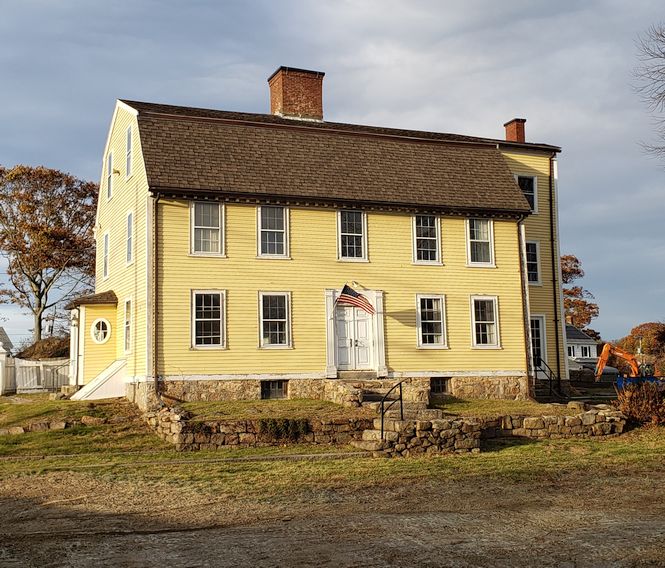
The Cape Ann Museum in Gloucester purchased the Babson-Alling House in February 2019 and the historic home is currently undergoing restoration to become part of a new museum campus that will include a new storage and programming facility, slated to open in June 2020. Located at the modern address of 243/245 Washington Street, the house was built in 1740 by Joseph Allen (1681-1750) or his son, William Allen (1717-1815), at what was then the town center, called the Green, adjacent to the White-Ellery House, also owned by the museum. In 1765, William Allen sold the house to Isaac Smith (1719-1797), a wealthy Boston merchant and slave owner who was the uncle of Abigail Adams. Scipio Dalton was an enslaved person who is thought to have lived in the attic of the house. He eventually gained his freedom from Smith in 1783 after a period of indenture.

Smith sold the house in 1779 to John Low, Jr. (1754-1801), a merchant and lieutenant in the militia. The house passed to his daughter, Eliza Gorham Low (1786-1862), who married Nathaniel Babson (1784-1836), a merchant and ship captain, in 1809. The house was eventually inherited by their son Gustavus Babson (1820-1897). Most of his brothers became seafarers, but Gustavus was a successful farmer on the property. He married his first cousin, Susan Stanwood Low (1820-1880). Their daughter, Ann Prentiss Babson Alling, moved to the house after the death of her husband in 1894 and maintained the property with her brother Nathaniel. Her daughter, Elizabeth L. Alling, also lived in the house for many years. The house may have been a stop on the Underground Railroad before the Civil War.
Continue reading “Babson-Alling House (1740)”

Samuel L. Hill House (1845)

by Dan/December 17, 2014/Gothic, Houses, Northampton

Samuel L. Hill House

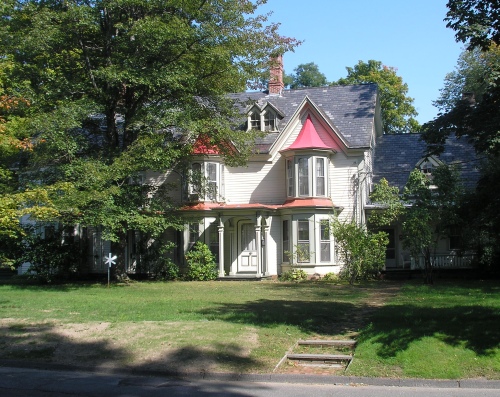
Samuel L. Hill was one of the founders of the Northampton Association of Education and Industry (NAEI), a nineteenth-century utopian community located in the village of Florence in Northampton. In the 1830s, S. L. Hill had worked as an overseer in a cotton factory in Willimantic, Connecticut. He came to Florence in 1841, where he became a leading citizen and established the Nonotuck Silk Company. An abolitionist, Hill actively aided slaves on the Underground Railroad. Among his other acts of philanthropy was the founding of the Florence Kindergarten, now the Hill Institute. His house, at 29-33 (or 31-35) Maple Street in Florence, was built around 1845. The south wing is the earliest section of the house, which is Arthur G. Hill, his son, also became one of Florence’s leading citizens and lived in the house until the 1920’s.

Ross Farm (1800)

by Dan/February 2, 2014/Federal, Houses, Northampton

Ross Farm

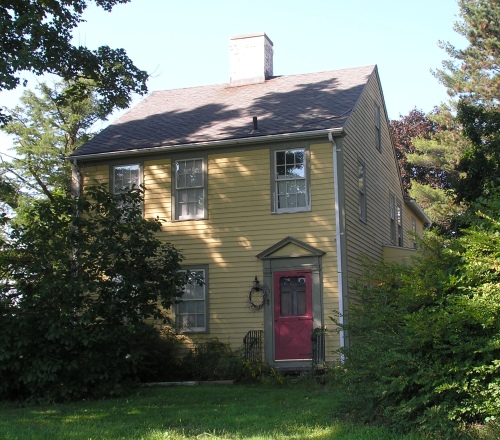
The farmhouse at 123 Meadow Street in the Florence section of Northampton was built c. 1830 by Theodore Burt, or perhaps c. 1800 by his father, Gaius Burt, who had purchased the farm in 1798. Samuel Whitmarsh, a pioneer of silk cultivation in Northampton, purchased the property in 1835. Whitmarsh’s Northampton Silk Company ceased operation in 1840 owing to a decline in the industry and heavy debt. The property was acquired abolitionist Samuel Hill in 1841 to become part of the utopian community called the Northampton Association of Education and Industry (founded in 1842). Hill, who was active in the Underground Railroad, lived in the house, which is the only surviving NAEI building left today. In 1849, Hill sold the farm to Abel Ross. He lived in the house with his nephew, Austin Ross, who eventually bought the property himself in 1857. Austin Ross also used the house as a station on the Underground Railroad. The property is now called Freedom Farm.

Elisha Hammond House (1845)

by Dan/August 8, 2013/Houses, Northampton, Vernacular

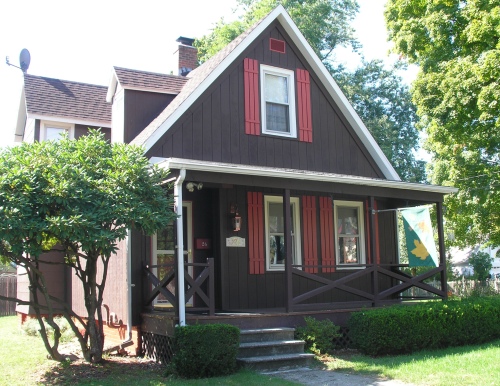
26 Maple Street, Florence

Elisha Hammond was an artist and craftsman in Northampton who joined the Northampton Association of Education and Industry, a utopian society, in 1844. The NAEI opposed slavery and supported fugitive slaves–Hammond’s obituary stated that “fugitives were never turned from his door.” In 1844 he painted a well-known portrait of Frederick Douglass. In 1845 Hammond built the house at 26 Maple Street in the Northampton village of Florence.

Dorsey-Jones House (1849)

by Dan/August 5, 2013/Houses, Northampton, Vernacular

Dorsey-Jones House

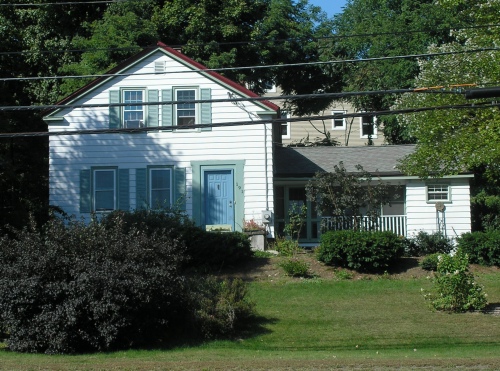
The Dorsey-Jones House, located at 191 Nonotuck Street in the village of Florence in Northampton, was built in 1849 by Basil Dorsey. He was a fugitive slave who had escaped from Maryland in 1836 to New York with the help of Robert Purvis, a prominent black abolitionist. Florence was home at that time to a utopian community called the Northampton Association of Education and Industry. The NAEI opposed slavery and aided fugitive slaves. Selah B. Trask briefly lived in the house when Dorsey and his family moved to another home in Florence in 1852. Mary Jones, the wife of Thomas H. Jones, who was also a fugitive slave, purchased the house in 1854. Jones had escaped from slavery in Wilmington, North Carolina in 1849, having already arranged for the escape of his free wife and her enslaved children. Jones then published a narrative of his life entitled The Experience of Thomas H. Jones, Who Was a Slave for Forty-Three Years. Jones and his family lived in Florence until they moved to Worcester in 1859.

Hall Judd House (1846)

by Dan/September 28, 2012/Houses, Northampton, Vernacular

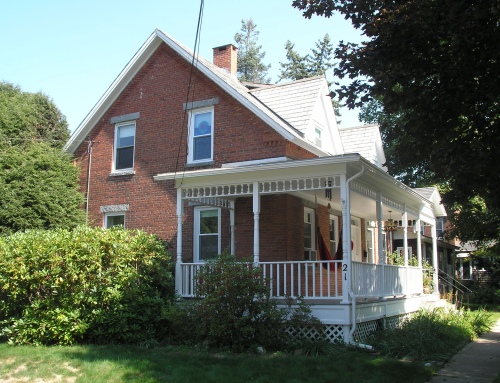
The brick house at 21 Park Street in Florence in Northampton was built in 1846 by Hall Judd, a founder and last secretary of the Northampton Association of Education and Industry. Part of the communitarian movement of the nineteenth century, the NAEI was a utopian community that was dissolved the same year that Judd was building his home. From 1851 to 1894, the house residence to (his widow?) Frances P. Judd. Dormer windows and a wraparound porch were added to the house around 1910. The house has a hidden staircase that suggests it was used in the Underground Railroad.

Sojourner Truth House (1849)

by Dan/September 22, 2012September 22, 2012/Houses, Northampton, Vernacular

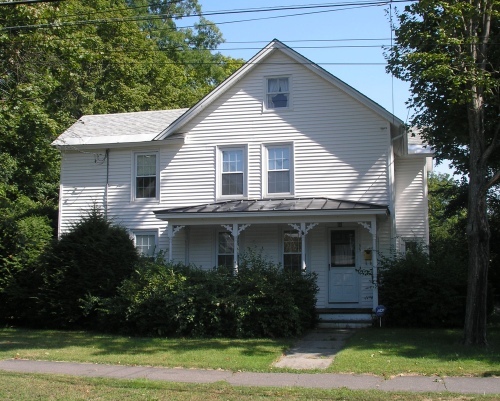
Sojourner Truth, whose name at birth was Isabella, was born an enslaved woman in upstate New York in approximately 1797. Slavery was finally abolished in the state in 1827. Taking the name Sojourner Truth, she would become a leading anti-slavery and woman’s rights lecturer. Starting in 1843, Truth was a member of the Northampton Association of Education and Industry. Located in the part of Northampton which would later come to be called Florence, the NAEI was a utopian community dedicated to abolitionism and equality. She continued to live in Northampton after the NAEI disbanded in 1846. Truth, who could not read or write, dictated her memoirs to her friend, Olive Gilbert. Sales of the Narrative of Sojourner Truth (first published in 1850), paid for her house, at 35 Park Street in Florence, where she lived from 1849/1850 to 1857. Her friend, Samuel L. Hill, who was the spiritual leader of the Northampton Association, held the mortgage on the house, which Sojourner Truth paid in 1854. In 1857, she moved to Battle Creek, Michigan, where she lived the remainder of her life.

Posts navigation

Older posts
Privacy Policy

Categories

  • Architectural Style (943)
    • Art Deco (9)
    • Byzantine (3)
    • Colonial (177)
    • Colonial Revival (85)
    • Craftsman (6)
    • Egyptian Revival (1)
    • Federal (190)
    • Foursquare (6)
    • Gothic (67)
    • Greek Revival (100)
    • Italianate (82)
    • Mission Revival (2)
    • Mission/Spanish Colonial (1)
    • Modern (2)
    • Neoclassical (56)
    • Octagon (3)
    • Postmodern (1)
    • Queen Anne (46)
    • Renaissance Revival (26)
    • Romanesque Revival (53)
    • Second Empire (26)
    • Shingle Style (12)
    • Stick Style (13)
    • Tudor Revival (8)
    • Vernacular (49)
    • Victorian Eclectic (15)
  • Building Type (943)
    • Apartment Buildings (8)
    • Banks (18)
    • Churches (119)
    • Collegiate (32)
    • Commercial (102)
    • Hotels (16)
    • Houses (508)
    • Industrial (23)
    • Libraries (22)
    • Lighthouses (1)
    • Military (15)
    • Monuments (1)
    • Museums (12)
    • Organizations (39)
    • Outbuildings (17)
    • Public Buildings (50)
    • Schools (23)
    • Stations (5)
    • Synagogues (1)
    • Taverns (21)
    • Theaters (9)
  • Town (943)
    • Adams (11)
    • Agawam (4)
    • Amherst (50)
    • Boston (64)
    • Boylston (6)
    • Cambridge (30)
    • Clinton (21)
    • Concord (15)
    • Cummington (1)
    • Danvers (14)
    • Deerfield (31)
    • Gloucester (18)
    • Granville (10)
    • Great Barrington (2)
    • Hadley (9)
    • Hancock (15)
    • Harvard (32)
    • Holyoke (47)
    • Lenox (5)
    • Lexington (8)
    • Longmeadow (32)
    • Marblehead (40)
    • Marlborough (4)
    • Natick (22)
    • Newton (2)
    • Northampton (68)
    • Peabody (4)
    • Pittsfield (20)
    • Salem (110)
    • Saugus (4)
    • Sheffield (4)
    • South Hadley (8)
    • Southborough (8)
    • Southwick (4)
    • Springfield (67)
    • Stockbridge (19)
    • Stow (1)
    • Sturbridge (18)
    • Sudbury (7)
    • Waltham (11)
    • Watertown (1)
    • Wayland (8)
    • West Springfield (14)
    • Westfield (46)
    • Weston (2)
    • Worcester (26)
  • Uncategorized (1)

Recent Comments

  • Wilber Blackson on South Hadley
  • Tami Speiden on Stockbridge
  • DexGuru on Stockbridge

Tags

Alcott Amherst College Asher Benjamin Back Bay Baptist Beacon Hill Big E Black Heritage Trail bowfront Bulfinch Catholic Congregational Episcopal Freedom Trail Gambrel H.H. Richardson Harvard Hawthorne Historic Deerfield Isaac Damon lit Longfellow mansard Methodist Mount Holyoke Museum Museums NPS Old Sturbridge Village PEM Revolutionary War row houses saltbox Samuel McIntire Shakers Smith College SPNEA Springfield Armory Stephen C. Earle Storrowton Underground Railroad UU Washington William Fenno Pratt Witch Trials

Meta

  • Log in
  • Entries feed
  • Comments feed
  • WordPress.org
Proudly powered by WordPress | Theme: ShowMe by NEThemes.