Historic Buildings of Massachusetts

  • About
  • Index by Town
  • CT
  • About
  • Index by Town
  • CT

Tag: Gambrel

Sycamores (1788)

by Dan/November 20, 2008/Colonial, Houses, South Hadley

sycamores.jpg

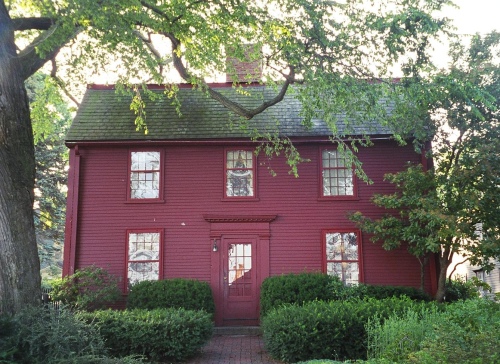
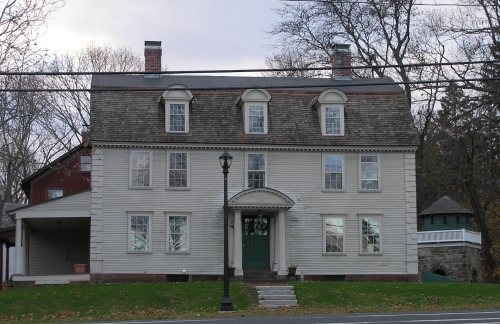
Colonel Benjamin Ruggles Woodbridge, of South Hadley, was a physician, merchant, entrepreneur and politician, who led a regiment at Bunker Hill and was a representative to the General Court. In 1788, Col. Woodbridge built his house on Woodbridge Street in South Hadley. After his death, in 1819, the house became the Woodbridge Scientific School for boys. It was later owned by the Montague family and was purchased, in 1900, by Rose Hollingsworth, who had the (recently restored) Water Tower on the property constructed. For much of the twentieth century, the house served as a dormitory for students at Mount Holyoke College. Having fallen into disrepair, in 1996 it was purchased by the Sycamores Committee of the South Hadley Historical Society, who are restoring the house to become a museum. In 2004, the 1733 Rawson House, home of South Hadley‘s first minister, Grindall Rawson, which originally stood on the Sycamores property, was donated to the Sycamore Committee. It was then moved to its current location, attached to Sycamore‘s rear ell.
Porter-Phelps-Huntington House (1752)

by Dan/November 20, 2008September 17, 2016/Colonial, Hadley, Houses

porter_phelps_huntington-house.jpg

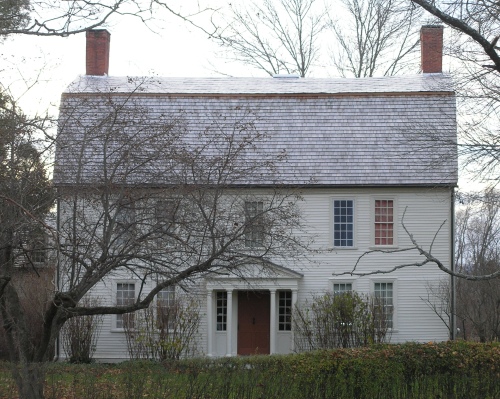
Built in 1752, the Porter-Phelps-Huntington House was the first to be constructed in Hadley outside the town’s fortified stockade, on land known as “Forty Acres and its Skirts,” which had earlier been farmed communally. The original owners were Moses Porter and his wife Elizabeth Pitkin Porter. Moses was killed in 1755 in the French and Indian War, at the “Bloody Morning Scout,” the first engagement of the Battle of Lake George. Elizabeth was left alone to raise their daughter, also named Elizabeth, who married Charles Phelps of Northampton in 1770. Phelps greatly expanded the family’s property and enlarged the house, although no significant structural changes have been made since 1799. Phelps was a lawyer as well as a farmer, supported the Revolutionary War and served as a representative to the General Court of Massachusetts. Charles and Elizabeth Phelps’ daughter, Elizabeth Phelps, married Dan Huntington in 1801. Huntington was a minister in Litchfield, CT and his growing family lived there for a time, before settling in the Hadley homestead in 1816. Their son, Frederic Dan Huntington, became a Unitarian minister, but later became an Episcopalian and the first Bishop of Central New York state. In 1855, Bishop Huntington inherited the house and used it as a summer home. The house continued to be owned by the family until a grandson of Bishop Huntington, Dr. James Huntington, who had studied the family’s history and first opened the house to the public in 1949, donated it the Porter-Phelps-Huntington Foundation in 1955. It has been open as a museum ever since.

John Hicks House (1762)

by Dan/July 25, 2008January 20, 2020/Cambridge, Colonial, Houses

john-hicks-house.jpg

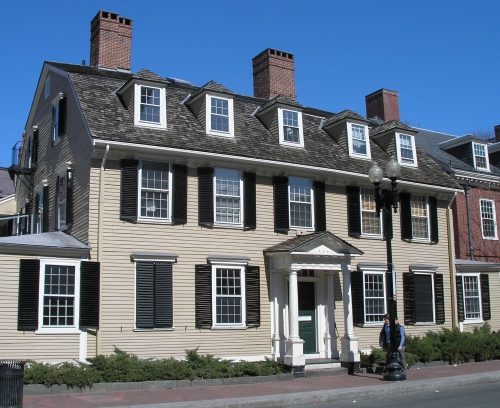
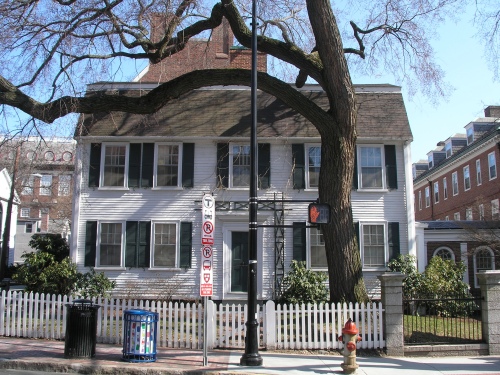
Originally located on Dunster and Winthrop in Cambridge, the 1762 John Hicks House was later moved to its current address on John F. Kennedy Street to become the library of Harvard University‘s Kirkland House. A historic marker in front of the house explains that it was the home of John Hicks, who was killed by British soldiers in 1775. He was killed near the junction of North avenue and Spruce Street by the retreating British on April 19, 1775. The marker also indicates that the house was used by General Putnam as his office during the Revolutionary War. In 1773, the house was purchased by John Foxcroft. A car crashed into the house in 2006.

Nathaniel Hawthorne Birthplace (1730)

by Dan/June 23, 2008June 29, 2013/Colonial, Houses, Salem

hawthorne-birthplace.jpg

The house in which the author, Nathaniel Hawthorne, was born on July 4, 1804 and lived in until he was age 4 is located in Salem. It was originally on Union Street, but in 1958 it was moved to a site adjacent to the House of the Seven Gables, the building that would inspire Hawthorne to write the novel of the same name. The house was built between 1730 and 1745 for Joshua Pickman, a Boston mariner. It was bought by Hawthorne’s grandfather, the famous shipmaster Captain Daniel Hawthorne, in 1772. As part of the House of the Seven Gables Settlement Association property, the house is now a museum open to visitors.

Benjamin Wadsworth House (1726)

by Dan/June 8, 2008September 17, 2016/Cambridge, Colonial, Houses

benjamin-wadsworth-house.jpg

In 1726, a house was constructed on Massachusetts Avenue in Cambridge, on the site where Harvard’s earliest building, the Peyntree House, had stood. It was first occupied by Harvard’s fourth president, Benjamin Wadsworth, his family and two slaves. After Wadsworth, it would serve as the home of eight other presidents, until 1849, when president Jared Sparks chose to reside in his own Cambridge home. During the Revolutionary War, the house was Washington’s first headquarters when he came to command the army during the siege of Boston in 1775. Do to its state of disrepair at the time, Washington soon moved to other quarters. Over the years, the house would serve as lodging for visiting ministers and student boarders (including Ralph Waldo Emerson). The building now houses the Office of the University Marshal and other offices. The Wadsworth House lost its front yard when Massachusetts Avenue was widened. Today it is the second oldest of Harvard’s surviving buildings, after Massachusetts Hall.

John Hodges House (1788)

by Dan/June 8, 2008September 17, 2016/Colonial, Houses, Salem

john-hodges-house.jpg

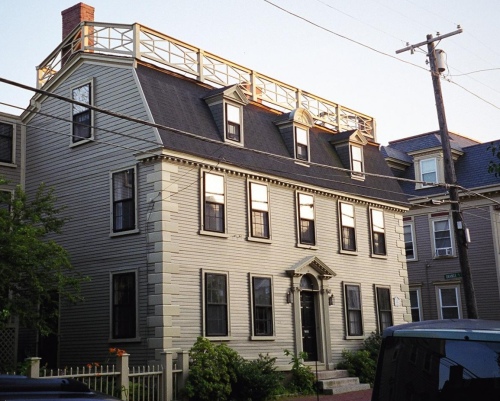
Built around 1788 on Essex Street in Salem, the John Hodges House is late Georgian-style home with a grand spiral staircase within. Hodges was a merchant and passed the house on to his son, Benjamin Hodges, after it was built.

Josiah Dwight House (1725)

by Dan/April 28, 2008September 17, 2016/Colonial, Deerfield, Houses

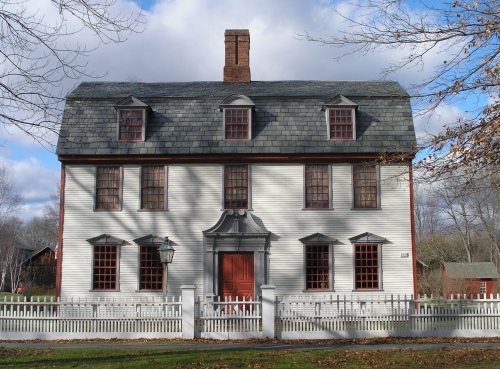
Originally built on Main Street in Springfield between 1722 and 1733 by David Ingersoll, the Dwight House was bought in 1743 by Josiah Dwight, who added a Connecticut River Valley Broken Scroll doorway, window pediments and a gambrel roof in the 1750s. Used as a rooming house in the later nineteenth century, the building was moved to Howard Street in 1884. In the early twentieth century, its original doorway pediment was purchased by Henry du Pont for his Long Island summer house (it was later moved to Winterthur). In 1950, when the house was facing demolition, it was purchased by Henry and Helen Flint for Historic Deerfield and stored until a location on the Street in Deerfield could be found. The Italianate-style Josiah Fogg House of 1868 was then demolished to make room for a restored Dwight House, complete with a reproduction of the original doorway pediment. Opened to the public in 1954, the Dwight House was originally interpreted as a the home of a doctor (complete with doctor’s office). It now presents the two contrasting interior decorative styles of Boston and the Connecticut River Valley on either side of the house. Continue reading “Josiah Dwight House (1725)”

Posts navigation

Older posts
Newer posts
Privacy Policy

Categories

  • Architectural Style (943)
    • Art Deco (9)
    • Byzantine (3)
    • Colonial (177)
    • Colonial Revival (85)
    • Craftsman (6)
    • Egyptian Revival (1)
    • Federal (190)
    • Foursquare (6)
    • Gothic (67)
    • Greek Revival (100)
    • Italianate (82)
    • Mission Revival (2)
    • Mission/Spanish Colonial (1)
    • Modern (2)
    • Neoclassical (56)
    • Octagon (3)
    • Postmodern (1)
    • Queen Anne (46)
    • Renaissance Revival (26)
    • Romanesque Revival (53)
    • Second Empire (26)
    • Shingle Style (12)
    • Stick Style (13)
    • Tudor Revival (8)
    • Vernacular (49)
    • Victorian Eclectic (15)
  • Building Type (943)
    • Apartment Buildings (8)
    • Banks (18)
    • Churches (119)
    • Collegiate (32)
    • Commercial (102)
    • Hotels (16)
    • Houses (508)
    • Industrial (23)
    • Libraries (22)
    • Lighthouses (1)
    • Military (15)
    • Monuments (1)
    • Museums (12)
    • Organizations (39)
    • Outbuildings (17)
    • Public Buildings (50)
    • Schools (23)
    • Stations (5)
    • Synagogues (1)
    • Taverns (21)
    • Theaters (9)
  • Town (943)
    • Adams (11)
    • Agawam (4)
    • Amherst (50)
    • Boston (64)
    • Boylston (6)
    • Cambridge (30)
    • Clinton (21)
    • Concord (15)
    • Cummington (1)
    • Danvers (14)
    • Deerfield (31)
    • Gloucester (18)
    • Granville (10)
    • Great Barrington (2)
    • Hadley (9)
    • Hancock (15)
    • Harvard (32)
    • Holyoke (47)
    • Lenox (5)
    • Lexington (8)
    • Longmeadow (32)
    • Marblehead (40)
    • Marlborough (4)
    • Natick (22)
    • Newton (2)
    • Northampton (68)
    • Peabody (4)
    • Pittsfield (20)
    • Salem (110)
    • Saugus (4)
    • Sheffield (4)
    • South Hadley (8)
    • Southborough (8)
    • Southwick (4)
    • Springfield (67)
    • Stockbridge (19)
    • Stow (1)
    • Sturbridge (18)
    • Sudbury (7)
    • Waltham (11)
    • Watertown (1)
    • Wayland (8)
    • West Springfield (14)
    • Westfield (46)
    • Weston (2)
    • Worcester (26)
  • Uncategorized (1)

Recent Comments

  • Wilber Blackson on South Hadley
  • Tami Speiden on Stockbridge
  • DexGuru on Stockbridge

Tags

Alcott Amherst College Asher Benjamin Back Bay Baptist Beacon Hill Big E Black Heritage Trail bowfront Bulfinch Catholic Congregational Episcopal Freedom Trail Gambrel H.H. Richardson Harvard Hawthorne Historic Deerfield Isaac Damon lit Longfellow mansard Methodist Mount Holyoke Museum Museums NPS Old Sturbridge Village PEM Revolutionary War row houses saltbox Samuel McIntire Shakers Smith College SPNEA Springfield Armory Stephen C. Earle Storrowton Underground Railroad UU Washington William Fenno Pratt Witch Trials

Meta

  • Log in
  • Entries feed
  • Comments feed
  • WordPress.org
Proudly powered by WordPress | Theme: ShowMe by NEThemes.