Historic Buildings of Massachusetts

  • About
  • Index by Town
  • CT
  • About
  • Index by Town
  • CT

Tag: Museum

Stephen Fitch House (1737)
by Dan/September 21, 2011September 21, 2011/Colonial, Houses, Sturbridge

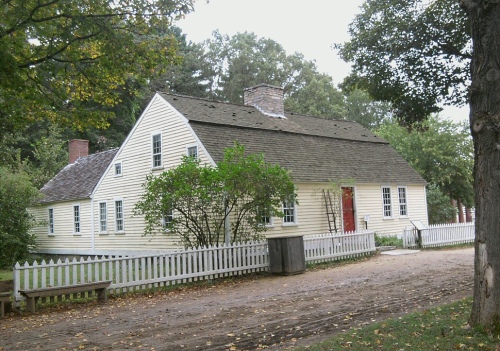
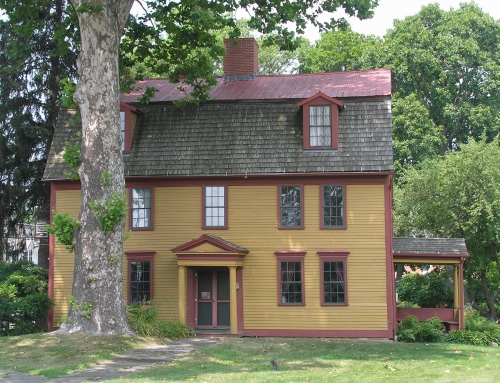
Stephen Fitch built a house in Windham, Connecticut in 1737. The house was later expanded in two or three stages, when an extended ell was added to the rear. In 1939, the Fitch House was acquired by Old Sturbridge Village and moved to Sturbridge the following year to become the museum’s first exhibit building. Today, the house is furnished with reproductions that visitors can touch. It is presented as the home of a successful country printer.
Old Strong House (1744)

by Dan/August 6, 2011/Amherst, Colonial, Houses

The gambrel-roofed dwelling known as the Old Strong House, at 67 Amity Street in Amherst, was built in 1744 by Nehemiah Strong. As related by Alice M. Walker in Historic Homes of Amherst (1905):

Samuel Strong, the ancestor of the Strongs in Amherst […], married Esther Clapp, and soon after her death took for his second wife, Mrs. Ruth Sheldon Wright. He had twelve children, most of whom settled on farms in Hadley and South Hadley. His third son Nehemiah, married about 1728 Hannah Edwards, the daughter of Jonathan French of Northampton, and widow of Nathaniel Edwards, who was killed by Indians. Unwilling for some reason to settle permanently in Northampton, Nehemiah Strong took council with his brothers, living across the river, as to the most desirable location for a home, and settled upon Hadley third precinct, where land was cheap and plentiful. He purchased a tract at the junction of the west highway and the road leading to Hadley, with the intent of building a mansion of the latest style and most approved design.

Nehemiah’s son, Simeon, a lawyer, inherited the house. Quoting again from Walker:

Young Simeon erected for himself an office on the west side of his dwelling, and it is possible made some changes in the back part of the mansion, as tradition hints that once the roof sloped to the ground.

During the Revolution:

Most prominent among the loyalists was Simeon Strong, and the old Strong house became the headquarters of the Tory faction. […] The learned advocate, honest in his convictions, in spite of his Tory principles, kept the respect of his fellow townsmen, maintained his standing at the bar and accumulated wealth. The small addition to the rear of the family mansion held his law library and pamphlets, and served him as an office. Here he interviewed his clients and pursued those studies in theology and metaphysics which were his delight to the close of his life. In 1787 Simeon Strong was appointed a member of a committee to build a new meeting house on the hill. Having served the town acceptably in the General Court, he was elected to the Senate, and in 1800 was appointed Justice of the Supreme Judicial Court of Massachusetts.

Continue reading “Old Strong House (1744)”

Emily Dickinson Homestead (1813)

by Dan/August 3, 2011December 1, 2011/Amherst, Federal, Houses

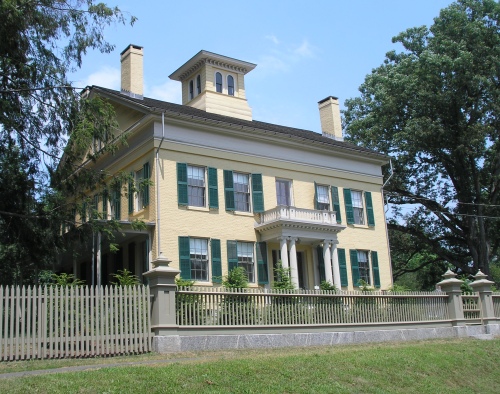
The Emily Dickinson Homestead in Amherst was built in 1813 for Samuel Fowler Dickinson, a lawyer and a principal founder of Amherst College, and his wife Lucretia Gunn Dickinson. Pledging his personal property in support of educational endeavors eventually left Samuel Fowler Dickinson bankrupt. In 1833 he sold the house and later moved to Ohio. David Mack, owner of a general store, purchased the house, but Dickinson’s son, Edward, purchased half the house and lived there until 1840 with his wife, Emily Norcross Dickinson, and their children. After living in another house on Pleasant Street (no longer standing), Edward Dickinson purchased the entire Homestead and moved back in with his family in 1855. He soon made improvements, building a rear addition, a veranda on the west side and a conservatory. He also added the distinctive cupola to the roof. Edward also built a house, the Evergreens, next door for his son, William Austin Dickinson, in 1856. His unmarried daughters, Emily and Lavinia, lived in the house after the deaths of their parents. Emily Dickinson (1830-1886), who had been born in the house, had her most productive period as a poet there between 1858 and 1865. After Lavinia’s death in 1899, the house passed to her niece, Martha Dickinson Bianchi, who leased it to tenants. From 1916 to 1965, the Homestead was owned by the Parke family, who then sold it to Amherst College. Opened for tours, the Homstead later joined with the Evergreens to form the Emily Dickinson Museum in 2003. The Emily Dickinson Homestead was painted in its original late-nineteenth-century colors in 2004.

The Evergreens (1856)

by Dan/July 29, 2011December 1, 2011/Amherst, Houses, Italianate

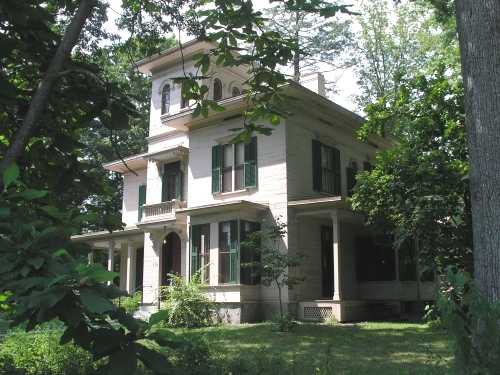
The Evergreens is a house in Amherst built in 1856 by Edward Dickinson for his his son, William Austin Dickinson, who had just married Susan Huntington Gilbert. Austin Dickinson was a lawyer and succeeded his father as treasurer of Amherst College, serving from 1874 until his death in 1895. He is also known for his longtime affair with Mabel Loomis Todd, who would edit early collections of poetry written by Austin’s sister, Emily Dickinson. The Italianate-style Evergreens, designed by Northampton architect William Fenno Pratt, was built next to the Dickinson Homestead, where Emily resided with her sister, Lavinia. The Evergreens became a social and cultural center in the town. After Austin and Sarah Dickinson died (the latter in 1913), the house was lived in and preserved by their daughter, Martha Dickinson Bianchi (died 1943), who left the house to her secretary, Alfred Leete Hampson, stipulating in her will that if Hampson and his family chose not to live in the house, it should be torn down. Hampson’s widow, Mary Landis Hampson, made arrangements in her own will to preserve the house under a trust for public use. Since 2003, it has been owned by Amherst College and, along with the Emily Dickinson Homestead, forms part of the Emily Dickinson Museum.

Peirce-Nichols House (1792)

by Dan/June 25, 2011/Federal, Houses, Salem

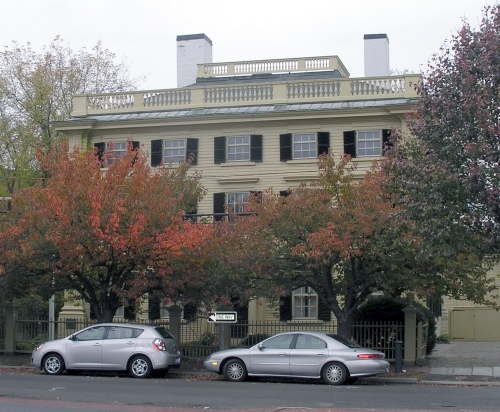
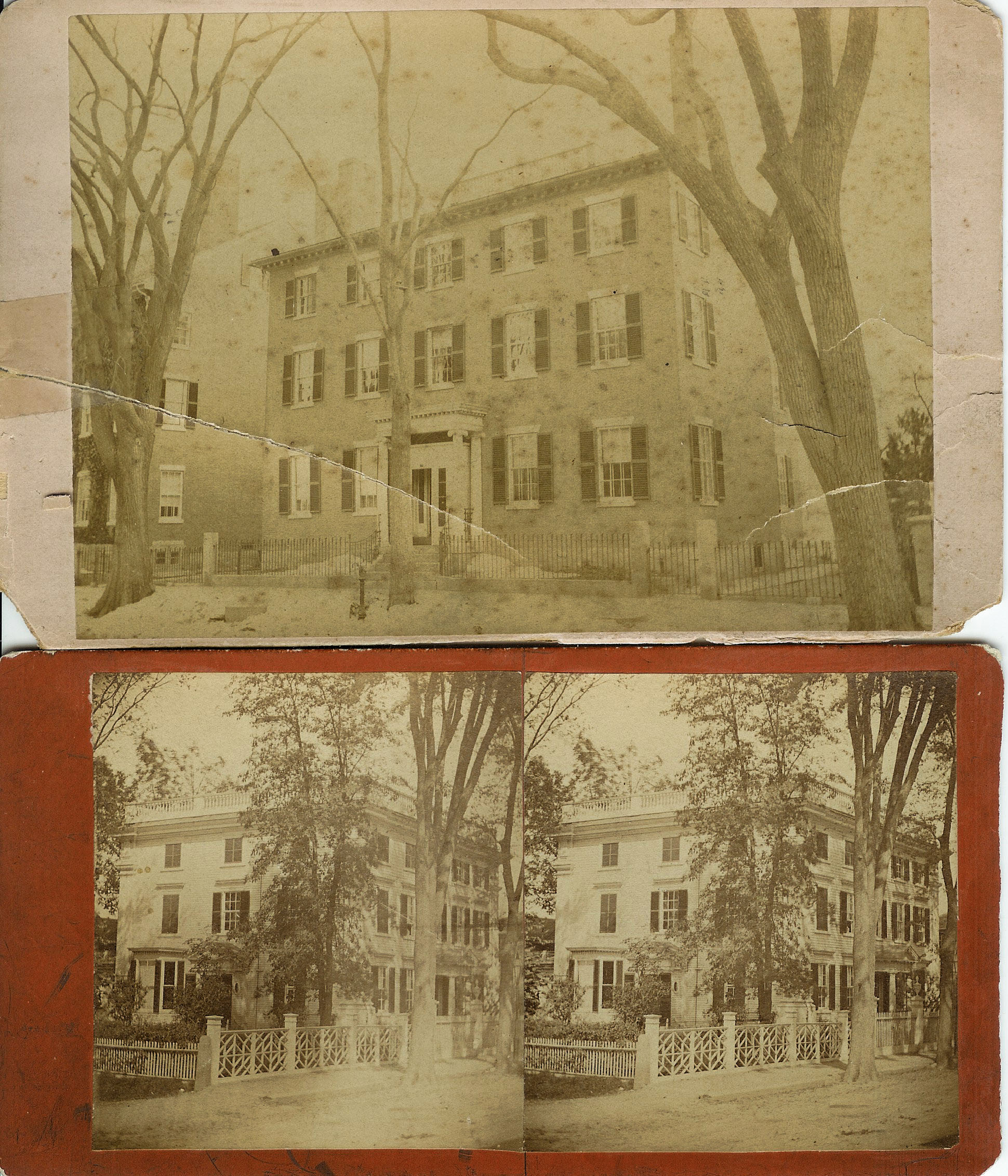
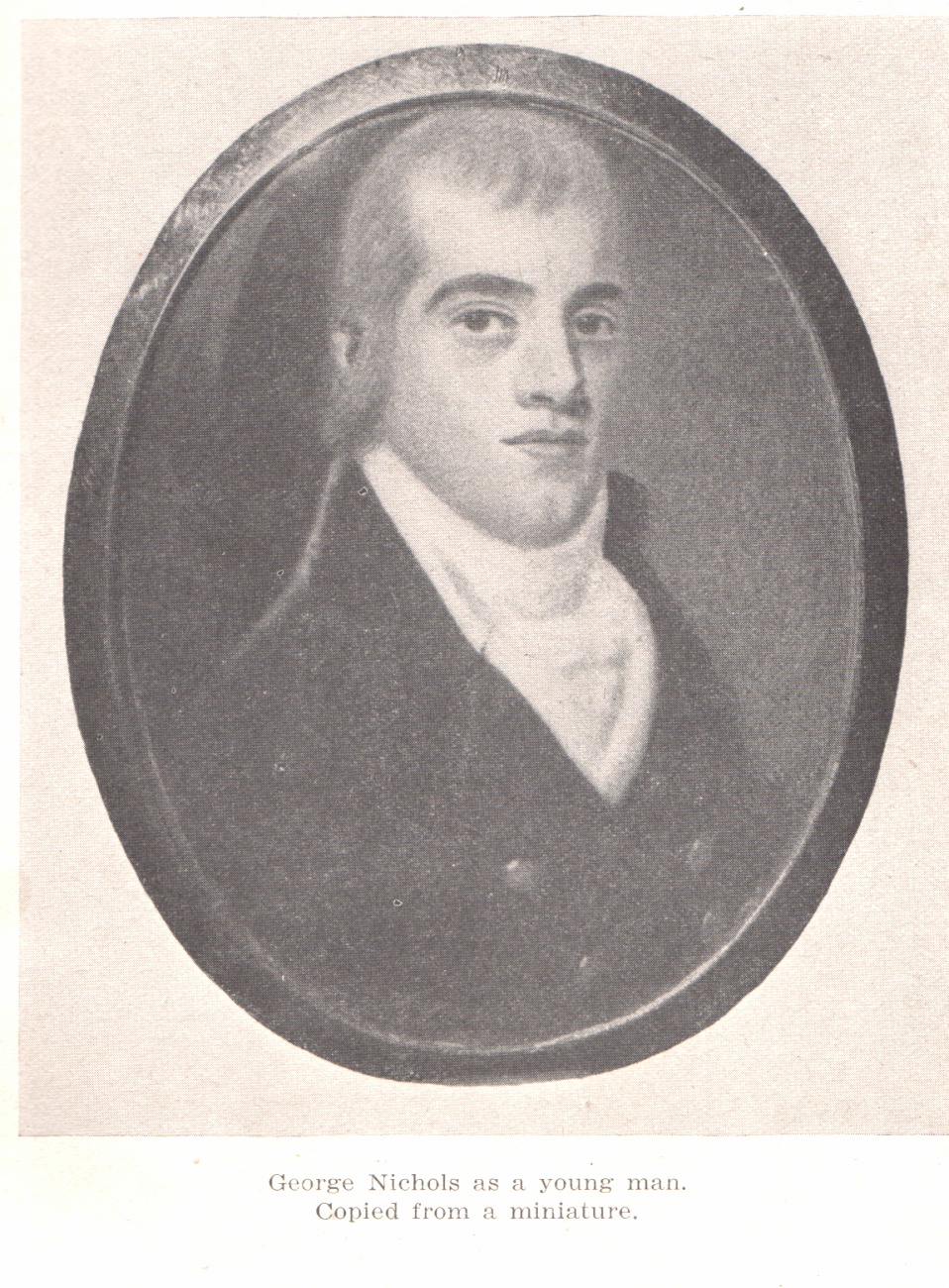
Another renowned three-story residence in Salem is the Peirce-Nichols House, a transitional Georgian/Federal structure at 80 Federal Street. The work of Samuel McIntire, the house was constructed in the Georgian style in 1792, with McIntire also remodeling several interior rooms in the Federal style in 1801. It was built for Jerathmiel Peirce, partner of Aaron Waite in the merchant firm of Peirce and Waite, owners of the East Indiaman Friendship. Behind the house and its stables, a terraced lawn extends back to a small arbor. The property originally extended to the North River, where Capt. Peirce docked his ships. The 1801 remodeling of the house was occasioned by the marriage of Sarah Peirce to George Nichols. At that time, McIntire also crafted the front fence, which has decorative urns. The house passed to John H. Johonnot in 1827, but it was inherited by George Nichols in 1840. The Essex Institute (now the Peabody Essex Museum) purchased the house by subscription in 1917.

Assembly House, Salem (1782)

by Dan/March 31, 2011June 24, 2011/Federal, Houses, Salem

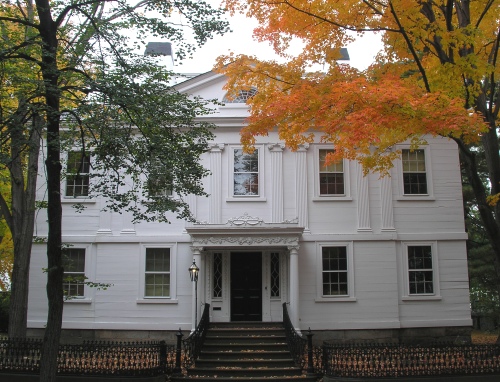
In 1782, Salem Federalists erected the Assembly House, also known as the Cotting-Smith Assembly House, at 138 Federal Street to serve as a gathering place for social and cultural events. Lafayette and Washington were both entertained there in the 1780s. The original building was most likely quite plain, but it was significantly altered around 1798 by Samuel McIntire, who added elaborate Federal style ornamentation to the front facade. By that time, the building had ceased to be used as an assembly place and was converted into a residence. Jonathan Waldo, an original funder of the Assembly House, had become sole owner in 1796 and sold it to Samuel Putnam, a local judge, two years later. Around that time, Waldo and his partners, William Stearns and Col. William Pickering, built the Stearns Block on Washington Street, which included their own new assembly space called Washington Hall, intended to supercede the Assembly House. In 1919, the Old Assembly House was acquired by Joseph Newton Smith, whose daughter, Mary Silver Smith, gave the house to the Essex Institute, now the Peabody Essex Museum, in 1965. Continue reading “Assembly House, Salem (1782)”

Osborne-Salata House (1860)

by Dan/March 14, 2011January 17, 2020/Houses, Italianate, Peabody

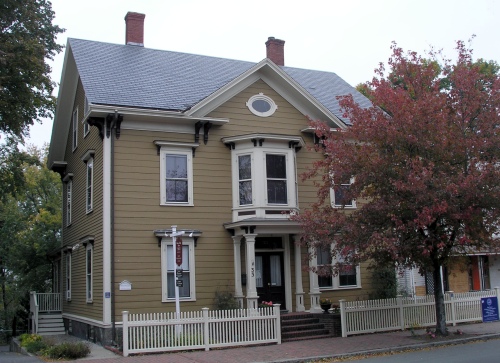
The Osborne-Salata House, at 33 Washington Street in Peabody, was constructed around 1860. This Italianate house was built for Thorndike and Sarah Daniels. It was later owned by Dennison Osborne and next served as a boarding house. The house’s last residents, from 1945-1997, were Dr. Benjamin Salata, a dentist, and wife, Celia, a music teacher. She donated the house to the Peabody Historical Society, which already owned the adjacent General Gideon Foster House. Today the Osborne-Salata House contains the Historical Society’s Elizabeth Cassidy Folk Art Museum, the Peabody Art Association Gallery and the Ruth Hill Library & Archives.

Posts navigation

Older posts
Newer posts
Privacy Policy

Categories

  • Architectural Style (943)
    • Art Deco (9)
    • Byzantine (3)
    • Colonial (177)
    • Colonial Revival (85)
    • Craftsman (6)
    • Egyptian Revival (1)
    • Federal (190)
    • Foursquare (6)
    • Gothic (67)
    • Greek Revival (100)
    • Italianate (82)
    • Mission Revival (2)
    • Mission/Spanish Colonial (1)
    • Modern (2)
    • Neoclassical (56)
    • Octagon (3)
    • Postmodern (1)
    • Queen Anne (46)
    • Renaissance Revival (26)
    • Romanesque Revival (53)
    • Second Empire (26)
    • Shingle Style (12)
    • Stick Style (13)
    • Tudor Revival (8)
    • Vernacular (49)
    • Victorian Eclectic (15)
  • Building Type (943)
    • Apartment Buildings (8)
    • Banks (18)
    • Churches (119)
    • Collegiate (32)
    • Commercial (102)
    • Hotels (16)
    • Houses (508)
    • Industrial (23)
    • Libraries (22)
    • Lighthouses (1)
    • Military (15)
    • Monuments (1)
    • Museums (12)
    • Organizations (39)
    • Outbuildings (17)
    • Public Buildings (50)
    • Schools (23)
    • Stations (5)
    • Synagogues (1)
    • Taverns (21)
    • Theaters (9)
  • Town (943)
    • Adams (11)
    • Agawam (4)
    • Amherst (50)
    • Boston (64)
    • Boylston (6)
    • Cambridge (30)
    • Clinton (21)
    • Concord (15)
    • Cummington (1)
    • Danvers (14)
    • Deerfield (31)
    • Gloucester (18)
    • Granville (10)
    • Great Barrington (2)
    • Hadley (9)
    • Hancock (15)
    • Harvard (32)
    • Holyoke (47)
    • Lenox (5)
    • Lexington (8)
    • Longmeadow (32)
    • Marblehead (40)
    • Marlborough (4)
    • Natick (22)
    • Newton (2)
    • Northampton (68)
    • Peabody (4)
    • Pittsfield (20)
    • Salem (110)
    • Saugus (4)
    • Sheffield (4)
    • South Hadley (8)
    • Southborough (8)
    • Southwick (4)
    • Springfield (67)
    • Stockbridge (19)
    • Stow (1)
    • Sturbridge (18)
    • Sudbury (7)
    • Waltham (11)
    • Watertown (1)
    • Wayland (8)
    • West Springfield (14)
    • Westfield (46)
    • Weston (2)
    • Worcester (26)
  • Uncategorized (1)

Recent Comments

  • Wilber Blackson on South Hadley
  • Tami Speiden on Stockbridge
  • DexGuru on Stockbridge

Tags

Alcott Amherst College Asher Benjamin Back Bay Baptist Beacon Hill Big E Black Heritage Trail bowfront Bulfinch Catholic Congregational Episcopal Freedom Trail Gambrel H.H. Richardson Harvard Hawthorne Historic Deerfield Isaac Damon lit Longfellow mansard Methodist Mount Holyoke Museum Museums NPS Old Sturbridge Village PEM Revolutionary War row houses saltbox Samuel McIntire Shakers Smith College SPNEA Springfield Armory Stephen C. Earle Storrowton Underground Railroad UU Washington William Fenno Pratt Witch Trials

Meta

  • Log in
  • Entries feed
  • Comments feed
  • WordPress.org
Proudly powered by WordPress | Theme: ShowMe by NEThemes.