Historic Buildings of Massachusetts

  • About
  • Index by Town
  • CT
  • About
  • Index by Town
  • CT

Tag: Museum

Pottery, Old Sturbridge Village (1819)
by Dan/December 1, 2011January 1, 2012/Commercial, Industrial, Outbuildings, Sturbridge, Vernacular

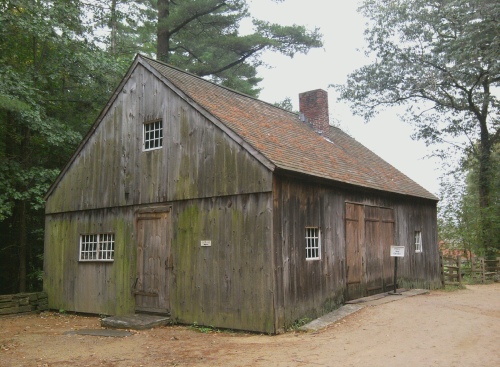
Harvey Brooks (1779-1873), of Goshen, Connecticut, began work at the age of sixteen as an apprentice potter. After 1819, he worked for himself as a rural farmer-potter, producing 26 different varieties and sizes of redware pots, pans and jugs. He had a pottery shop and an adjacent kiln, where he burned his last batch of ware in 1864, long after most other redware potters had given up practicing their craft. Brooks‘ pottery shop, built around 1819, was moved to Old Sturbridge Village in 1961 and a replica kiln was built in 1979.
Law Office, Old Sturbridge Village (1796)

by Dan/November 17, 2011November 15, 2011/Commercial, Sturbridge, Vernacular

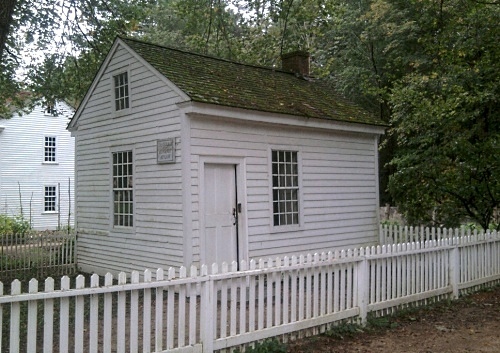
John McClellan was a lawyer in Woodstock, Connecticut, active in the first half of the nineteenth century. His law office in Woodstock, built around 1796, was acquired by Old Sturbridge Village in 1962 and was moved there in 1965.

General Israel Putnam House (1648)

by Dan/October 29, 2011/Colonial, Danvers, Houses

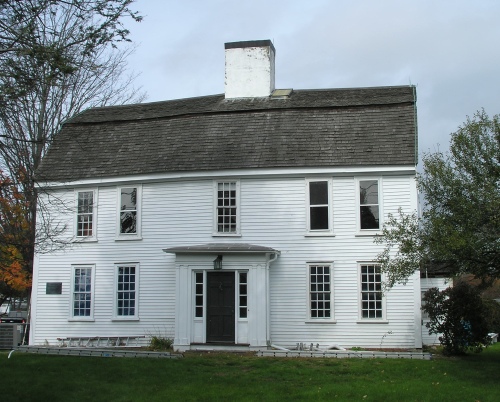
The earliest (rear) section of the Putnam House in Danvers was built in 1648 by Lt. Thomas Putnam. The house would go on to be the home of twelve generations of the Putnam family. During the Salem witchcraft trials, Joseph Putnam, who spoke out against the ongoing hysteria, lived on the property. Joseph’s son, Israel Putnam, for whom it’s now known, was born in the house in 1718. General Israel Putnam was a famous colonial officer and one of the primary figures at the Battle of Bunker Hill in 1775. In the 1850s, Daniel Putnam operated a shoe-making business in the house and in the twentieth century, the family ran a candy and ice cream shop next door called the Putnam Pantry. A number of additions were made to the house over the years, including the eighteenth-century gambrel-roofed section that is now the front facade. The Putnam family gave the house to the Danvers Historical Society in 1991.

Joseph Dewey House (1735)

by Dan/October 27, 2011/Colonial, Houses, Westfield

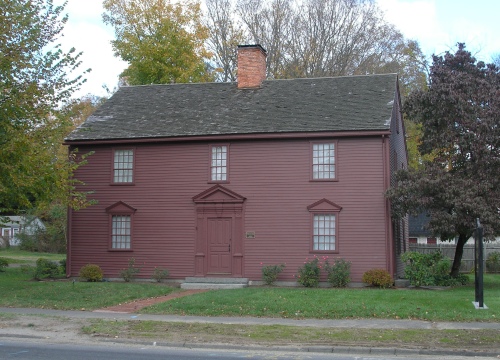
The Joseph Dewey House, at 87 South Maple Street in Westfield, was built in 1735 as a saltbox house. Joseph Dewey was a prosperous farmer who also served as a militia sergeant and had been a town selectman in 1726. In 1756, Dewey sold the house to his son, also named Joseph. In the early nineteenth century, Benjamin Dewey made extensive interior and exterior alterations to the family home, replacing the roof, realigning the chimney and altering the front facade in the Federal style. The house was in the Dewey family until 1856 and then had a number of other owners over the years until 1972, when a developer sold it to the Western Hampden Historical Society. It was then moved 200 feet west, restored as much as possible to its colonial-era appearance and opened as a historic house museum.

Salem Towne House (1796)

by Dan/October 15, 2011October 16, 2011/Federal, Houses, Sturbridge

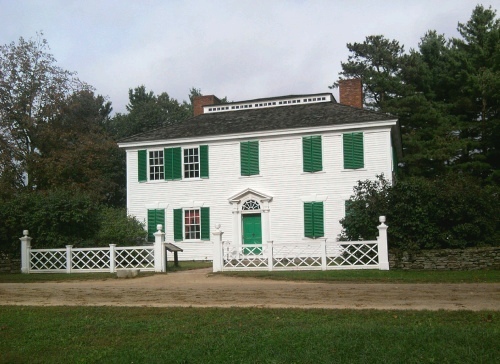
In the early nineteenth century, Salem Towne, Jr. was a businessman and a leader in public affairs in Charlton. In 1825, Towne inherited an impressive hipped-roof house, built for his father, Salem Towne, Sr., in 1796. The house had a ballroom on the second floor, later divided into bedchambers, that was used for Masonic meetings until 1806. The house’s builder was influenced by the illustrations in the 1792 American edition of William Pain’s Practical Builder, a guidebook of designs for English carpenters. The Salem Towne House was moved to Old Sturbridge Village in 1952 and the interior has recently been restored, with original colors and reproductions of period wallpapers.

Yin Yu Tang (1800)

by Dan/October 14, 2011October 14, 2011/Houses, Salem, Vernacular

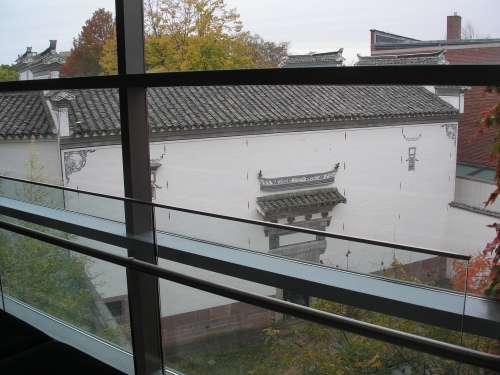
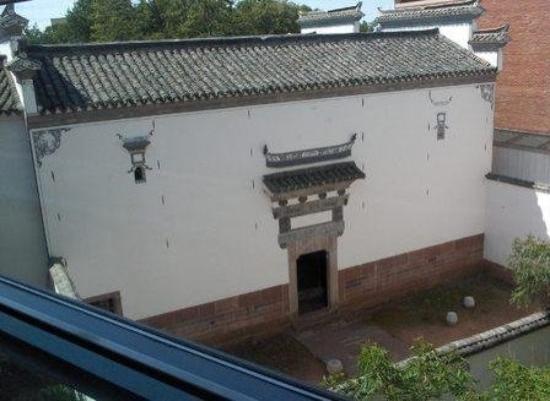
Yin Yu Tang (“Hall of Plentiful Shelter”) is a Qing Dynasty Chinese merchant’s house, built around 1800, which was moved to the Peabody Essex Museum in Salem and reconstructed there in 1997-2002. The house was first built by a merchant of the Huang family in the village of Huang Cun, located in Xiuning County of the Huangshan Prefecture (a region traditionally known as Huizhou) in Anhui Province. Eight generations of the family lived in the house for nearly two centuries. By the 1980s, the house stood empty, as Huang family members had moved to other parts of the country. In 1996, family members decided to sell the house and the following year, Chinese authorities approved Yin Yu Tang’s move to the United States as part of a cultural exchange helping to protect and promote the architecture of the Huizhou region. It is now open to the public and contains original family furnishings. Also check out my post on the New York Chinese Scholar’s Garden.

Wistariahurst (1868)

by Dan/October 10, 2011/Holyoke, Houses, Second Empire

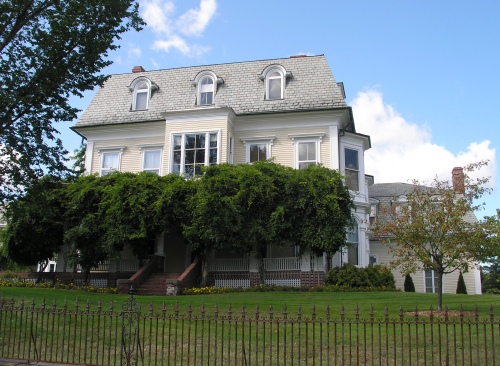
William Skinner, who left England for America at the age of nineteen in 1843, became a successful silk and saten manufacturer. The mills of Skinner’s company, the Unquomonk Silk Company in Williamsburg (where his employees lived in a community called Skinnerville), were destroyed when the Mill River Dam gave way on May 16, 1874. The Holyoke Water Power Company then offered Skinner a prime canal site, where he could rebuild his mill in Holyoke. They also offered him land to build a house and it was to there that he moved his home, called Wistariahurst, which he had built in 1868 and which had survived the flood. The house still stands at 238 Cabot Street in Holyoke. His company, called William Skinner and Sons after 1883, was continued by his sons after his death in 1902. It became the largest producer of satin linings in the world. The Skinner family were also great philantrophists: William Skinner supported various institutions in Holyoke and donated to Mount Holyoke and Vassar Colleges. His daughters, Belle and Katherine, founded the Skinner Coffee House to serve the needs of immigrants who worked in the mills and factories. The Skinner family sold the company in 1961. The house remained in the family until 1959, when Katharine Skinner Kilborne gave it to the city of Holyoke for cultural and educational purposes. It is open to the public for tours as the Wistariahurst Museum.

Posts navigation

Older posts
Newer posts
Privacy Policy

Categories

  • Architectural Style (943)
    • Art Deco (9)
    • Byzantine (3)
    • Colonial (177)
    • Colonial Revival (85)
    • Craftsman (6)
    • Egyptian Revival (1)
    • Federal (190)
    • Foursquare (6)
    • Gothic (67)
    • Greek Revival (100)
    • Italianate (82)
    • Mission Revival (2)
    • Mission/Spanish Colonial (1)
    • Modern (2)
    • Neoclassical (56)
    • Octagon (3)
    • Postmodern (1)
    • Queen Anne (46)
    • Renaissance Revival (26)
    • Romanesque Revival (53)
    • Second Empire (26)
    • Shingle Style (12)
    • Stick Style (13)
    • Tudor Revival (8)
    • Vernacular (49)
    • Victorian Eclectic (15)
  • Building Type (943)
    • Apartment Buildings (8)
    • Banks (18)
    • Churches (119)
    • Collegiate (32)
    • Commercial (102)
    • Hotels (16)
    • Houses (508)
    • Industrial (23)
    • Libraries (22)
    • Lighthouses (1)
    • Military (15)
    • Monuments (1)
    • Museums (12)
    • Organizations (39)
    • Outbuildings (17)
    • Public Buildings (50)
    • Schools (23)
    • Stations (5)
    • Synagogues (1)
    • Taverns (21)
    • Theaters (9)
  • Town (943)
    • Adams (11)
    • Agawam (4)
    • Amherst (50)
    • Boston (64)
    • Boylston (6)
    • Cambridge (30)
    • Clinton (21)
    • Concord (15)
    • Cummington (1)
    • Danvers (14)
    • Deerfield (31)
    • Gloucester (18)
    • Granville (10)
    • Great Barrington (2)
    • Hadley (9)
    • Hancock (15)
    • Harvard (32)
    • Holyoke (47)
    • Lenox (5)
    • Lexington (8)
    • Longmeadow (32)
    • Marblehead (40)
    • Marlborough (4)
    • Natick (22)
    • Newton (2)
    • Northampton (68)
    • Peabody (4)
    • Pittsfield (20)
    • Salem (110)
    • Saugus (4)
    • Sheffield (4)
    • South Hadley (8)
    • Southborough (8)
    • Southwick (4)
    • Springfield (67)
    • Stockbridge (19)
    • Stow (1)
    • Sturbridge (18)
    • Sudbury (7)
    • Waltham (11)
    • Watertown (1)
    • Wayland (8)
    • West Springfield (14)
    • Westfield (46)
    • Weston (2)
    • Worcester (26)
  • Uncategorized (1)

Recent Comments

  • Wilber Blackson on South Hadley
  • Tami Speiden on Stockbridge
  • DexGuru on Stockbridge

Tags

Alcott Amherst College Asher Benjamin Back Bay Baptist Beacon Hill Big E Black Heritage Trail bowfront Bulfinch Catholic Congregational Episcopal Freedom Trail Gambrel H.H. Richardson Harvard Hawthorne Historic Deerfield Isaac Damon lit Longfellow mansard Methodist Mount Holyoke Museum Museums NPS Old Sturbridge Village PEM Revolutionary War row houses saltbox Samuel McIntire Shakers Smith College SPNEA Springfield Armory Stephen C. Earle Storrowton Underground Railroad UU Washington William Fenno Pratt Witch Trials

Meta

  • Log in
  • Entries feed
  • Comments feed
  • WordPress.org
Proudly powered by WordPress | Theme: ShowMe by NEThemes.