Historic Buildings of Massachusetts

  • About
  • Index by Town
  • CT
  • About
  • Index by Town
  • CT

Tag: William Fenno Pratt

M. M. French House (1848)
by Dan/December 2, 2011/Greek Revival, Houses, Northampton

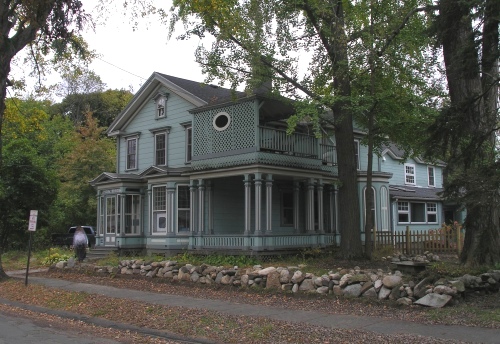
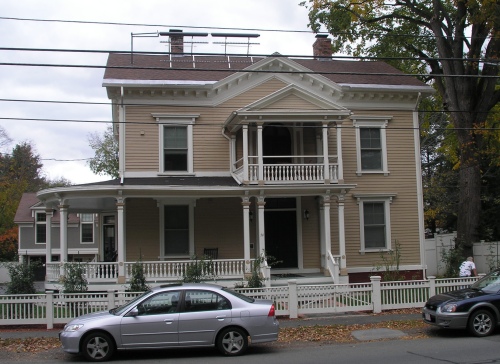
In 1847, Marvin Marcy French (1820-1896) was one of the first people to acquire a plot of land on the newly opened Pomeroy Terrace in Northampton. The original section of his house, 44 Pomeroy Terrace, was built in 1848. The house is architecturally notable for the extensive additions made to the structure for Mr. French in 1870 by architect William F. Pratt, who may or may not have designed the earlier part of the house. In an 1883-4 Directory, M.M. French is listed as a vice-president of the Northampton Institution for Savings.
74 Bridge Street, Northampton (1866)

by Dan/November 28, 2011/Houses, Italianate, Northampton

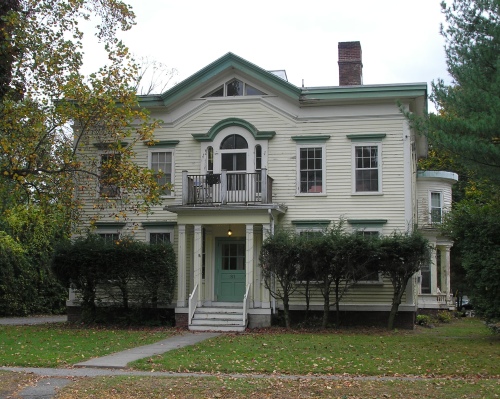
Designed by William F. Pratt, the house at 74 Bridge Street in Northampton was built in 1866 as the First Parish parsonage. It was later owned by the Shepard, Parsons and Damon families and was an inn. Today, it is the Historic College Inn of Northampton.

Stebbins-Lathrop House (1790)

by Dan/November 12, 2011November 11, 2011/Houses, Italianate, Northampton

The house at 81 Bridge Street in Northampton was built in 1790 by Asahel Wright and was sold to James Bull in 1809. It was later owned by a physician, Dr. Daniel Stebbins. Through his correspondence with missionaries in China, Dr. Stebbins was one of the earliest people in the area to import silkworm eggs in 1842. Stebbins had 12 acres of mulberry trees behind his home and he and his daughters fed the leaves to the worms. Dr. Stebbins brought a silk weaver from Lyons, France to weave his family’s silk. After Dr. Stebbins’ death in 1859, his daughter Clarissa resided in the house with her husband, Henry Lathrop. They hired the architect William F. Pratt to redesign the originally Federal-style house in the fashionable Italianate style, an altered appearance it maintains today.

Northampton City Hall (1850)

by Dan/November 10, 2011November 9, 2011/Gothic, Northampton, Public Buildings

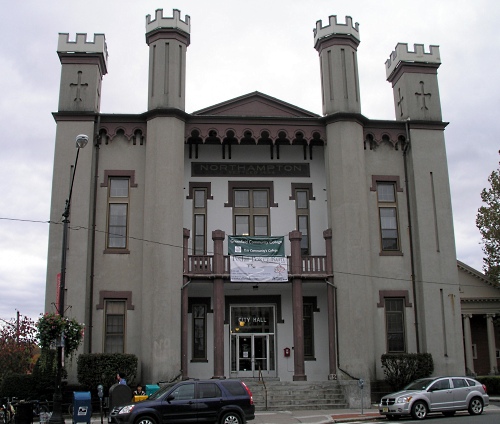
Northampton‘s distinctively Gothic City Hall was designed by William Fenno Pratt and was built in 1849-1850. Conceived as a novelty, the building was in danger of being torn down in 1923, but was saved when voters decided to remodel rather than completely replace it. One result of that remodeling was the loss of the building‘s second floor auditorium, which had hosted many famous speakers and entertainers over the years. Further restorations of City Hall occurred in 1985 and 1993.

Seth Hunt House (1859)

by Dan/October 26, 2011October 26, 2011/Gothic, Houses, Northampton

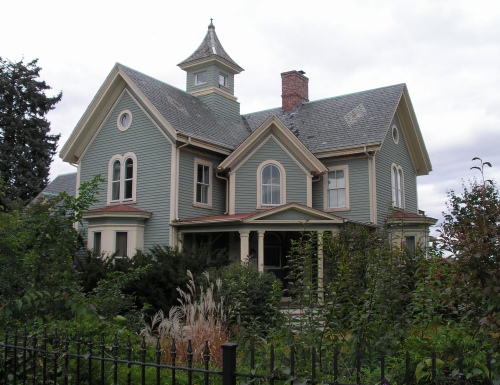
At 115 Bridge Street in Northampton is a Gothic Revival house designed by local architect William Fenno Pratt. It was built in 1859 for Seth Hunt, president of the Connecticut Valley Railroad.

Leonard M. Hills House (1864)

by Dan/August 5, 2011/Amherst, Houses, Italianate

Born in Ellington, Connecticut in 1803, Leonard Mariner Hills moved to Amherst in 1827. He ran a tavern and a dry goods store and eventually became very successful manufacturing palm leaf hats. He also became the first president of the First National Bank of Amherst in 1864. In the 1840s to 1860s, Hills built a complex of factories in Amherst. His son, Henry F. Hills, built a house off Main Street in 1863. Leonard decided to hire the same architect, William Fenno Pratt, to design his own Italian Villa home, built in 1863-1864 on the adjoining lot (35 Triangle Street). It is said that he ordered the house, which was called the Hedges, to be one foot larger than his son’s in every dimension. The Hills family owned the house until 1923, when a bequest of Mrs. Alice M. Hills left it to the Amherst Woman’s Club. It is now known as the Hills Memorial Club House.

The Evergreens (1856)

by Dan/July 29, 2011December 1, 2011/Amherst, Houses, Italianate

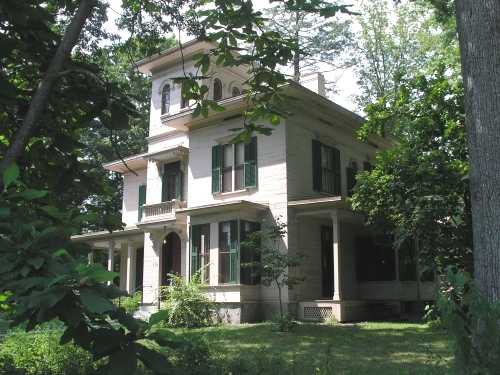
The Evergreens is a house in Amherst built in 1856 by Edward Dickinson for his his son, William Austin Dickinson, who had just married Susan Huntington Gilbert. Austin Dickinson was a lawyer and succeeded his father as treasurer of Amherst College, serving from 1874 until his death in 1895. He is also known for his longtime affair with Mabel Loomis Todd, who would edit early collections of poetry written by Austin’s sister, Emily Dickinson. The Italianate-style Evergreens, designed by Northampton architect William Fenno Pratt, was built next to the Dickinson Homestead, where Emily resided with her sister, Lavinia. The Evergreens became a social and cultural center in the town. After Austin and Sarah Dickinson died (the latter in 1913), the house was lived in and preserved by their daughter, Martha Dickinson Bianchi (died 1943), who left the house to her secretary, Alfred Leete Hampson, stipulating in her will that if Hampson and his family chose not to live in the house, it should be torn down. Hampson’s widow, Mary Landis Hampson, made arrangements in her own will to preserve the house under a trust for public use. Since 2003, it has been owned by Amherst College and, along with the Emily Dickinson Homestead, forms part of the Emily Dickinson Museum.

Posts navigation

Older posts
Newer posts
Privacy Policy

Categories

  • Architectural Style (943)
    • Art Deco (9)
    • Byzantine (3)
    • Colonial (177)
    • Colonial Revival (85)
    • Craftsman (6)
    • Egyptian Revival (1)
    • Federal (190)
    • Foursquare (6)
    • Gothic (67)
    • Greek Revival (100)
    • Italianate (82)
    • Mission Revival (2)
    • Mission/Spanish Colonial (1)
    • Modern (2)
    • Neoclassical (56)
    • Octagon (3)
    • Postmodern (1)
    • Queen Anne (46)
    • Renaissance Revival (26)
    • Romanesque Revival (53)
    • Second Empire (26)
    • Shingle Style (12)
    • Stick Style (13)
    • Tudor Revival (8)
    • Vernacular (49)
    • Victorian Eclectic (15)
  • Building Type (943)
    • Apartment Buildings (8)
    • Banks (18)
    • Churches (119)
    • Collegiate (32)
    • Commercial (102)
    • Hotels (16)
    • Houses (508)
    • Industrial (23)
    • Libraries (22)
    • Lighthouses (1)
    • Military (15)
    • Monuments (1)
    • Museums (12)
    • Organizations (39)
    • Outbuildings (17)
    • Public Buildings (50)
    • Schools (23)
    • Stations (5)
    • Synagogues (1)
    • Taverns (21)
    • Theaters (9)
  • Town (943)
    • Adams (11)
    • Agawam (4)
    • Amherst (50)
    • Boston (64)
    • Boylston (6)
    • Cambridge (30)
    • Clinton (21)
    • Concord (15)
    • Cummington (1)
    • Danvers (14)
    • Deerfield (31)
    • Gloucester (18)
    • Granville (10)
    • Great Barrington (2)
    • Hadley (9)
    • Hancock (15)
    • Harvard (32)
    • Holyoke (47)
    • Lenox (5)
    • Lexington (8)
    • Longmeadow (32)
    • Marblehead (40)
    • Marlborough (4)
    • Natick (22)
    • Newton (2)
    • Northampton (68)
    • Peabody (4)
    • Pittsfield (20)
    • Salem (110)
    • Saugus (4)
    • Sheffield (4)
    • South Hadley (8)
    • Southborough (8)
    • Southwick (4)
    • Springfield (67)
    • Stockbridge (19)
    • Stow (1)
    • Sturbridge (18)
    • Sudbury (7)
    • Waltham (11)
    • Watertown (1)
    • Wayland (8)
    • West Springfield (14)
    • Westfield (46)
    • Weston (2)
    • Worcester (26)
  • Uncategorized (1)

Recent Comments

  • Wilber Blackson on South Hadley
  • Tami Speiden on Stockbridge
  • DexGuru on Stockbridge

Tags

Alcott Amherst College Asher Benjamin Back Bay Baptist Beacon Hill Big E Black Heritage Trail bowfront Bulfinch Catholic Congregational Episcopal Freedom Trail Gambrel H.H. Richardson Harvard Hawthorne Historic Deerfield Isaac Damon lit Longfellow mansard Methodist Mount Holyoke Museum Museums NPS Old Sturbridge Village PEM Revolutionary War row houses saltbox Samuel McIntire Shakers Smith College SPNEA Springfield Armory Stephen C. Earle Storrowton Underground Railroad UU Washington William Fenno Pratt Witch Trials

Meta

  • Log in
  • Entries feed
  • Comments feed
  • WordPress.org
Proudly powered by WordPress | Theme: ShowMe by NEThemes.