Historic Buildings of Massachusetts

  • About
  • Index by Town
  • CT
  • About
  • Index by Town
  • CT

Category: Colonial

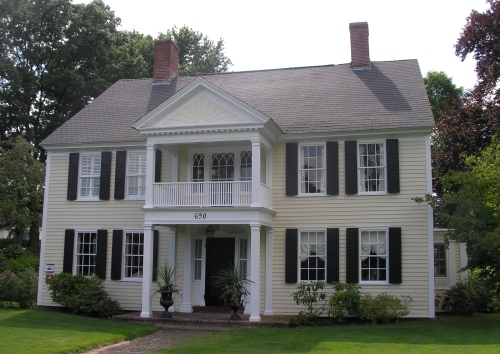
Ebeneezer Bliss House (1720)
by Dan/February 26, 2010September 17, 2016/Colonial, Houses, Longmeadow

Ebenezer Bliss built his house in Longmeadow in 1720, the year after his marriage to Sarah Colton. It was next owned by his son, Ebeneezer, and then by his grandson, Gad Bliss. The house was much expanded in the mid-nineteenth century, with the newer rooms being in the front, facing Longmeadow Green.
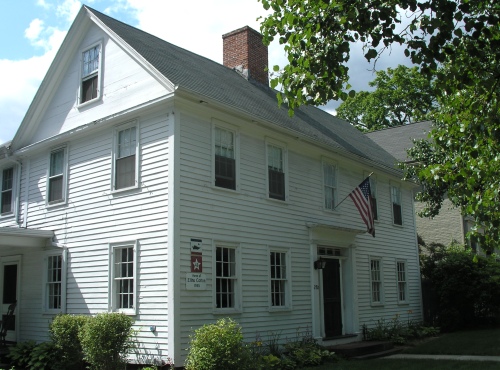
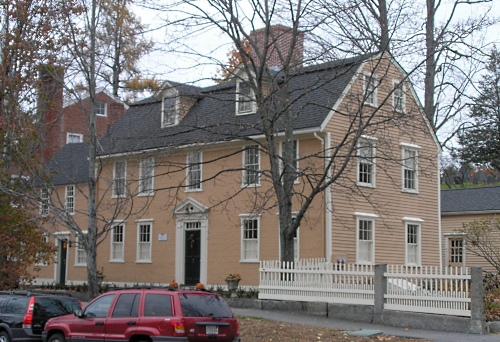
Jacob Colton House (1765)

by Dan/February 25, 2010September 17, 2016/Colonial, Houses, Longmeadow

Elihu Colton was a Yale educated lawyer who had served as a soldier in the Revolutionary War. He was a delegate to the Massachusetts Convention of 1788, which ratified the U.S. Constitution. His house in Longmeadow was built in 1765, possibly for Henry or Jacob Colton. It is known as the Jacob Colton House. Two gravestones were discovered along the south property line in the 1960s, one marked “N. C.” and the other “Ebeneezer Colton.”

Thomas Pellet House (1670)

by Dan/January 30, 2010January 16, 2020/Colonial, Concord, Houses

The earliest sections of the Thomas Pellet House, off Monument Square and across from the First Parish Church in Concord, date to 1670. The house has had a number of additions, much of the present structure being completed by early in the eighteenth century. The frame house is notable for its stuccoed facade, intended to imitate stonework and most likely added when Benjamin Barrett owned the house in the 1730s. The house was later the home of Dr. Ezekiel Brown, a surgeon in the Revolutionary War. In the nineteenth century, the house became known as the Deacon Tolman or Old Tolman House, after owner Elisha Tolman, who had a shoe shop next door. Another owner was Thomas Heald, a lawyer and member of the Concord Social Circle. Harriett Lothrop, who wrote the Five Little Peppers stories under the name Margaret Sidney, lived in the famous Wayside in Concord and saved a number of historic houses in town in the later nineteenth century, including the Old Tolman House. In 1909, the Old Concord Chapter of the Daughters of the American Revolution bought the house, which they furnished and maintained, sometimes renting its rooms. They had a public tea room in the house in the 1910s and in 1929 they built an annex to use as a meeting hall. The house was sold in 1951 and the furniture was auctioned. The exterior of the house has recently been renovated, with colonial era style plank frame windows and restored exterior horsehair and wood lathe stucco plaster.

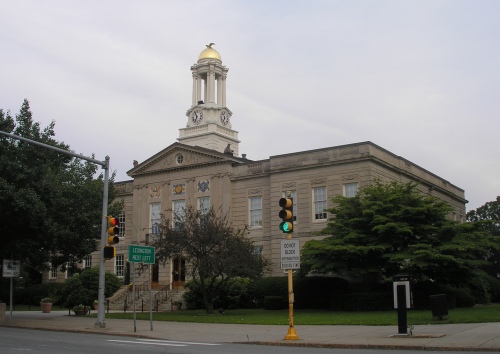
Waltham City Hall (1926)

by Dan/December 8, 2009October 25, 2012/Colonial, Public Buildings, Waltham

Waltham City Hall

The Colonial Revival-style City Hall of Waltham, designed by Kilham, Hopkins and Greeling, was built in 1926 and opened and dedicated in 1927. It stands on the old site of Rumford Hall, a building constructed a century earlier, in 1827, to house the Rumford Institute. Founded in 1826, the Institute was a lyceum, with lectures and classes in the arts and sciences for the female mill workers at the Boston Manufacturing Company, which built the Hall. An early instructor at the Institute was the Unitarian minister and educator, Bernard Whitman. The institute also established Waltham’s first circulating library. In 1854, the Rumford Building was sold to the Town of Waltham for use as Town Hall, eventually being replaced by the current structure. Waltham City Hall has a limestone facade.

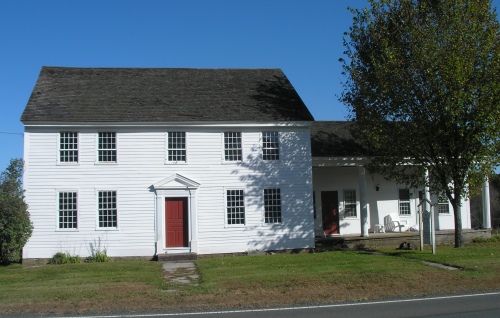
Joseph Moore House (1751)

by Dan/October 20, 2009January 20, 2020/Colonial, Houses, Southwick

Moore House

The Joseph Moore House is located in an area known as the Southwick Jog, a section of the town of Southwick that extends further south than the rest of the state border with Connecticut. The house was built in 1751 by Joseph Moore and was lived in by his son, Roger Moore (1752-1838), for his entire life. Owing to the many boundary changes which led to the creation of the Southwick Jog (which is surrounded by Connecticut on three sides), Roger Moore lived in two states, three counties, and four towns, without ever moving! The house has been restored as a museum by the Southwick Historical Society.

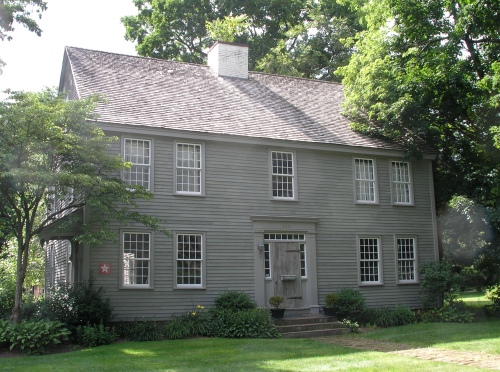
Booth-Allen House (1795)

by Dan/September 9, 2009September 17, 2016/Colonial, Houses, Longmeadow

Booth-Allen House

The Booth-Allen House, on Longmeadow Green, was built in 1795 by David Booth. The Booth family lived there for almost a century thereafter. In 1896, John Allen moved the house to its current location, which is further back from the street and a few feet north of where it had stood before.

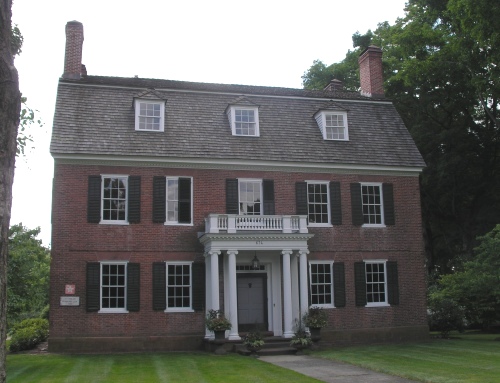
“Old” Nathaniel Ely House (1780)

by Dan/September 9, 2009September 17, 2016/Colonial, Houses, Longmeadow

Nathaniel Ely House

The late Georgian brick house of Deacon Nathaniel Ely is at 674 Longmeadow Street in Longmeadow. It was built in 1780 (originally to house two families, father and son) and is referred to as the “Old” Nathaniel Ely House to differentiate it from the “New” Nathaniel Ely House nearby, built in 1856. The house’s projecting portico is probably a later Colonial Revival addition. Deacon Ely was a captain in the Revolutionary War and Tory prisoners, on their way from Boston to New York, were kept in his house during the war. Dacon Ely’s fourth wife was a widow, Martha Williams Raynolds, daughter of Longmeadow’s minister, Rev. Stephen Williams. As children, Rev. Williams and his sister Eunice had been abducted in the 1704 Raid on Deerfield. Stephen returned to Massachusetts with their father, Rev. John Williams, but Eunice remained in Canada, marrying a Mohawk man and converting to Roman Catholicism. In 1800, Thomas Thorakwaneken Williams, Eunice’s grandson, arrived in Longmeadow with his two sons, Eleazer and John, who were to stay with the Ely’s while they were educated at a local school. John later returned to Canada, but Eleazer Williams remained and attempted to become a Congregational minister, although he faced resistance from relatives due to his Indian heritage. He eventually became a missionary and later claimed to be the Lost Dauphin, son of the executed King Louis XVI and Queen Marie Antoinette!

Posts navigation

Older posts
Newer posts
Privacy Policy

Categories

  • Architectural Style (943)
    • Art Deco (9)
    • Byzantine (3)
    • Colonial (177)
    • Colonial Revival (85)
    • Craftsman (6)
    • Egyptian Revival (1)
    • Federal (190)
    • Foursquare (6)
    • Gothic (67)
    • Greek Revival (100)
    • Italianate (82)
    • Mission Revival (2)
    • Mission/Spanish Colonial (1)
    • Modern (2)
    • Neoclassical (56)
    • Octagon (3)
    • Postmodern (1)
    • Queen Anne (46)
    • Renaissance Revival (26)
    • Romanesque Revival (53)
    • Second Empire (26)
    • Shingle Style (12)
    • Stick Style (13)
    • Tudor Revival (8)
    • Vernacular (49)
    • Victorian Eclectic (15)
  • Building Type (943)
    • Apartment Buildings (8)
    • Banks (18)
    • Churches (119)
    • Collegiate (32)
    • Commercial (102)
    • Hotels (16)
    • Houses (508)
    • Industrial (23)
    • Libraries (22)
    • Lighthouses (1)
    • Military (15)
    • Monuments (1)
    • Museums (12)
    • Organizations (39)
    • Outbuildings (17)
    • Public Buildings (50)
    • Schools (23)
    • Stations (5)
    • Synagogues (1)
    • Taverns (21)
    • Theaters (9)
  • Town (943)
    • Adams (11)
    • Agawam (4)
    • Amherst (50)
    • Boston (64)
    • Boylston (6)
    • Cambridge (30)
    • Clinton (21)
    • Concord (15)
    • Cummington (1)
    • Danvers (14)
    • Deerfield (31)
    • Gloucester (18)
    • Granville (10)
    • Great Barrington (2)
    • Hadley (9)
    • Hancock (15)
    • Harvard (32)
    • Holyoke (47)
    • Lenox (5)
    • Lexington (8)
    • Longmeadow (32)
    • Marblehead (40)
    • Marlborough (4)
    • Natick (22)
    • Newton (2)
    • Northampton (68)
    • Peabody (4)
    • Pittsfield (20)
    • Salem (110)
    • Saugus (4)
    • Sheffield (4)
    • South Hadley (8)
    • Southborough (8)
    • Southwick (4)
    • Springfield (67)
    • Stockbridge (19)
    • Stow (1)
    • Sturbridge (18)
    • Sudbury (7)
    • Waltham (11)
    • Watertown (1)
    • Wayland (8)
    • West Springfield (14)
    • Westfield (46)
    • Weston (2)
    • Worcester (26)
  • Uncategorized (1)

Recent Comments

  • Wilber Blackson on South Hadley
  • Tami Speiden on Stockbridge
  • DexGuru on Stockbridge

Tags

Alcott Amherst College Asher Benjamin Back Bay Baptist Beacon Hill Big E Black Heritage Trail bowfront Bulfinch Catholic Congregational Episcopal Freedom Trail Gambrel H.H. Richardson Harvard Hawthorne Historic Deerfield Isaac Damon lit Longfellow mansard Methodist Mount Holyoke Museum Museums NPS Old Sturbridge Village PEM Revolutionary War row houses saltbox Samuel McIntire Shakers Smith College SPNEA Springfield Armory Stephen C. Earle Storrowton Underground Railroad UU Washington William Fenno Pratt Witch Trials

Meta

  • Log in
  • Entries feed
  • Comments feed
  • WordPress.org
Proudly powered by WordPress | Theme: ShowMe by NEThemes.