Historic Buildings of Massachusetts

  • About
  • Index by Town
  • CT
  • About
  • Index by Town
  • CT

Category: Houses

Gedney House (1665)

by Dan/October 29, 2010January 25, 2020/Colonial, Houses, Salem

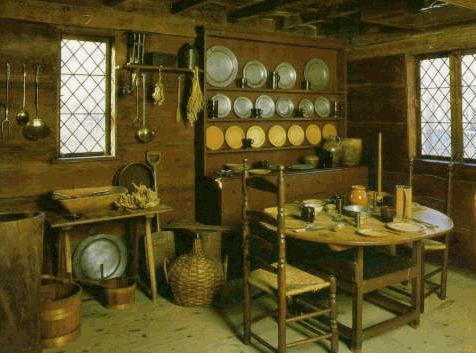
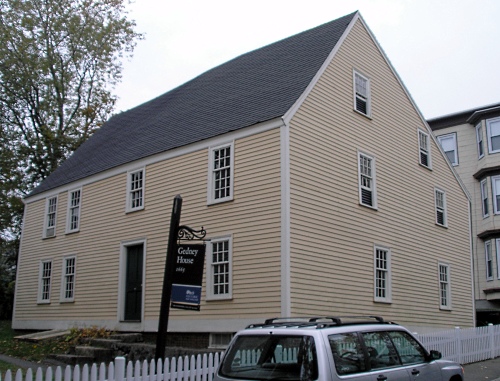
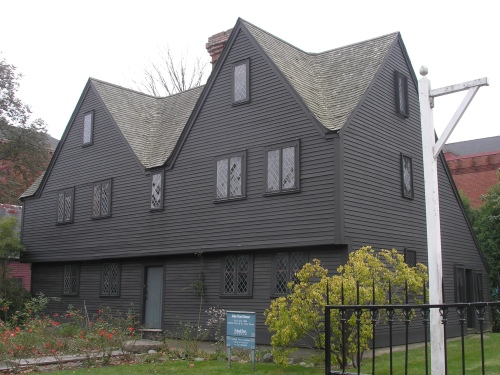
Gedney House in Salem is believed to have been built as early as 1665. As originally built by shipwright Eleazer Gedney, the house had two stories with a gabled attic to the left and a parlor with lean-to roof to the right. Gedney, who was married to the sister of John Turner, builder of the House of Seven Gables, passed the house on to his descendants, who made alterations in 1712. The Gedney family later sold the home to Benjamin Cox, who added two town house ells to the building around 1800, thus converting it to a multi-family residence. In later years, the house served as a boarding house and tenement in what became an Italian-American neighborhood. In 1967, when the house was being prepared for demolition, it was acquired by Historic New England. Now an unfurnished house museum, the original wood structure of the building’s interior is left exposed to display to visitors its original seventeenth-century construction.
Boardman House (1687)

by Dan/October 28, 2010January 16, 2020/Colonial, Houses, Saugus

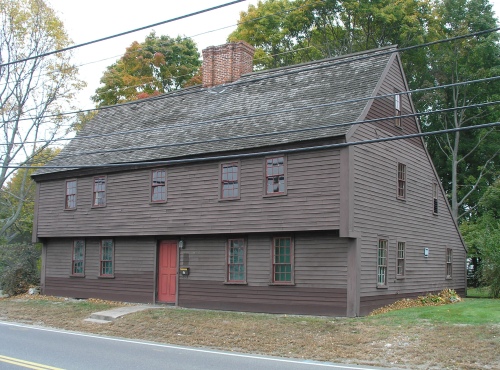
The Boardman House in Saugus is believed to have been built around 1687 (or as late as 1692) by William Boardman, a Boston-trained joiner. The house is sometimes referred to as the Scotch House because it was later confused with an earlier building on the site that once housed indentured Scottish prisoners who worked at the Saugus Iron Works. Boardman may have occupied that building before constructing the current home. A lean-to was added to the house by 1696, giving the structure a saltbox profile. Around 1725, William Boardman, Jr. made changes to the house, including replacing the original casement windows with sash windows. At some point, the building’s original two front gables were also removed. The house remained in the Boardman family until 1911, when it faced danger from modern development. In 1914, it was acquired by the Society for the Preservation of New England Antiquities (now Historic New England). While some necessary repairs were made, SPNEA founder William Sumner Appleton left the house in unspoiled condition to preserve its seventeenth-century structural fabric.

John Ward House (1684)

by Dan/October 27, 2010January 25, 2020/Colonial, Houses, Salem

The John Ward House in Salem is a First Period house built in 1684. John Ward was a currier (leather finisher), who is believed to have fled the plague in England around 1660. The house originally stood at 38 St. Peter Street and consisted of one room over one room. At some point around the time of Ward’s death in 1732, the house was expanded with a matching set of rooms. The house went through various changes over the years, with the original front gables being removed. The building‘s eighteenth-century ell was once used for a cent shop and for a time, Sarah W. Symonds, a Salem artist, had her studio and gallery in the home. In 1910, the house was acquired by the Essex Institute and moved to its current location on Brown Street. It was restored under the direction of preservationist George Francis Dow, with period rooms containing seventeenth-century furnishings. Today, the house is a museum owned by the Peabody Essex Museum.

Charles Sumner House (1805)

by Dan/October 17, 2010January 19, 2020/Boston, Federal, Houses

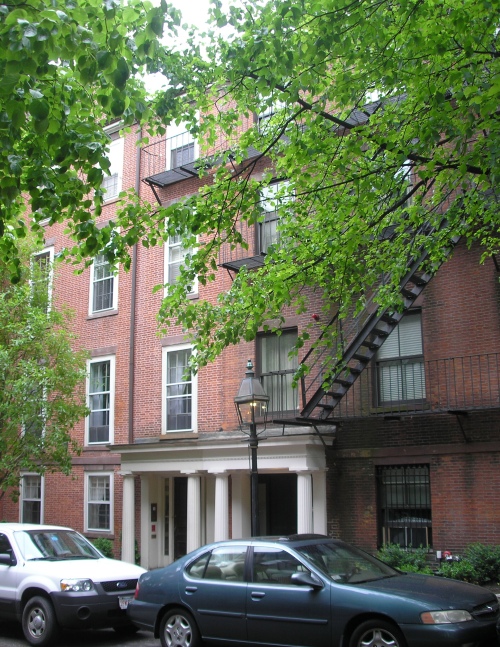
At 20 Hancock Street on Beacon Hill in Boston is the home once occupied by Senator Charles Sumner. It was built in 1805 by Ebenezer Farley and was purchased by Sumner’s father in 1830. Charles Sumner was a fiery opponent of slavery and the victim of a famous caning, delivered by Representative Preston Brooks on the floor of the Senate on May 22, 1856. After the Civil War, Sumner was a leader of the Radical Republicans. He lived in the house until 1867 and was possibly the one who added the Greek Revival portico that links nos. 20 and 22 Beacon Hill.

Dr. Austin Scott House (1810)

by Dan/October 1, 2010January 18, 2020/Federal, Granville, Houses

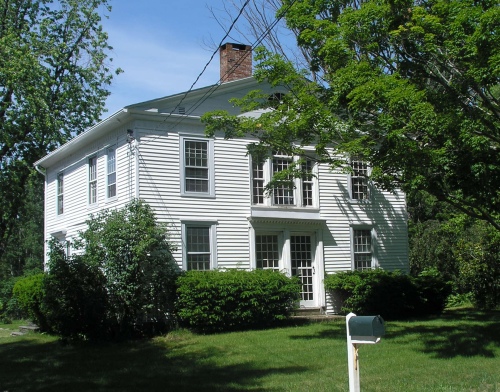
Built around 1810, the home of James Cooley in Granville Center is a Federal-style home with a double leaf front door below a Palladian window. The house was later the summer home of Dr. Austin Scott, president of Rutgers University from 1891 to 1906. He died in Granville in 1922 and according to Rutgers Alumni Monthly (Vol. 2, No. 1):

Dr. Scott’s funeral service was held at Granville Center, Massachusetts. For years he had his summer home there, the home of his grandfather, with whom he spent much of his boyhood. The service was in the village Congregational Church, and the neighbors gathered to pay their tribute of great respect and friendship.

Joel Root House (1816)

by Dan/September 29, 2010January 18, 2020/Federal, Granville, Houses

In the Spelman Genealogy (1910), Fannie Cooley Williams Barbour writes of Elizabeth Lucins Spelman Brown:

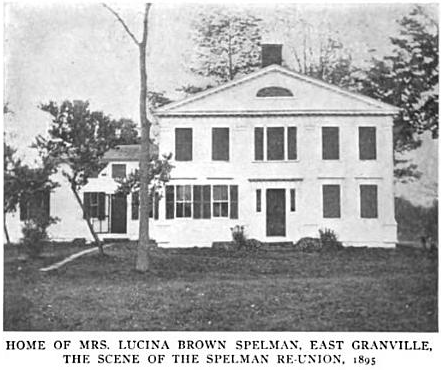
Mrs. Brown spent much of her girlhood in the “Old Spelman Red House,” and received the names of her two grandmothers, Hayes and Kent. Soon after her marriage, her husband purchased the old Joel Root homestead on the hill at East Granville, near the church. The house is built in the Colonial style, and the door and entrance is much admired. Mrs. Brown has lived in it for fifty years, and still continues to reside there. […] Mrs. Brown was a singer, taking part in the Granville Jubilee of 1845 and later in the Jubilee of 1895, having retained her vocal talent for the intervening years. She was prominent in the affairs of the schools of Granville, and did much to aid them. At the time of the Jubilee of 1895 a reunion of the Spelman family took place at her house, and a large gathering of descendants was present, coming from all parts of the United States.

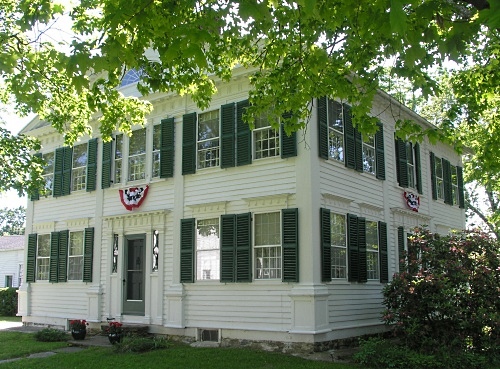
The house, on Main Road in Granville Center, was built around 1816 by Joel Root, who married Sarah Ensign in 1803 and then, after her death, married her sister Clarissa Ensign in 1811. According to James Pierce Root in Root Genealogical Records (1870):

He commenced business in early life, and was a successful merchant for more than forty years in his native town, where, by honesty, integrity, and faithful application to business, he accumulated a property large for those days and the place in which he lived. He was postmaster for a series of years, and during his whole life had the confidence and respect of his fellow townsmen, being frequently honored with the highest offices within their gift. Mrs. C. Root has resided in Springfield, Mass., for the past few years, and though nearly eighty, has never used spectacles, and reads with ease the finest print.

At an 1850 double-wedding in Springfield, Root’s daughter Amorette married Col. Horatio N. Case of Springfield and another daughter, Sarah, married Calvin Spencer of Hartford.

Joseph Burnett House (1850)

by Dan/July 22, 2010January 21, 2020/Houses, Second Empire, Southborough

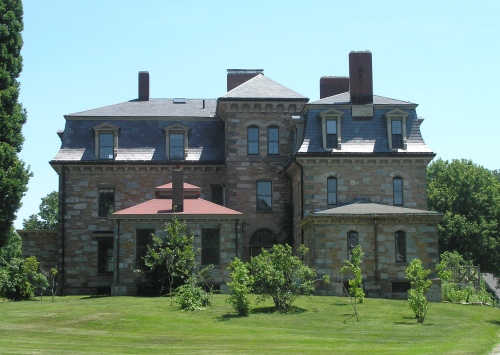
Joseph Burnett (1820-1894) was born in Southborough and studied chemistry in Worcester. In 1837, he moved to Boston, working for, and eventually partnering (in 1845) with, Theodore Metcalf. They had a chemist shop on Tremont Row (now Tremont Street). A woman’s request for vanilla in 1847 led him to develop a premium vanilla extract, which previously had to be imported from France. He eventually established his own business as a manufacturing chemist, Joseph Burnett and Company. Back in Southborough, Burnett purchased land and established the Deerfoot Farms Company, originally a dairy farm, which later also became known for its sausages. Burnett also established an estate, off Main Street in Southborough, where he built a stone mansion. Here he lived with his wife, Josephine Cutter Burnett, and twelve children. Constructed in 1849-1850, the house was updated in 1860. The house was sold out of the family in 1947.

Posts navigation

Older posts
Newer posts
Privacy Policy

Categories

  • Architectural Style (943)
    • Art Deco (9)
    • Byzantine (3)
    • Colonial (177)
    • Colonial Revival (85)
    • Craftsman (6)
    • Egyptian Revival (1)
    • Federal (190)
    • Foursquare (6)
    • Gothic (67)
    • Greek Revival (100)
    • Italianate (82)
    • Mission Revival (2)
    • Mission/Spanish Colonial (1)
    • Modern (2)
    • Neoclassical (56)
    • Octagon (3)
    • Postmodern (1)
    • Queen Anne (46)
    • Renaissance Revival (26)
    • Romanesque Revival (53)
    • Second Empire (26)
    • Shingle Style (12)
    • Stick Style (13)
    • Tudor Revival (8)
    • Vernacular (49)
    • Victorian Eclectic (15)
  • Building Type (943)
    • Apartment Buildings (8)
    • Banks (18)
    • Churches (119)
    • Collegiate (32)
    • Commercial (102)
    • Hotels (16)
    • Houses (508)
    • Industrial (23)
    • Libraries (22)
    • Lighthouses (1)
    • Military (15)
    • Monuments (1)
    • Museums (12)
    • Organizations (39)
    • Outbuildings (17)
    • Public Buildings (50)
    • Schools (23)
    • Stations (5)
    • Synagogues (1)
    • Taverns (21)
    • Theaters (9)
  • Town (943)
    • Adams (11)
    • Agawam (4)
    • Amherst (50)
    • Boston (64)
    • Boylston (6)
    • Cambridge (30)
    • Clinton (21)
    • Concord (15)
    • Cummington (1)
    • Danvers (14)
    • Deerfield (31)
    • Gloucester (18)
    • Granville (10)
    • Great Barrington (2)
    • Hadley (9)
    • Hancock (15)
    • Harvard (32)
    • Holyoke (47)
    • Lenox (5)
    • Lexington (8)
    • Longmeadow (32)
    • Marblehead (40)
    • Marlborough (4)
    • Natick (22)
    • Newton (2)
    • Northampton (68)
    • Peabody (4)
    • Pittsfield (20)
    • Salem (110)
    • Saugus (4)
    • Sheffield (4)
    • South Hadley (8)
    • Southborough (8)
    • Southwick (4)
    • Springfield (67)
    • Stockbridge (19)
    • Stow (1)
    • Sturbridge (18)
    • Sudbury (7)
    • Waltham (11)
    • Watertown (1)
    • Wayland (8)
    • West Springfield (14)
    • Westfield (46)
    • Weston (2)
    • Worcester (26)
  • Uncategorized (1)

Recent Comments

  • Wilber Blackson on South Hadley
  • Tami Speiden on Stockbridge
  • DexGuru on Stockbridge

Tags

Alcott Amherst College Asher Benjamin Back Bay Baptist Beacon Hill Big E Black Heritage Trail bowfront Bulfinch Catholic Congregational Episcopal Freedom Trail Gambrel H.H. Richardson Harvard Hawthorne Historic Deerfield Isaac Damon lit Longfellow mansard Methodist Mount Holyoke Museum Museums NPS Old Sturbridge Village PEM Revolutionary War row houses saltbox Samuel McIntire Shakers Smith College SPNEA Springfield Armory Stephen C. Earle Storrowton Underground Railroad UU Washington William Fenno Pratt Witch Trials

Meta

  • Log in
  • Entries feed
  • Comments feed
  • WordPress.org
Proudly powered by WordPress | Theme: ShowMe by NEThemes.