Historic Buildings of Massachusetts

  • About
  • Index by Town
  • CT
  • About
  • Index by Town
  • CT

Category: Houses

Isaac Mansfield House (1721)
by Dan/December 30, 2010January 22, 2020/Colonial, Houses, Marblehead

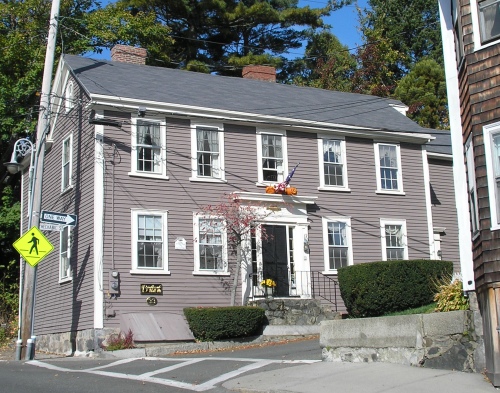
Isaac Mansfield was a joiner who built his home in Marblehead in 1721. He may be the same person as Capt. Isaac Mansfield (born 1695 and died 1760) [there was also an Isaac Mansfield, Esq., born in 1722, and another Capt. Isaac Mansfield, born in 1750]. The house was rebuilt in 1810 by housewrights John & Eben Harris. Built on Mechanic Street, which was then a cow path leading to Brimblecomb Hill, the house is now the Brimblecomb Hill Bed & Breakfast.
Amos and Solomon Towne House (1804)

by Dan/December 29, 2010January 24, 2020/Federal, Houses, Salem

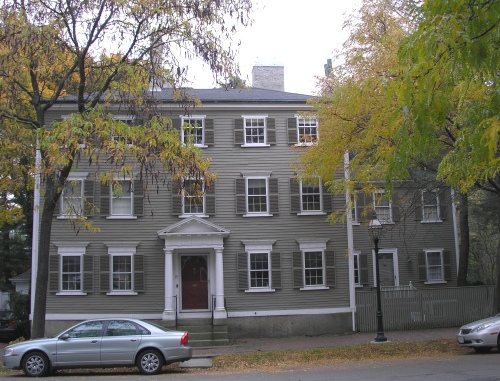
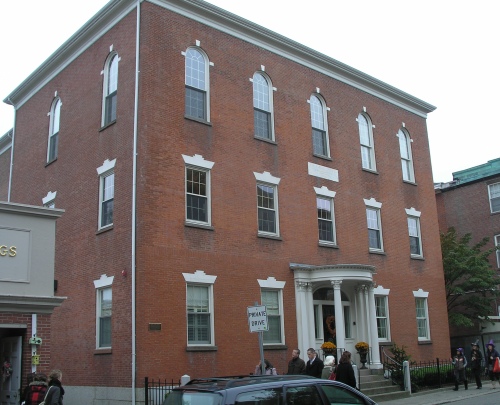
One of the earliest Federal-style mansions on Chestnut Street in Salem was built in 1804 for two brothers, a schoolmaster and a ship-master, Amos and Solomon Towne. Notable for its fine entrance porch, the house was jointly owned until Amos sold his half in 1807. Solomon sold the house to merchant James King in 1821. While Amos still occupied the house, there was “a school for misses” held there where Sarah Gould taught “reading, English, grammar, geography, embroidery, tambouring, needlework in its various branches, drawing, painting and paper fancy work.” The house has been expanded on the sides and to the rear by later owners.

Gideon Tucker House (1809)

by Dan/December 24, 2010January 24, 2020/Federal, Houses, Salem

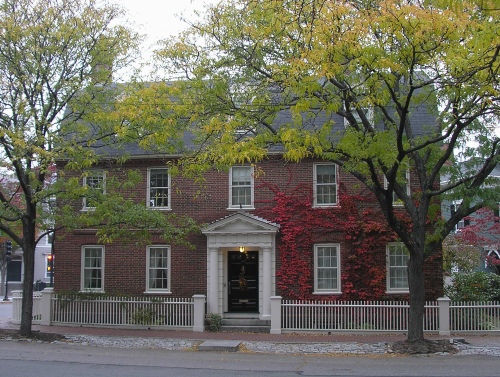
The Gideon Tucker House, also known as the Tucker-Rice House, is at 129 Essex Street in Salem. It was built in 1808-1809 for Gideon Tucker who, according to Old Time Ships of Salem (1917):

was born March 7, 1778, and built and occupied the house on Essex street opposite the Essex Institute. He was clerk for Joseph Peabody and afterwards a partner in that noted shipping firm, which he left to establish a business of his own. He died February 18, 1861. “A venerable man of exact habits and strict integrity.”

Tucker’s house, designed by Samuel McIntire, once looked very similar to the McIntire-designed Gardner-Pingree House across the street, but the Tucker House was significantly altered in 1910. As described in Cousins and Riley’s Colonial Architecture of Salem (1919):

Because of their spaciousness and large number of rooms, the three-story square houses of brick built during the early nineteenth century lend themselves admirably to adaptation as semi-public institutions, and several splendid old mansions have been so utilized. Thus in 1896 the Father Mathew Catholic Total Abstinence Society, organized in 1875, purchased the Tucker-Rice house at Number 129 Essex Street for its headquarters, and considerably remodeled it. […] Much of the handsome interior wood trim remains, but the splendid elliptical porch, one of the best proportioned in Salem, was removed to the garden of the Essex lnstitute for preservation, where it may now be seen with a contemporary three-piece door from the Rogers house on Essex Street and glasswork of attractive pattern.

In more recent times, the house has been converted for use as condominiums.

Pickering House (1651)

by Dan/December 23, 2010January 24, 2020/Colonial, Gothic, Houses, Salem

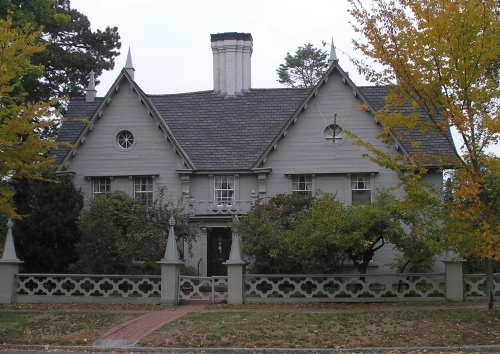
One of Salem‘s most interesting buildings is the Pickering House at 18 Broad Street, which is the oldest house in the United States continuously occupied by one family. The earliest section, on the east, was erected by carpenter John Pickering, Sr., around 1651. The house was later expanded to the west in 1671 by his son, John Pickering II, and in 1751, Deacon Timothy Pickering raised the rear lean-to to a full two stories. A two-story ell was added in 1904. The front, with the new addition of two cross gables, was adapted to the Gothic Revival style in 1841. The fence also dates to this period. The house‘s most prominent resident was Timothy Pickering, the arch-Federalist politician (serving as a cabinet member, Senator and US Representative), who had been an aide to Washington during the Revolutionary War. Boston architect Gordon Robb, who also restored the Witch House in Salem, restored the interior of the Pickering House in 1948 and it was opened to the public in 1951 by the nonprofit Pickering Foundation.

Smith-Crosby-Endicott House (1789)

by Dan/December 22, 2010January 24, 2020/Federal, Houses, Salem

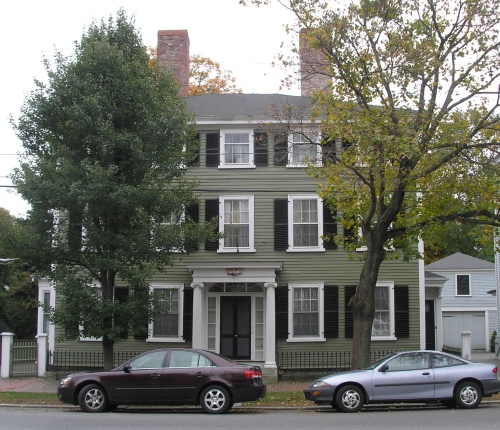
The house at 359 Essex Street in Salem was built in 1788-1789 by Benjamin Smith and Capt. Nicholas Crosby. They later divided their property and Crosby built his own house next door. From 1815 to the 1880s, the Smith-Crosby-Endicott House was owned by Capt. Samuel Endicott and his descendants. The Greek Revival-style entrance to this Federal-style house is a later addition.

Francis A. Seamans House (1909)

by Dan/December 20, 2010January 24, 2020/Colonial Revival, Houses, Salem

The house at 48 Chestnut Street in Salem was built in 1909 for Caroline O. Emmerton, the philanthropist who had the year before purchased the House of the Seven Gables and would oversee its restoration as a museum. Designed by architect William G. Rantoul and modeled on the Derby House in Salem, the house on Chestnut Street was quickly sold to Francis A. Seamans, who lived there for over twenty years.

Rebecca Nurse Homestead (1678)

by Dan/December 17, 2010January 18, 2020/Colonial, Danvers, Houses

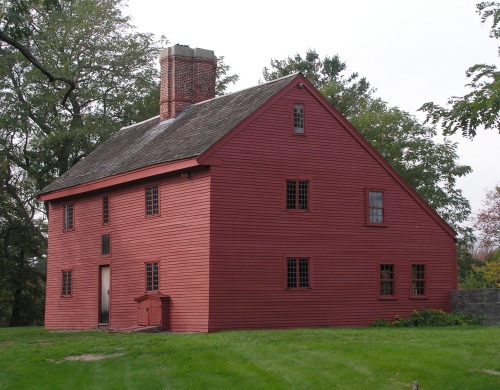
Located on a proprty of 25 acres of fields, pasture and woods at 149 Pine Street in Danvers is the Rebecca Nurse Homestead. The house was mostly likely built in 1678, when Francis Nurse, a skilled maker of wooden household items, began renting the property from owner James Allen. Nurse would eventually purchase the house, where he lived with his wife Rebecca and eight children. In 1692, during the Salem Witch Trials, the 71-year-old Rebecca Nurse was accused of practicing witchcraft. Initially found not guilty at her trial, her young accusers went into convulsive fits which led the jury to return with a guilty verdict. Rebecca Nurse was hanged and her family secretly buried her on the Homestead land. In 1885, the family dedicated a granite memorial in her honor in the Nurse family graveyard. The monument is inscribed with a poem by John Greenleaf Whittier. Francis Nurse died in 1695 and the Homestead remained in the Nurse family into the eighteenth century. Rebecca’s great-grandson, Francis, lived in the house and, as a sergeant in the Danvers Alarm Company, responded to the Lexington Alarm in 1775. The Homestead was owned by the Putnam family from 1784 to 1908. Purchased and restored by the Rebecca Nurse Memorial Asociation, the property was given to the Society for the Preservation of New England Antiquities in 1926 and, since 1981, has been a museum owned by the Danvers Alarm List Company.

Posts navigation

Older posts
Newer posts
Privacy Policy

Categories

  • Architectural Style (943)
    • Art Deco (9)
    • Byzantine (3)
    • Colonial (177)
    • Colonial Revival (85)
    • Craftsman (6)
    • Egyptian Revival (1)
    • Federal (190)
    • Foursquare (6)
    • Gothic (67)
    • Greek Revival (100)
    • Italianate (82)
    • Mission Revival (2)
    • Mission/Spanish Colonial (1)
    • Modern (2)
    • Neoclassical (56)
    • Octagon (3)
    • Postmodern (1)
    • Queen Anne (46)
    • Renaissance Revival (26)
    • Romanesque Revival (53)
    • Second Empire (26)
    • Shingle Style (12)
    • Stick Style (13)
    • Tudor Revival (8)
    • Vernacular (49)
    • Victorian Eclectic (15)
  • Building Type (943)
    • Apartment Buildings (8)
    • Banks (18)
    • Churches (119)
    • Collegiate (32)
    • Commercial (102)
    • Hotels (16)
    • Houses (508)
    • Industrial (23)
    • Libraries (22)
    • Lighthouses (1)
    • Military (15)
    • Monuments (1)
    • Museums (12)
    • Organizations (39)
    • Outbuildings (17)
    • Public Buildings (50)
    • Schools (23)
    • Stations (5)
    • Synagogues (1)
    • Taverns (21)
    • Theaters (9)
  • Town (943)
    • Adams (11)
    • Agawam (4)
    • Amherst (50)
    • Boston (64)
    • Boylston (6)
    • Cambridge (30)
    • Clinton (21)
    • Concord (15)
    • Cummington (1)
    • Danvers (14)
    • Deerfield (31)
    • Gloucester (18)
    • Granville (10)
    • Great Barrington (2)
    • Hadley (9)
    • Hancock (15)
    • Harvard (32)
    • Holyoke (47)
    • Lenox (5)
    • Lexington (8)
    • Longmeadow (32)
    • Marblehead (40)
    • Marlborough (4)
    • Natick (22)
    • Newton (2)
    • Northampton (68)
    • Peabody (4)
    • Pittsfield (20)
    • Salem (110)
    • Saugus (4)
    • Sheffield (4)
    • South Hadley (8)
    • Southborough (8)
    • Southwick (4)
    • Springfield (67)
    • Stockbridge (19)
    • Stow (1)
    • Sturbridge (18)
    • Sudbury (7)
    • Waltham (11)
    • Watertown (1)
    • Wayland (8)
    • West Springfield (14)
    • Westfield (46)
    • Weston (2)
    • Worcester (26)
  • Uncategorized (1)

Recent Comments

  • Wilber Blackson on South Hadley
  • Tami Speiden on Stockbridge
  • DexGuru on Stockbridge

Tags

Alcott Amherst College Asher Benjamin Back Bay Baptist Beacon Hill Big E Black Heritage Trail bowfront Bulfinch Catholic Congregational Episcopal Freedom Trail Gambrel H.H. Richardson Harvard Hawthorne Historic Deerfield Isaac Damon lit Longfellow mansard Methodist Mount Holyoke Museum Museums NPS Old Sturbridge Village PEM Revolutionary War row houses saltbox Samuel McIntire Shakers Smith College SPNEA Springfield Armory Stephen C. Earle Storrowton Underground Railroad UU Washington William Fenno Pratt Witch Trials

Meta

  • Log in
  • Entries feed
  • Comments feed
  • WordPress.org
Proudly powered by WordPress | Theme: ShowMe by NEThemes.