Historic Buildings of Massachusetts

  • About
  • Index by Town
  • CT
  • About
  • Index by Town
  • CT

Category: Vernacular

Fisher House (1830)

by Dan/November 29, 2011December 1, 2011/Amherst, Houses, Vernacular

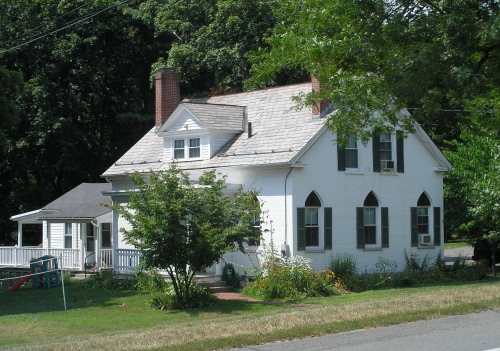
The Fisher House, at 227 South Pleasant Street in Amherst, was built in 1830, possibly by brick mason Hiram Johnson. The house was used as a school by the Nelson sisters, but opinion is divided as to whether or not Emily Dickinson attended school there or not in 1837. Amherst College purchased the house from Anna A. Fisher, wife of G. Edward Fisher, in 1917 and it served for a time as a student residence. It is now a single family home.
Law Office, Old Sturbridge Village (1796)

by Dan/November 17, 2011November 15, 2011/Commercial, Sturbridge, Vernacular

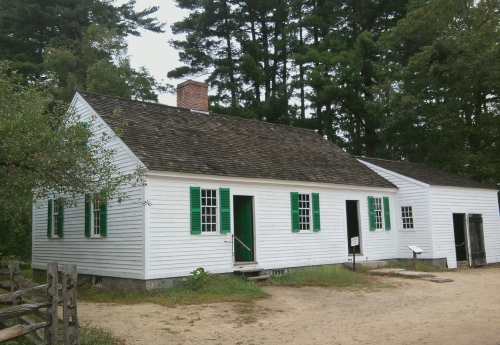
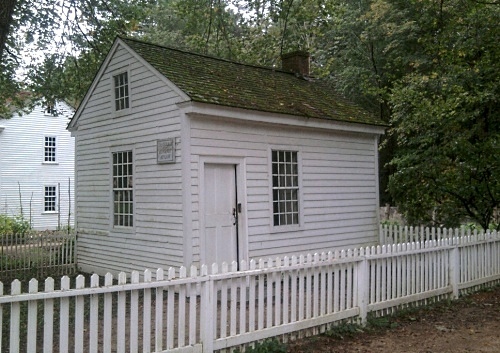
John McClellan was a lawyer in Woodstock, Connecticut, active in the first half of the nineteenth century. His law office in Woodstock, built around 1796, was acquired by Old Sturbridge Village in 1962 and was moved there in 1965.

Yin Yu Tang (1800)

by Dan/October 14, 2011October 14, 2011/Houses, Salem, Vernacular

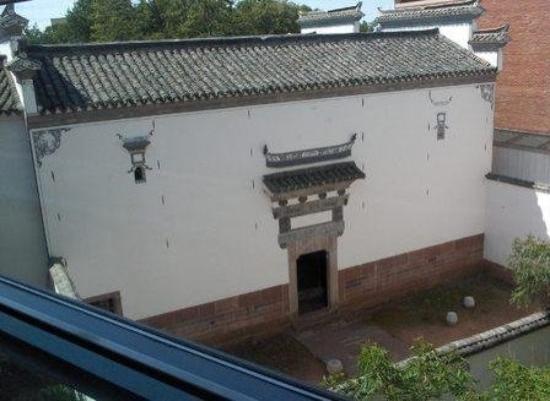
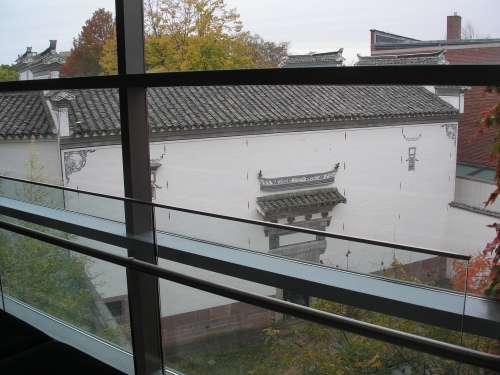
Yin Yu Tang (“Hall of Plentiful Shelter”) is a Qing Dynasty Chinese merchant’s house, built around 1800, which was moved to the Peabody Essex Museum in Salem and reconstructed there in 1997-2002. The house was first built by a merchant of the Huang family in the village of Huang Cun, located in Xiuning County of the Huangshan Prefecture (a region traditionally known as Huizhou) in Anhui Province. Eight generations of the family lived in the house for nearly two centuries. By the 1980s, the house stood empty, as Huang family members had moved to other parts of the country. In 1996, family members decided to sell the house and the following year, Chinese authorities approved Yin Yu Tang’s move to the United States as part of a cultural exchange helping to protect and promote the architecture of the Huizhou region. It is now open to the public and contains original family furnishings. Also check out my post on the New York Chinese Scholar’s Garden.

Bixby House (1807)

by Dan/September 22, 2011September 23, 2011/Houses, Sturbridge, Vernacular

The Bixby House was built around 1807 in the community of Barre Four Corners. It was constructed by Nathan Hemenway or by his father Daniel, both housewrights, for Nathan’s brother, Rufus Hemenway, a carpenter. The house was then extended on the east side after Rufus’s marriage in 1815. The next owner was wheelwright Alanson O. Green in 1824. The house and adjacent barn were then acquired by Emerson Bixby, a blacksmith, in 1826. Two new rooms were added to the original three-room house between 1838 and 1845. The house remained in the Bixby family until Bixby descendants gave it to Old Sturbridge Village, to where it was moved in 1986.

John J. Perry House (1856)

by Dan/January 22, 2011January 22, 2020/Houses, Natick, Vernacular

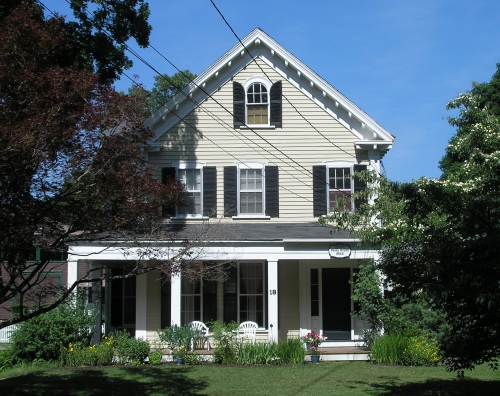
The Perry House, located on Pleasant Street in South Natick, was built in 1856 by John Jones Perry. In 1834, he had married Mary, the daughter of Oliver N. Bacon, author of A History of Natick (1856). Perry also acquired a barn on the property and moved it back from the street where he used it to stable horses used in his coal business. In 1907, the house and barn were purchased by Anna Kneeland Haggerty Shaw, widow of Robert Gould Shaw. She gave the barn (now Shaw Gym) for use by the town and renovated the house to become a children’s home for the Unitarian Society in Boston. The house has since had other owners, who have used it as a private residence.

Noble and Cooley Drum Factory (1872)

by Dan/September 30, 2010October 28, 2010/Granville, Industrial, Vernacular

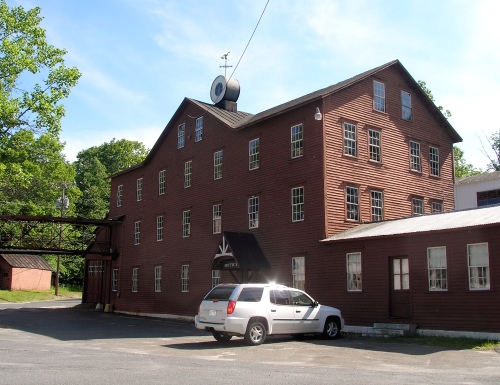
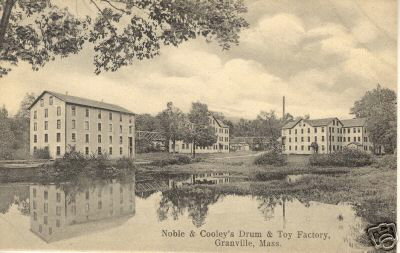
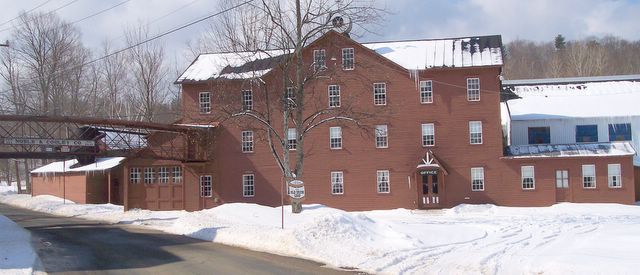
In 1852, master mechanic Silas Noble began manufacturing toy drums in his kitchen. In 1854, Noble and his partner, James Cooley (who handled the business side of their operation and whose descendants still run the business), built a factory in Granville (the current structure dates to 1872). Taking advantage of nearby water power (an electric generator was installed in 1915), the Noble & Cooley Drum Company prospered. They made marching drums for the Union Army during the Civil War, but their main business continued to be the production of toy drums. In the 1980s, the company entered the professional drum market, producing a highly regarded single-ply solid shell snare drum using an original steam bending machine from the nineteenth century. The factory, which has a drum weathervane, is now also home to a museum, the Noble & Cooley Center for Historic Preservation.

Casey’s Diner (1922)

by Dan/September 3, 2010September 3, 2010/Commercial, Natick, Vernacular

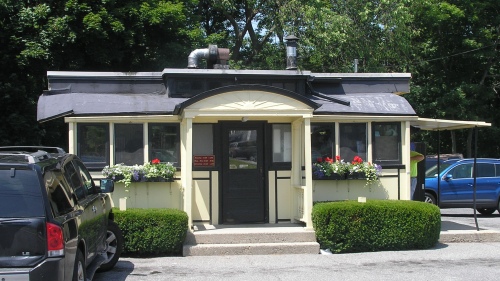
A famous Natick landmark is Casey’s Diner, famous for its steamed hot dogs. Casey’s began as a horse-drawn lunch cart on Natick Common. In 1927, Fred Casey purchased a 1922 Diner, originally located in Framingham, and brought it to Natick. The Diner, produced by the Worcester Lunch Car Company, was first on Washington Street and was moved to its current location, on South Avenue, in 1977, to make way for a bank parking lot.

Posts navigation

Older posts
Newer posts
Privacy Policy

Categories

  • Architectural Style (943)
    • Art Deco (9)
    • Byzantine (3)
    • Colonial (177)
    • Colonial Revival (85)
    • Craftsman (6)
    • Egyptian Revival (1)
    • Federal (190)
    • Foursquare (6)
    • Gothic (67)
    • Greek Revival (100)
    • Italianate (82)
    • Mission Revival (2)
    • Mission/Spanish Colonial (1)
    • Modern (2)
    • Neoclassical (56)
    • Octagon (3)
    • Postmodern (1)
    • Queen Anne (46)
    • Renaissance Revival (26)
    • Romanesque Revival (53)
    • Second Empire (26)
    • Shingle Style (12)
    • Stick Style (13)
    • Tudor Revival (8)
    • Vernacular (49)
    • Victorian Eclectic (15)
  • Building Type (943)
    • Apartment Buildings (8)
    • Banks (18)
    • Churches (119)
    • Collegiate (32)
    • Commercial (102)
    • Hotels (16)
    • Houses (508)
    • Industrial (23)
    • Libraries (22)
    • Lighthouses (1)
    • Military (15)
    • Monuments (1)
    • Museums (12)
    • Organizations (39)
    • Outbuildings (17)
    • Public Buildings (50)
    • Schools (23)
    • Stations (5)
    • Synagogues (1)
    • Taverns (21)
    • Theaters (9)
  • Town (943)
    • Adams (11)
    • Agawam (4)
    • Amherst (50)
    • Boston (64)
    • Boylston (6)
    • Cambridge (30)
    • Clinton (21)
    • Concord (15)
    • Cummington (1)
    • Danvers (14)
    • Deerfield (31)
    • Gloucester (18)
    • Granville (10)
    • Great Barrington (2)
    • Hadley (9)
    • Hancock (15)
    • Harvard (32)
    • Holyoke (47)
    • Lenox (5)
    • Lexington (8)
    • Longmeadow (32)
    • Marblehead (40)
    • Marlborough (4)
    • Natick (22)
    • Newton (2)
    • Northampton (68)
    • Peabody (4)
    • Pittsfield (20)
    • Salem (110)
    • Saugus (4)
    • Sheffield (4)
    • South Hadley (8)
    • Southborough (8)
    • Southwick (4)
    • Springfield (67)
    • Stockbridge (19)
    • Stow (1)
    • Sturbridge (18)
    • Sudbury (7)
    • Waltham (11)
    • Watertown (1)
    • Wayland (8)
    • West Springfield (14)
    • Westfield (46)
    • Weston (2)
    • Worcester (26)
  • Uncategorized (1)

Recent Comments

  • Wilber Blackson on South Hadley
  • Tami Speiden on Stockbridge
  • DexGuru on Stockbridge

Tags

Alcott Amherst College Asher Benjamin Back Bay Baptist Beacon Hill Big E Black Heritage Trail bowfront Bulfinch Catholic Congregational Episcopal Freedom Trail Gambrel H.H. Richardson Harvard Hawthorne Historic Deerfield Isaac Damon lit Longfellow mansard Methodist Mount Holyoke Museum Museums NPS Old Sturbridge Village PEM Revolutionary War row houses saltbox Samuel McIntire Shakers Smith College SPNEA Springfield Armory Stephen C. Earle Storrowton Underground Railroad UU Washington William Fenno Pratt Witch Trials

Meta

  • Log in
  • Entries feed
  • Comments feed
  • WordPress.org
Proudly powered by WordPress | Theme: ShowMe by NEThemes.