Historic Buildings of Massachusetts

  • About
  • Index by Town
  • CT
  • About
  • Index by Town
  • CT

Category: Vernacular

St. Nicholas Russian Orthodox Church (1905)
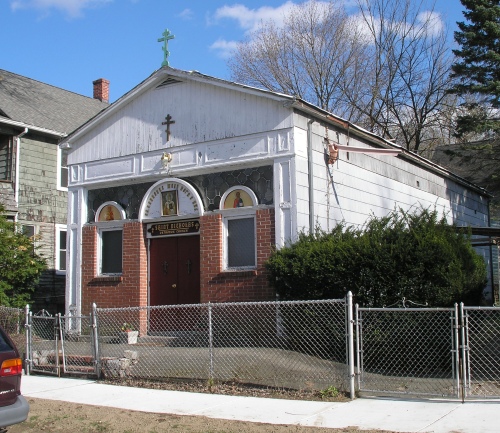
by Dan/April 4, 2012/Churches, Commercial, Vernacular, West Springfield

The building at 23 Southworth Street in West Springfield was built in 1905 in a newly developing residential area subdivided into lots from the Southworth family’s farm. The building itself was never a residence, but has been a bakery, home to the Puritan Home Made Candy Company, and a store. Since 1960 it has been St. Nicholas Russian Orthodox Church, a parish of the Russian Orthodox Church Outside of Russia. There are plans to replace the small building in the future with a somewhat larger one having a full basement.
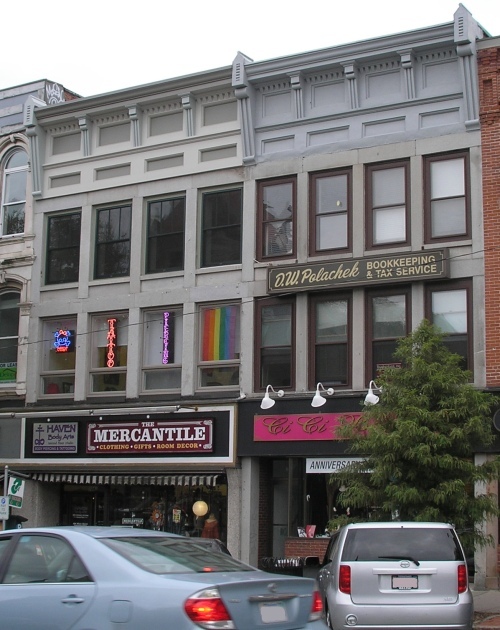
Granite Stores, Northampton (1826)

by Dan/March 18, 2012/Commercial, Northampton, Vernacular

During a visit to Boston in 1825, builder Isaac Damon of Northampton observed the new granite market buildings being constructed next to Faneuil Hall. After returning home, he acquired land with a granite quarry in Medfield and c. 1826-1828 constructed a pair of three-story granite front commercial buildings at 108-112 Main Street. These were built using traditional post-and-beam construction techniques, but with granite instead of wood. The ground floors and cornices of these buildings have been changed many times, but the central two granite floors are still visible.

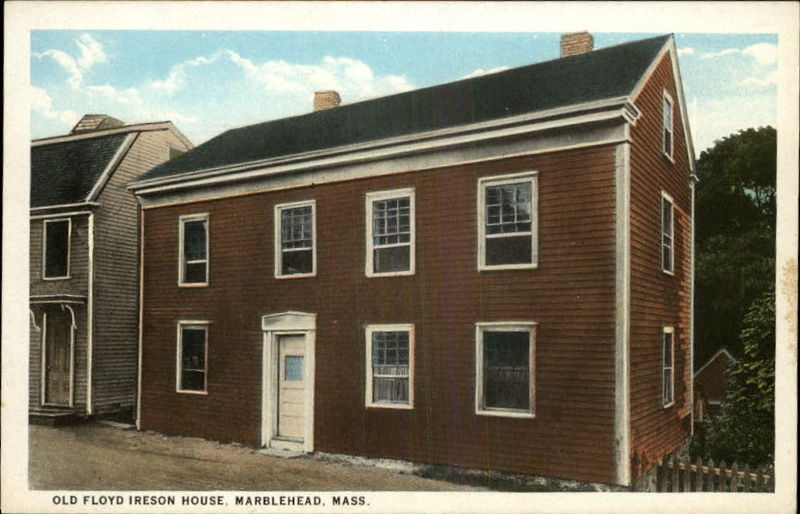
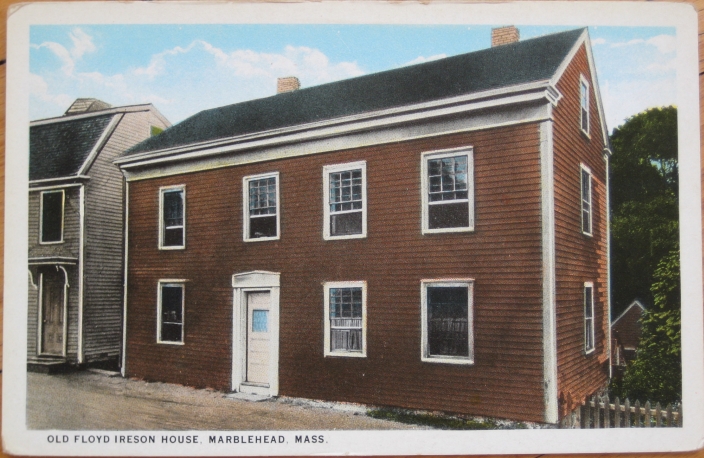
Benjamin Ireson House (1808)

by Dan/February 6, 2012/Houses, Marblehead, Vernacular

The house at 19 Circle Street in Marblehead, built before 1808 and perhaps as early as 1758, is famous for being the home of Benjamin “Flood” Ireson, subject of the 1857 poem, “Skipper Ireson’s Ride,” by John Greenleaf Whittier. Captain Ireson, of the fishing vessel Betty, had supposedly refused to assist the sinking schooner Active during a gale in 1808. In retribution, a group of sailors and boys had tarred and feathered him. Whittier later heard the story, by which time the name of the captain had been corrupted to “Floyd Ireson” and he elaborated the story so that the tarring and feathering was perpetrated by the women of Marblehead. In his book, The History and Traditions of Marblehead (1881), author Samuel Roads defended Ireson, who had actually been innocent of the crime for which he was tarred and feathered. Whittier sent a letter to Roads expressing that he was pleased the true facts had come out, but the poem’s success perpetuated the Whittier version in the public imagination. The Ireson House would remain a notable Marblehead landmark and be the subject of postcards well into the twentieth century.

Pliny Freeman House (1815)

by Dan/January 2, 2012/Houses, Sturbridge, Vernacular

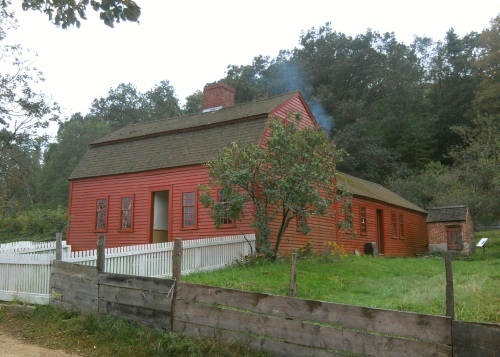
The Pliny Freeman Farmhouse at Old Sturbridge Village was built elsewhere in Sturbridge by Chester Belknap between 1812 and 1815. It is named for Pliny Freeman, who bought the property in 1828 (his third in town) and spent 23 years there. He and his wife Delia Marsh had seven children, most of whom were grown by 1828 and most of whom eventually migrated westward. He sold the farm in 1851 and went to live with his daughter Delia until his death in 1855. The Freeman House was condemned by the Massachusetts highway department and moved to Old Sturbridge Village in 1950 (and relocated again in the Village in 1956). Today, it is surrounded by farm fields and historic outbuildings which collectively depict the life and work on an early-nineteenth century New England farm.

Bolton Friends Meetinghouse (1796)

by Dan/December 22, 2011January 1, 2012/Churches, Sturbridge, Vernacular

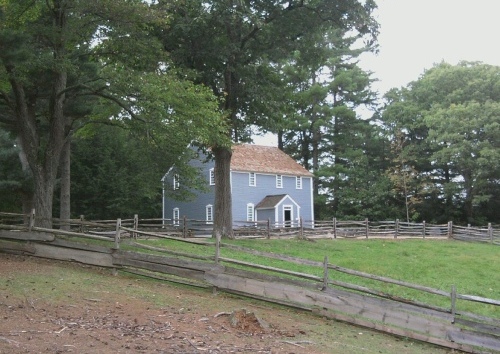
Quakers in Bolton formed the Friends Meeting in 1779 and constructed the Bolton Friends Meetinghouse in 1795. By 1930, membership had dwindled and the Friends joined the Unitarians and Baptists and formed the Bolton Federated Church, known as the First Parish of Bolton. In 1952, the Friends deeded their former meetinghouse to Old Sturbridge Village. It was moved to Sturbridge in 1953 and restored to its original 1796 appearance, necessitating the removal of an 1818 addition.

District School, Old Sturbridge Village (1810)

by Dan/December 21, 2011January 1, 2012/Schools, Sturbridge, Vernacular

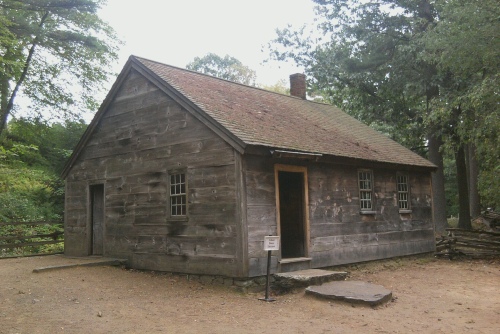
The District School at Old Sturbridge Village is a one-room Schoolhouse, originally built in Candia, New Hampshire, c. 1800-1810. It was moved to Sturbridge in 1955.

Pottery, Old Sturbridge Village (1819)

by Dan/December 1, 2011January 1, 2012/Commercial, Industrial, Outbuildings, Sturbridge, Vernacular

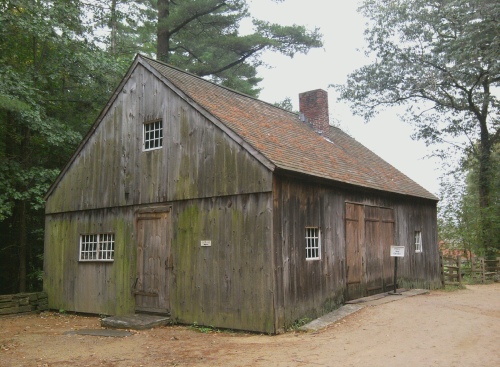
Harvey Brooks (1779-1873), of Goshen, Connecticut, began work at the age of sixteen as an apprentice potter. After 1819, he worked for himself as a rural farmer-potter, producing 26 different varieties and sizes of redware pots, pans and jugs. He had a pottery shop and an adjacent kiln, where he burned his last batch of ware in 1864, long after most other redware potters had given up practicing their craft. Brooks‘ pottery shop, built around 1819, was moved to Old Sturbridge Village in 1961 and a replica kiln was built in 1979.

Posts navigation

Older posts
Newer posts
Privacy Policy

Categories

  • Architectural Style (943)
    • Art Deco (9)
    • Byzantine (3)
    • Colonial (177)
    • Colonial Revival (85)
    • Craftsman (6)
    • Egyptian Revival (1)
    • Federal (190)
    • Foursquare (6)
    • Gothic (67)
    • Greek Revival (100)
    • Italianate (82)
    • Mission Revival (2)
    • Mission/Spanish Colonial (1)
    • Modern (2)
    • Neoclassical (56)
    • Octagon (3)
    • Postmodern (1)
    • Queen Anne (46)
    • Renaissance Revival (26)
    • Romanesque Revival (53)
    • Second Empire (26)
    • Shingle Style (12)
    • Stick Style (13)
    • Tudor Revival (8)
    • Vernacular (49)
    • Victorian Eclectic (15)
  • Building Type (943)
    • Apartment Buildings (8)
    • Banks (18)
    • Churches (119)
    • Collegiate (32)
    • Commercial (102)
    • Hotels (16)
    • Houses (508)
    • Industrial (23)
    • Libraries (22)
    • Lighthouses (1)
    • Military (15)
    • Monuments (1)
    • Museums (12)
    • Organizations (39)
    • Outbuildings (17)
    • Public Buildings (50)
    • Schools (23)
    • Stations (5)
    • Synagogues (1)
    • Taverns (21)
    • Theaters (9)
  • Town (943)
    • Adams (11)
    • Agawam (4)
    • Amherst (50)
    • Boston (64)
    • Boylston (6)
    • Cambridge (30)
    • Clinton (21)
    • Concord (15)
    • Cummington (1)
    • Danvers (14)
    • Deerfield (31)
    • Gloucester (18)
    • Granville (10)
    • Great Barrington (2)
    • Hadley (9)
    • Hancock (15)
    • Harvard (32)
    • Holyoke (47)
    • Lenox (5)
    • Lexington (8)
    • Longmeadow (32)
    • Marblehead (40)
    • Marlborough (4)
    • Natick (22)
    • Newton (2)
    • Northampton (68)
    • Peabody (4)
    • Pittsfield (20)
    • Salem (110)
    • Saugus (4)
    • Sheffield (4)
    • South Hadley (8)
    • Southborough (8)
    • Southwick (4)
    • Springfield (67)
    • Stockbridge (19)
    • Stow (1)
    • Sturbridge (18)
    • Sudbury (7)
    • Waltham (11)
    • Watertown (1)
    • Wayland (8)
    • West Springfield (14)
    • Westfield (46)
    • Weston (2)
    • Worcester (26)
  • Uncategorized (1)

Recent Comments

  • Wilber Blackson on South Hadley
  • Tami Speiden on Stockbridge
  • DexGuru on Stockbridge

Tags

Alcott Amherst College Asher Benjamin Back Bay Baptist Beacon Hill Big E Black Heritage Trail bowfront Bulfinch Catholic Congregational Episcopal Freedom Trail Gambrel H.H. Richardson Harvard Hawthorne Historic Deerfield Isaac Damon lit Longfellow mansard Methodist Mount Holyoke Museum Museums NPS Old Sturbridge Village PEM Revolutionary War row houses saltbox Samuel McIntire Shakers Smith College SPNEA Springfield Armory Stephen C. Earle Storrowton Underground Railroad UU Washington William Fenno Pratt Witch Trials

Meta

  • Log in
  • Entries feed
  • Comments feed
  • WordPress.org
Proudly powered by WordPress | Theme: ShowMe by NEThemes.