Category Archives: Houses

Brick Dwelling, Hancock Shaker Village (1830)

Brick Dwelling

The Brick Dwelling at Hancock Shaker Village replaced two earlier dwelling structures, dating to the 1790s. The Brick Dwelling was built in 1830-1831 and was designed by Elder William Deming. The building’s basement was used for the kitchen and food storage and the first floor contained various waiting rooms, with the large dining room and the meeting room at opposite ends. The upper floors contained the separated brethren and sisters retiring rooms (Elders and Eldresses retiring rooms were on the second floor). The restored Brick Dwelling can be visited as part of the Hancock Shaker Village museum.

(more…)

Share Button
Posted in Apartment Buildings, Federal, Hancock, Houses, Organizations, Outbuildings | Tagged , | Leave a comment

Susan B. Anthony Birthplace (1817)

Susan B. Anthony Birthplace

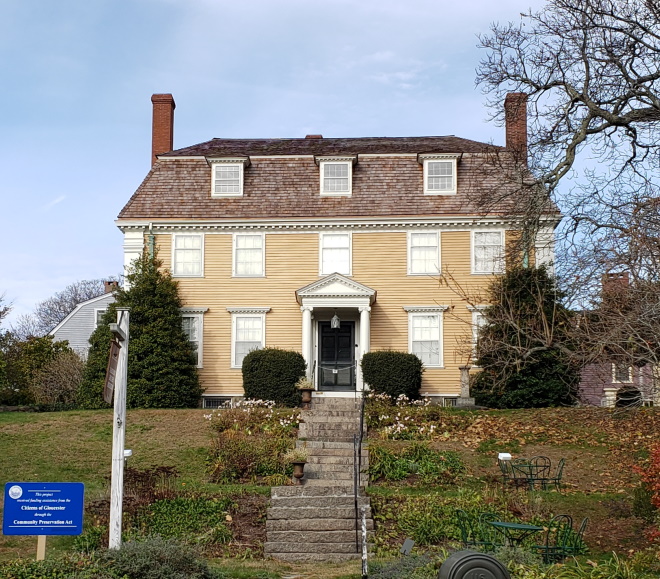
[Note--This is a non-partisan post, but some of the links lead to pages reflecting representing strong opinions on both sides of the abortion issue.] The famous women’s suffrage leader Susan B. Anthony was born in 1820 in a house in Adams. The house had been built by her father, Daniel Anthony, in 1817. He was a cotton manufacturer and abolitionist who raised Susan in the family’s Quaker religion. The family left the house in 1827 and moved to New York State. Their former home, located at 67 East Road in Adams, passed through several owners. From 1926 to 1949, The Society of Friends Descendents owned the house and operated a museum about Susan B. Anthony. After a few unsuccessful attempts by later owners to again make the house a museum, it was purchased at auction in 2006 by Carol Crossed, of the pro-life group Feminists for Life. The restored house opened to the public in 2010 as the Susan B. Anthony Birthplace Museum. It did not open without controversy, however, as there were objections to the museum’s presentation of Anthony’s position on abortion.

Share Button
Posted in Adams, Federal, Houses | Tagged | Leave a comment

William Cullen Bryant Homestead (1785)

William Cullen Bryant Homestead

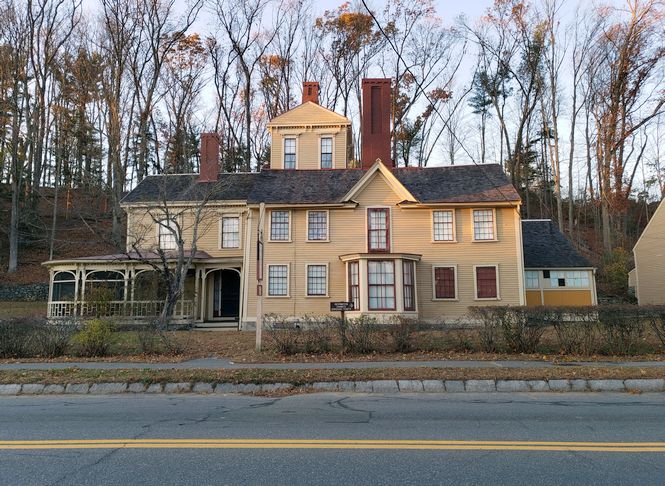
William Cullen Bryant (1794-1878) was a major poet and for 50 years was editor and publisher of The New York Evening Post. He was born in a log cabin in Cummington. When he was two, Bryant‘s father, Dr. Peter Bryant, moved the family to a house in Cummington that the doctor’s father-in-law had built in circa 1783-1785. The house became young William Cullen Bryant‘s boyhood home and is now called the William Cullen Bryant Homestead. In 1865, after the old farmhouse had been out of the family for 30 years, Bryant purchased and extensively altered it in to reflect Victorian stylistic tastes. He began by raising the original section of the house, creating a new ground floor. He also added a gambrel-roofed study, a replica of his father’s medical office, which projects from the front facade, and constructed an addition to the house’s original rear ell. The renovated house would serve as his summer home until his death. It is now owned by the Trustees of Reservations and can be toured by the public. (more…)

Share Button
Posted in Colonial, Cummington, Houses, Italianate, Victorian Eclectic | Tagged , , , | Leave a comment

Bray-Hoadley House (1873)

9 Park Street, Florence

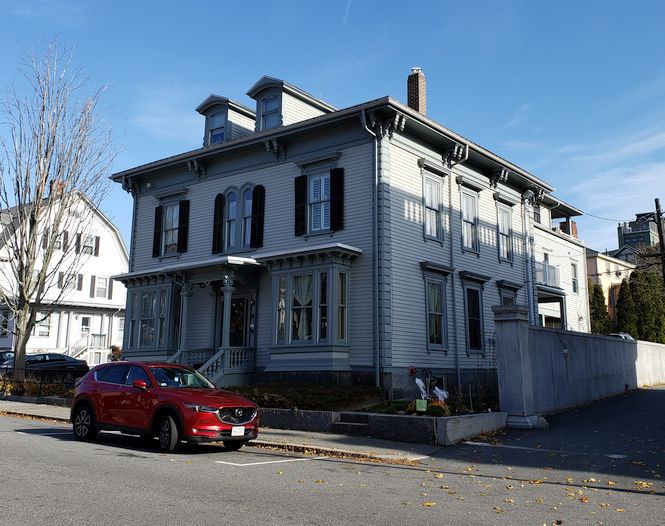
The house at 9 Park Street in Florence (Northampton) was built circa 1871-1873 for Eliphalet Bray, a lather (lathe machinist), and his wife Sarah C. Tilton Bray. In the 1880s, the house was home to George Hoadley, principal of Florence High School.

Share Button
Posted in Houses, Italianate, Northampton | Leave a comment

Browne House (1698)

Browne House

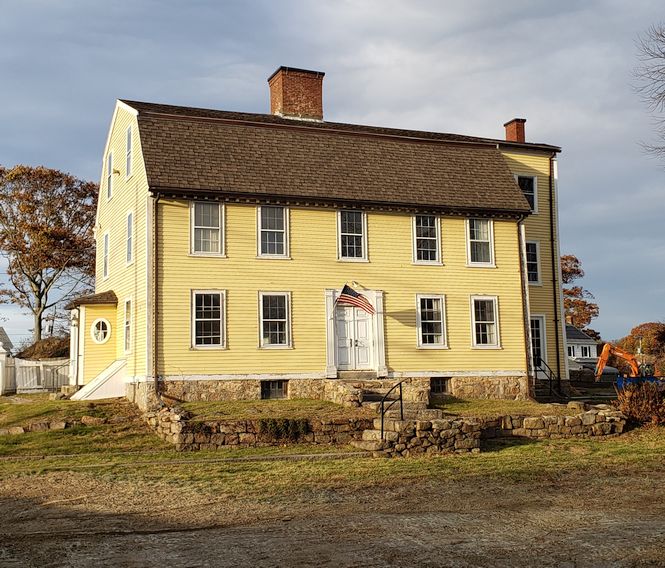
It’s not a great picture above, but since Watertown is making headlines I’m featuring one of its most historic buildings. The Browne House at 562 Main Street in Watertown was built in 1698 by Captain Abraham Browne (1671-1729). The earliest section of the house is located on the far left of the image. On the right is the north ell, which was built in 1725. Browne descendents lived in the house until 1897. The house became dilapidated. It was purchased by preservationist William Sumner Appleton in 1919, just days before it was to be demolished. He restored the house, which is considered to be one of the best examples of a “First Period” New England residence. Appleton had founded the Society for the Preservation of New England Antiquities (now Historic New England) in 1910, but the trustees had not thought the house could be salvaged. Having purchased and restored it, Appleton gave the house to the Society in 1922, subject to a mortgage that was finally discharged in 1949. With its unique architectural features, it is now used by Historic New England as a study property.

Share Button
Posted in Colonial, Houses, Watertown | Tagged , | Leave a comment

81 Joy Street, Boston (1902)

Site of former 8 Belnap Street in Boston

The house at 81 Joy Street in Boston was built in 1902 and replaced an earlier house on the site, built in 1825 and numbered 8 Belknap Street. This had been the home of two African American abolitionist leaders. From 1827 to 1829, David Walker resided here with his wife Eliza. Born a free black in North Carolina, Walker came to Boston where he ran and used clothing store. In 1829 he published Appeal to the Coloured Citizens of the World and Expressly to the Coloured Citizens of the United States. This work, which called on enslaved people to rebel against their masters, was banned in the south and Georgia slave owners placed a bounty on Walker’s head. The house was next home to James and Maria W. Stewart. Maria Stewart gave speeches about women’s rights and against slavery, which were published by William Lloyd Garrison. She is the first American born woman, of any race, known to have spoken publicly on political issues. She moved to New York in 1834. Rev. George H. Black, one of the founders of the Twelfth Baptist Church, and Leonard Black, a former slave, lived in the house in the late 1830s. Their lives are discussed in Life and Sufferings of Leonard Black, A Fugitive from Slavery. Written by Himself (1848).

Share Button
Posted in Boston, Colonial Revival, Houses | Tagged | Leave a comment

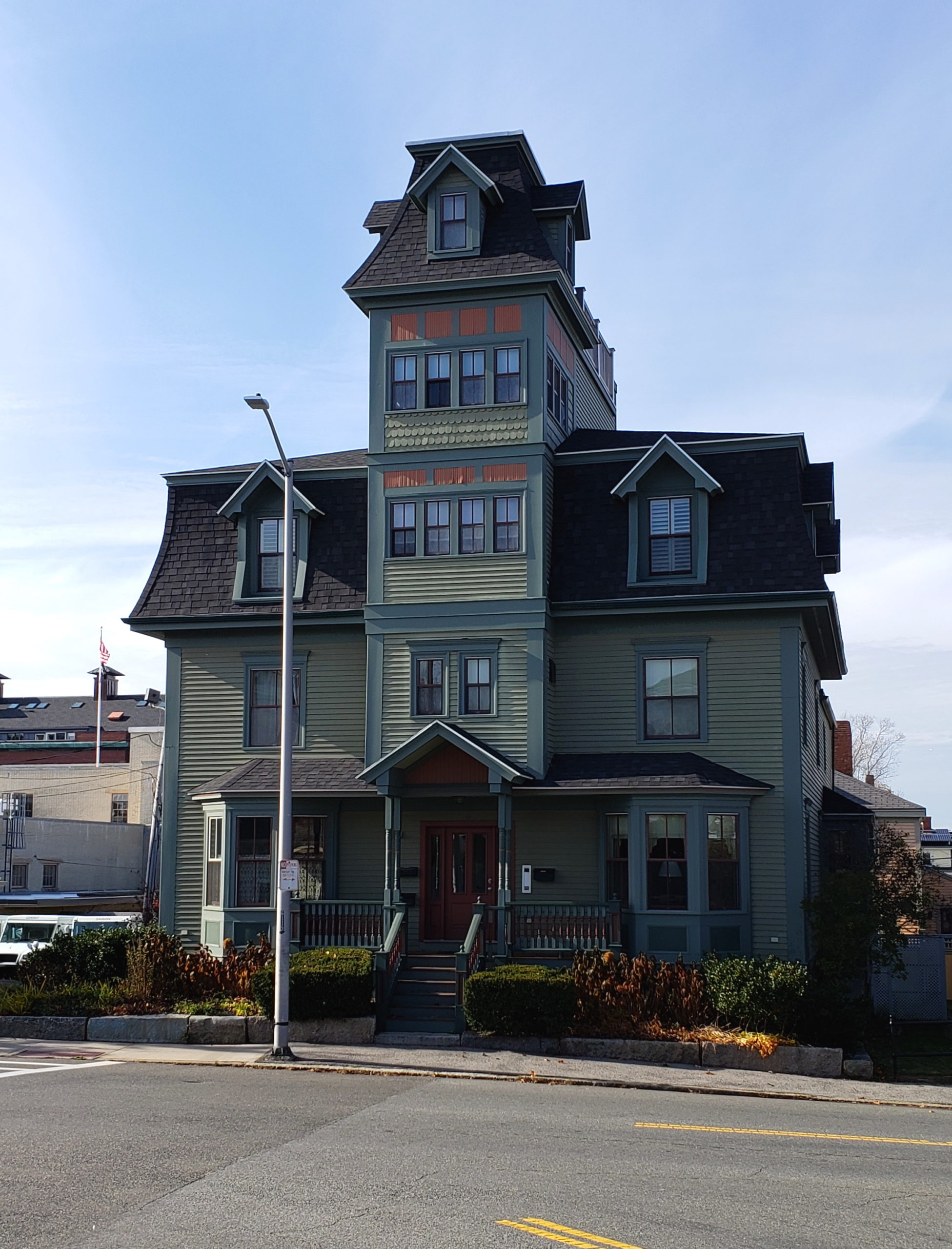
Putnam-Balch House (1871)

Putnam-Balch House, Salem

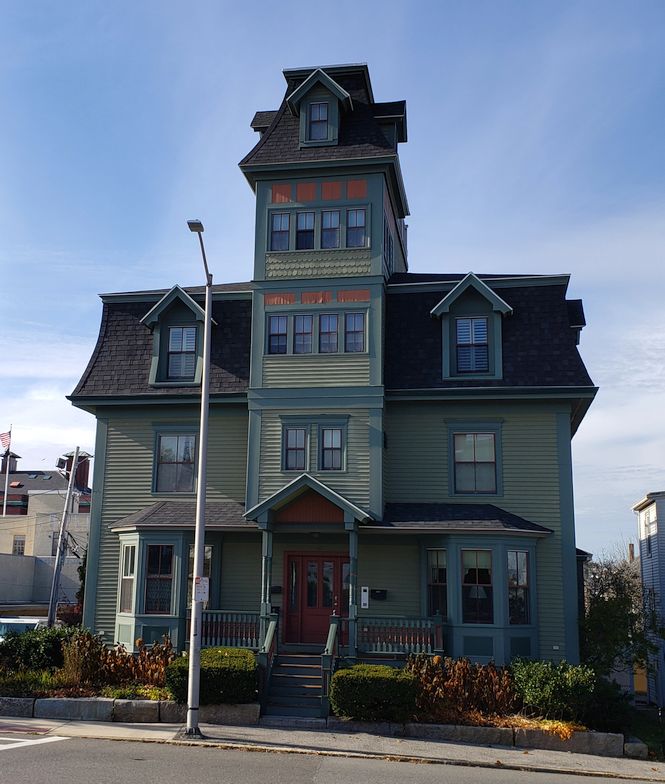
In 1871-1872, on the site of the Benjamin Marston House, James S. Putnam erected an elaborately and eclectically ornamented house, known as Greymoor, at 329 Essex Street in Salem. From 1881 to 1921, it was owned by Frank Balch and then the house served as the headquarters of American Legion Post 23. The house was restored in 1979-1981. The house was recently restored to its 1872 color scheme.

Share Button
Posted in Houses, Italianate, Salem | Leave a comment