Search
Advertisement
Become a Fan!
Buy My Book! Click Cover Image to Order!
Categories
- Architectural Style (684)
- Art Deco (2)
- Byzantine (3)
- Colonial (157)
- Colonial Revival (58)
- Craftsman (3)
- Egyptian Revival (1)
- Federal (156)
- Foursquare (3)
- Gothic (45)
- Greek Revival (75)
- Italianate (48)
- Mission Revival (1)
- Modern (1)
- Neoclassical (28)
- Octagon (2)
- Postmodern (1)
- Queen Anne (26)
- Renaissance Revival (16)
- Romanesque Revival (33)
- Second Empire (18)
- Shingle Style (9)
- Stick Style (10)
- Tudor Revival (6)
- Vernacular (29)
- Victorian Eclectic (7)
- Building Type (684)
- Apartment Buildings (5)
- Banks (7)
- Churches (82)
- Collegiate (31)
- Commercial (51)
- Hotels (10)
- Houses (403)
- Industrial (10)
- Libraries (12)
- Lighthouses (1)
- Military (13)
- Monuments (1)
- Museums (9)
- Organizations (26)
- Outbuildings (8)
- Public Buildings (33)
- Schools (16)
- Stations (2)
- Synagogues (1)
- Taverns (17)
- Theaters (5)
- Town (684)
- Adams (2)
- Agawam (4)
- Amherst (50)
- Boston (64)
- Cambridge (30)
- Clinton (8)
- Concord (8)
- Cummington (1)
- Danvers (14)
- Deerfield (31)
- Granville (10)
- Hadley (7)
- Hancock (6)
- Holyoke (19)
- Lenox (5)
- Lexington (8)
- Longmeadow (31)
- Marblehead (40)
- Marlborough (4)
- Natick (22)
- Newton (2)
- Northampton (39)
- Peabody (4)
- Pittsfield (4)
- Salem (97)
- Saugus (4)
- South Hadley (8)
- Southborough (8)
- Southwick (3)
- Springfield (50)
- Stockbridge (10)
- Stow (1)
- Sturbridge (18)
- Sudbury (7)
- Waltham (10)
- Watertown (1)
- Wayland (8)
- West Springfield (14)
- Westfield (19)
- Weston (2)
- Worcester (11)
- Uncategorized (1)
- Architectural Style (684)
Recent Comments
- Pat Barnes on Springfield Municipal Group (1913)
- Paul A. Doucette on The Joseph Burnett House (1850)
- Judith on The Joseph Burnett House (1850)
- PCL on Hotel Vendome (1871)
- jennider D on The Joseph Burnett House (1850)
Tags
Alcott Amherst College Asher Benjamin Back Bay Baptist Beacon Hill Big E Black Heritage Trail bowfront Bulfinch Catholic Congregational Episcopal Freedom Trail Gambrel H.H. Richardson Harvard Hawthorne Historic Deerfield Isaac Damon lit Longfellow mansard Methodist Mount Holyoke Museum Museums NPS Old Sturbridge Village PEM Revolutionary War row houses saltbox Samuel McIntire Shakers Shingle SPNEA Springfield Armory Stick Style Storrowton Underground Railroad UU Washington William Fenno Pratt Witch Trials-

Centers And SquaresBlogroll
Links
- Boston Preservation Alliance
- Cape Cod Modern House Trust
- Digital Treasures
- Historic Boston Inc.
- Historic Deerfield
- Historic New England
- Historic Salem Inc.
- Image Museum
- Old Sturbridge Village
- Preservation Massachusetts
- Preservation Worcester
- Salem Preservation, Inc.
- Springfield Preservation Trust
- The Trustees of Reservations
-
Recent Posts
- Friends Meeting House, Adams (1782)
- Meetinghouse, Hancock Shaker Village (1793)
- Trustees’ Office and Store, Hancock Shaker Village (1813)
- Sisters’ Dairy and Weave Shop (1790)
- Brethren’s Shop, Hancock Shaker Village (1813)
- Brick Poultry House, Hancock Shaker Village (1878)
- Brick Dwelling, Hancock Shaker Village (1830)
- Round Stone Barn, Hancock Shaker Village (1826)
- First Baptist Church, Pittsfield (1927)
- Old Berkshire Athenaeum (1876)
- Susan B. Anthony Birthplace (1817)
- William Cullen Bryant Homestead (1785)
- Bray-Hoadley House (1873)
- Dewey Block, Northampton (1912)
- Browne House (1698)
Archives
- May 2013
- April 2013
- March 2013
- February 2013
- January 2013
- December 2012
- November 2012
- October 2012
- September 2012
- August 2012
- July 2012
- June 2012
- May 2012
- April 2012
- March 2012
- February 2012
- January 2012
- December 2011
- November 2011
- October 2011
- September 2011
- August 2011
- July 2011
- June 2011
- May 2011
- April 2011
- March 2011
- February 2011
- January 2011
- December 2010
- November 2010
- October 2010
- September 2010
- August 2010
- July 2010
- June 2010
- May 2010
- April 2010
- March 2010
- February 2010
- January 2010
- December 2009
- November 2009
- October 2009
- September 2009
- August 2009
- July 2009
- June 2009
- May 2009
- April 2009
- March 2009
- February 2009
- January 2009
- December 2008
- November 2008
- October 2008
- July 2008
- June 2008
- May 2008
- April 2008
- March 2008
-

Pages
- Towns
- Adams
- Agawam
- Amherst
- Boston
- Burlington
- Cambridge
- Clinton
- Concord
- Cummington
- Danvers
- Deerfield
- Granville
- Hadley
- Hancock
- Hatfield
- Holyoke
- Lenox
- Lexington
- Longmeadow
- Marblehead
- Marlborough
- Natick
- Newton
- Northampton
- Peabody
- Pittsfield
- Salem
- Saugus
- South Hadley
- Southborough
- Southwick
- Springfield
- Stockbridge
- Stow
- Sturbridge
- Sudbury
- Waltham
- Watertown
- Wayland
- West Springfield
- Westfield
- Weston
- Worcester
- Towns
Meta
Category Archives: Boston
81 Joy Street, Boston (1902)
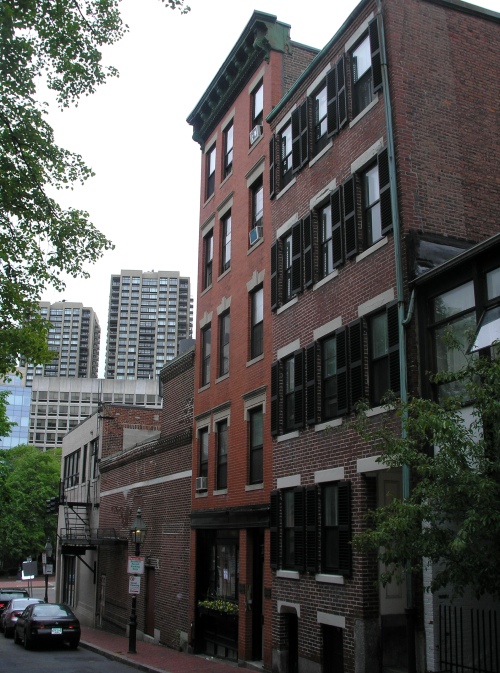
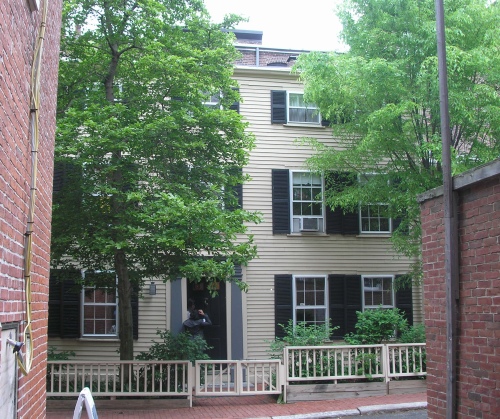
The house at 81 Joy Street in Boston was built in 1902 and replaced an earlier house on the site, built in 1825 and numbered 8 Belknap Street. This had been the home of two African American abolitionist leaders. From 1827 to 1829, David Walker resided here with his wife Eliza. Born a free black in North Carolina, Walker came to Boston where he ran and used clothing store. In 1829 he published Appeal to the Coloured Citizens of the World and Expressly to the Coloured Citizens of the United States. This work, which called on enslaved people to rebel against their masters, was banned in the south and Georgia slave owners placed a bounty on Walker’s head. The house was next home to James and Maria W. Stewart. Maria Stewart gave speeches about women’s rights and against slavery, which were published by William Lloyd Garrison. She is the first American born woman, of any race, known to have spoken publicly on political issues. She moved to New York in 1834. Rev. George H. Black, one of the founders of the Twelfth Baptist Church, and Leonard Black, a former slave, lived in the house in the late 1830s. Their lives are discussed in Life and Sufferings of Leonard Black, A Fugitive from Slavery. Written by Himself (1848).
Old South Building (1903)

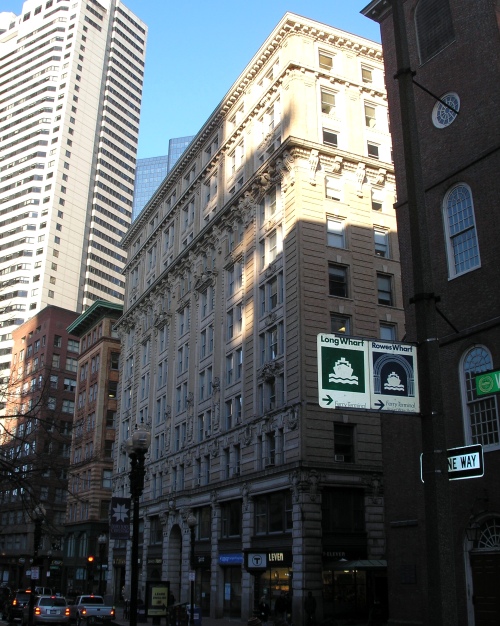
Adjacent to the Old South Meeting House (Church) in Boston, and surrounding it on the north and east, is the Old South Building, constructed as an office rental property by the church in 1903. Designed by Arthur Bowditch, it is located on the site of Gov. John Winthrop‘s second house, where he died in 1649. The house was used as the parsonage house of Old South, until it was demolished by the British during the Revolutionary War for firewood during the siege of Boston. The current building‘s address is 294 Washington Street and 10 Milk Street. The three postcards in this image (see link) show the area before the building was constructed (left) and after (center and right).
Posted in Boston, Commercial, Neoclassical
Leave a comment
326-328 Dartmouth Street, Boston (1871)

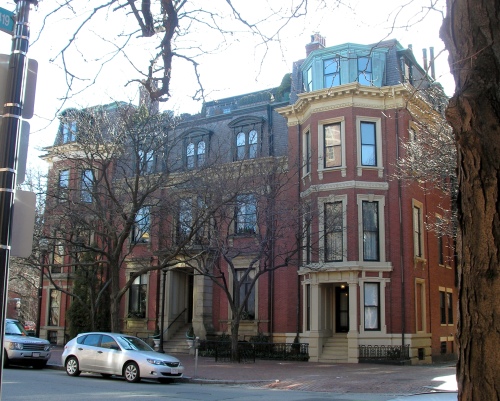
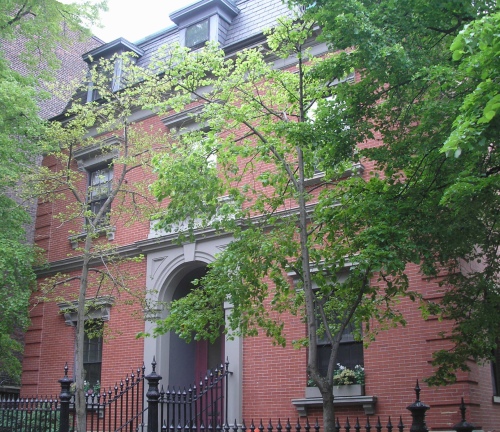
The Cushing-Endicott House, at 163 Marlborough Street in Boston, is considered one of the Back Bay‘s greatest architectural achievements. Designed in the French Academic Style, it was built in 1871 of brick, with Nova Scotia sandstone trim, for Thomas F. Cushing by the firm of Snell and Gregerson. The house later served as the home of William C. Endicott, secretary of war under President Grover Cleveland. In 1903, John Singer Sargent used one of the bedrooms as his studio. The house is now divided into condominiums. The house is joined to two neighboring houses, one with an interesting T-shape interior plan, which are located around the corner at 326-328 Dartmouth Street and have a similar architectural style.
John T. Hilton House (1826)

The house at 73 Joy Street in Beacon Hill in Boston was built in 1825-1826 for black hairdresser and musician John B. Holmes. The house is named for John Telemachus Hilton (1801-1864) (pdf), also a hairdresser, who was a Grand Master of the Prince Hall Masonic Lodge, a founder of the Massachusetts General Colored Association, a member of the Boston Vigilance Committee and on the Board of Managers of the Anti-Slavery Society. Hilton only briefly lived in the house, which is also associated with the brothers, Anthony F. Clark (who lived there) and Jonas W. Clark (who used it as a rental property). The house is also one of several boardinghouses owned by John R. Taylor, who is known to have assisted fugitive slaves. [For more info, see this Document]
3 Smith Court, Boston (1799)

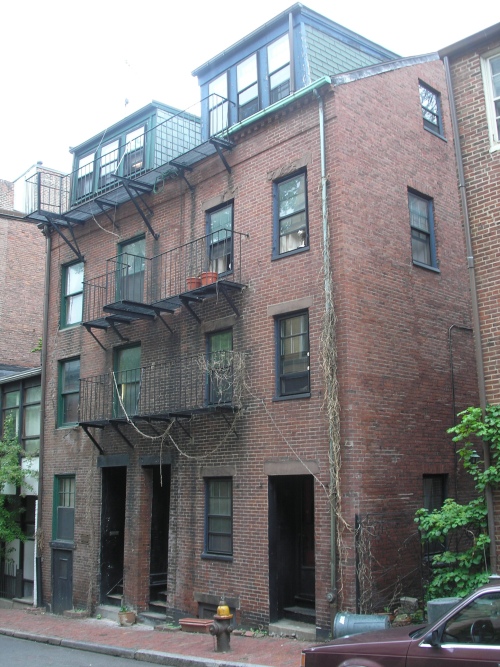
Smith Court, on Boston’s Beacon Hill, was the center of the city’s African American community in the nineteenth century. The house at 3 Smith Court, a double house with a common entryway, was built in 1799 by two white bricklayers. Just the year before, a ropewalk had been demolished on the property leading to the construction of residences. By 1830, black families were renting the house at 3 Smith Court. The longest resident of the house was was James Scott, an African American clothier, who became a tenant in 1839 and bought the property in 1865. Originally from Virginia, Scott was an abolitionist who was arrested in 1851 for his role in freeing fugitive slave Shadrach Minkins. From 1851-1856, part of the house was rented by William C. Nell, a journalist and abolitionist, who led the campaign to integrate Boston’s public schools. He became the first published African American historian when he wrote Services of Colored Americans in the Wars of 1776 and 1812 (1851) and Colored Patriots of the American Revolution (1855).
Second Brazer Building (1896)

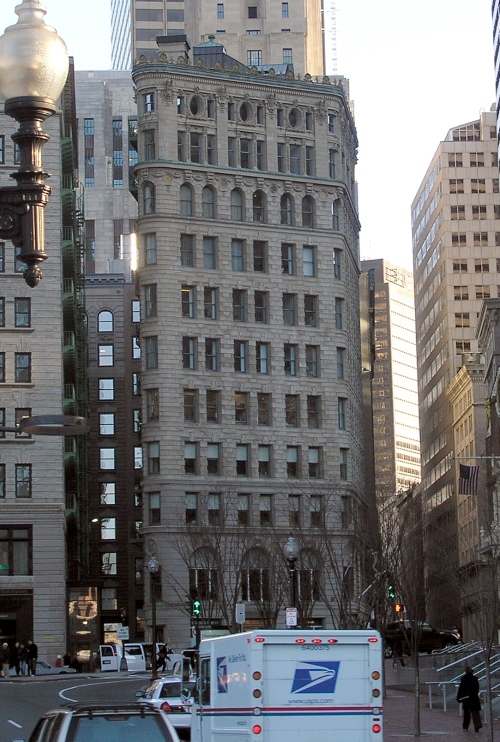
The Second Brazer Building (pdf), an early steel-frame skyscraper in Boston is located at 25-29 State Street, across from the Old State House, at the intersection with Devonshire Street. Built in 1896, it replaced the original three-story Brazer’s Building of 1842, which had stood on the same spot. The Second Brazer Building is the only Boston commission of New York architect Cass Gilbert and features decorative terra-cotta on the upper floors. The building has a trapezoidal foundation plan to fit the irregular street grid pattern.
Posted in Boston, Commercial, Neoclassical
Leave a comment
74 Joy Street, Boston (1862)

At 74 Joy Street in Boston’s Beacon Hill is a mansard-roofed building, built in 1861-1862. Designed by Gridley J.F. Bryant, it was built as Boston’s Police Station Number 3. In 1962, it ceased being used as a police station and in 1966 it was bought by the Beacon Hill Civic Association (it also houses the Beacon Hill Business Association and Beacon Hill Village).