Search
Advertisement
Become a Fan!
Buy My Book! Click Cover Image to Order!
Categories
- Architectural Style (688)
- Art Deco (2)
- Byzantine (3)
- Colonial (157)
- Colonial Revival (60)
- Craftsman (3)
- Egyptian Revival (1)
- Federal (156)
- Foursquare (3)
- Gothic (45)
- Greek Revival (75)
- Italianate (48)
- Mission Revival (1)
- Modern (1)
- Neoclassical (29)
- Octagon (2)
- Postmodern (1)
- Queen Anne (26)
- Renaissance Revival (18)
- Romanesque Revival (33)
- Second Empire (18)
- Shingle Style (9)
- Stick Style (10)
- Tudor Revival (6)
- Vernacular (30)
- Victorian Eclectic (7)
- Building Type (688)
- Apartment Buildings (5)
- Banks (7)
- Churches (82)
- Collegiate (31)
- Commercial (52)
- Hotels (11)
- Houses (403)
- Industrial (10)
- Libraries (12)
- Lighthouses (1)
- Military (13)
- Monuments (1)
- Museums (9)
- Organizations (27)
- Outbuildings (9)
- Public Buildings (33)
- Schools (16)
- Stations (2)
- Synagogues (1)
- Taverns (17)
- Theaters (6)
- Town (688)
- Adams (2)
- Agawam (4)
- Amherst (50)
- Boston (64)
- Cambridge (30)
- Clinton (8)
- Concord (8)
- Cummington (1)
- Danvers (14)
- Deerfield (31)
- Granville (10)
- Hadley (8)
- Hancock (6)
- Holyoke (19)
- Lenox (5)
- Lexington (8)
- Longmeadow (31)
- Marblehead (40)
- Marlborough (4)
- Natick (22)
- Newton (2)
- Northampton (40)
- Peabody (4)
- Pittsfield (5)
- Salem (97)
- Saugus (4)
- South Hadley (8)
- Southborough (8)
- Southwick (3)
- Springfield (50)
- Stockbridge (10)
- Stow (1)
- Sturbridge (18)
- Sudbury (7)
- Waltham (10)
- Watertown (1)
- Wayland (8)
- West Springfield (14)
- Westfield (19)
- Weston (2)
- Worcester (12)
- Uncategorized (1)
- Architectural Style (688)
Recent Comments
- peter hiller on Boston
- Pat Barnes on Springfield Municipal Group (1913)
- Paul A. Doucette on The Joseph Burnett House (1850)
- Judith on The Joseph Burnett House (1850)
- PCL on Hotel Vendome (1871)
Tags
Alcott Amherst College Asher Benjamin Back Bay Baptist Beacon Hill Big E Black Heritage Trail bowfront Bulfinch Catholic Congregational Episcopal Freedom Trail Gambrel H.H. Richardson Harvard Hawthorne Historic Deerfield Isaac Damon lit Longfellow mansard Methodist Mount Holyoke Museum Museums NPS Old Sturbridge Village PEM Revolutionary War row houses saltbox Samuel McIntire Shakers Shingle SPNEA Springfield Armory Stick Style Storrowton Underground Railroad UU Washington William Fenno Pratt Witch Trials-

Centers And SquaresBlogroll
Links
- Boston Preservation Alliance
- Cape Cod Modern House Trust
- Digital Treasures
- Historic Boston Inc.
- Historic Deerfield
- Historic New England
- Historic Salem Inc.
- Image Museum
- Old Sturbridge Village
- Preservation Massachusetts
- Preservation Worcester
- Salem Preservation, Inc.
- Springfield Preservation Trust
- The Trustees of Reservations
-
Recent Posts
- Hadley Farm Museum (1782)
- Mechanics Hall (1857)
- Hotel Northampton (1927)
- Berkshire Life Insurance Company (1868)
- Friends Meeting House, Adams (1782)
- Meetinghouse, Hancock Shaker Village (1793)
- Trustees’ Office and Store, Hancock Shaker Village (1813)
- Sisters’ Dairy and Weave Shop (1790)
- Brethren’s Shop, Hancock Shaker Village (1813)
- Brick Poultry House, Hancock Shaker Village (1878)
- Brick Dwelling, Hancock Shaker Village (1830)
- Round Stone Barn, Hancock Shaker Village (1826)
- First Baptist Church, Pittsfield (1927)
- Old Berkshire Athenaeum (1876)
- Susan B. Anthony Birthplace (1817)
Archives
- May 2013
- April 2013
- March 2013
- February 2013
- January 2013
- December 2012
- November 2012
- October 2012
- September 2012
- August 2012
- July 2012
- June 2012
- May 2012
- April 2012
- March 2012
- February 2012
- January 2012
- December 2011
- November 2011
- October 2011
- September 2011
- August 2011
- July 2011
- June 2011
- May 2011
- April 2011
- March 2011
- February 2011
- January 2011
- December 2010
- November 2010
- October 2010
- September 2010
- August 2010
- July 2010
- June 2010
- May 2010
- April 2010
- March 2010
- February 2010
- January 2010
- December 2009
- November 2009
- October 2009
- September 2009
- August 2009
- July 2009
- June 2009
- May 2009
- April 2009
- March 2009
- February 2009
- January 2009
- December 2008
- November 2008
- October 2008
- July 2008
- June 2008
- May 2008
- April 2008
- March 2008
-

Pages
- Towns
- Adams
- Agawam
- Amherst
- Boston
- Burlington
- Cambridge
- Clinton
- Concord
- Cummington
- Danvers
- Deerfield
- Granville
- Hadley
- Hancock
- Hatfield
- Holyoke
- Lenox
- Lexington
- Longmeadow
- Marblehead
- Marlborough
- Natick
- Newton
- Northampton
- Peabody
- Pittsfield
- Salem
- Saugus
- South Hadley
- Southborough
- Southwick
- Springfield
- Stockbridge
- Stow
- Sturbridge
- Sudbury
- Waltham
- Watertown
- Wayland
- West Springfield
- Westfield
- Weston
- Worcester
- Towns
Meta
Category Archives: Lexington
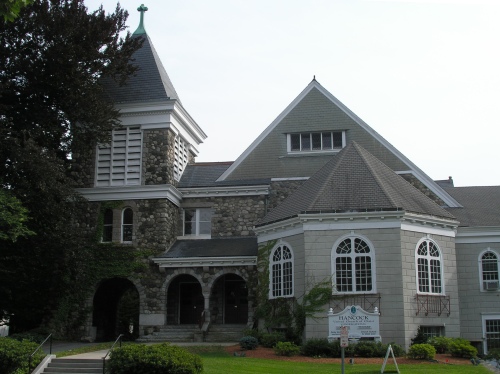
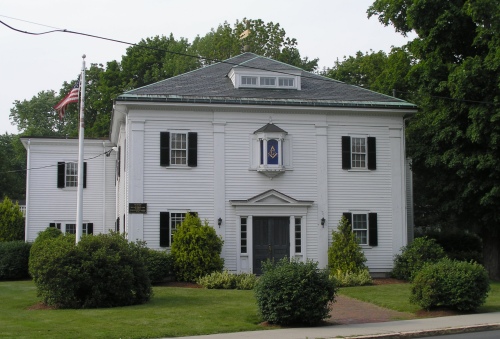
Hancock Congregational Church (1893)

In 1819, the First Congregational Society of Lexington became Unitarian. The minority of Trinitarian Congregationalists attended the local Baptist church for a time, but in 1868 formed the Hancock Congregational Society. The Congregation occupied the old Lexington Academy building until 1893, when the current Hancock Congregational Church was built. The church, designed by Paine and Lewis, features both Shingle Style siding and fieldstone walls. Many additions have been made over the years, including a new stuccoed wing in 1951.
Posted in Churches, Lexington, Queen Anne, Shingle Style
Tagged Congregational, Shingle
Leave a comment
Lexington Masonic Building (1822)

Opposite the Battle Green in Lexington is the Lexington Masonic Building. It was originally built in 1822 to house the Lexington Academy, which only lasted eleven years. From 1835 to 1837, it was used for the Lexington Manual Labor Seminary, an early trade school, and in 1839 the building was taken over by the state to become the first Normal School in America. A school for the training of teachers, it was established by Horace Mann, who chose Rev. Cyrus Pierce to run it. This educational experiment proved successful and soon moved to larger quarters, first to Newton in 1844 and then to Framingham in 1853. The building was later used for tenements and a grocery store. It served as the Hancock Congregational Church from 1868 to 1893. The former school became a Masonic Lodge in 1917.
Posted in Greek Revival, Lexington, Organizations, Schools
Leave a comment
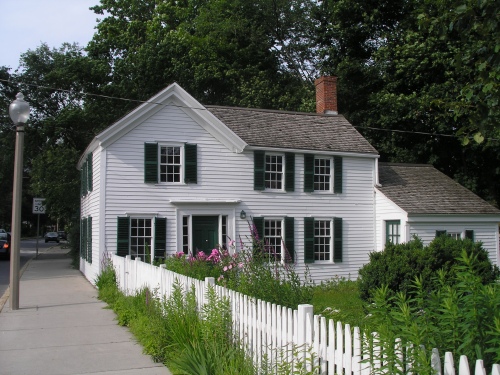
The Garrity House (1856)

A complex of several farm buildings once surrounded the Buckman Tavern in Lexington. The only ones to survive today are a Federal-style carriage house and the adjacent Garrity House. Built in the first half of the nineteenth century, the Garrity House is privately owned today, although the Town maintains the grounds through a land lease and preservation agreement.
Posted in Houses, Lexington, Vernacular
Leave a comment
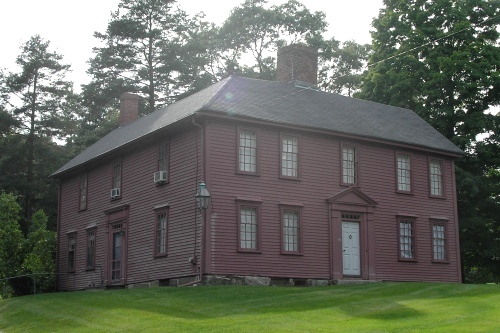
Munroe Tavern (1695)

Munroe Tavern, located one mile east of Lexington Common, was built around 1695. The Tavern is named for William Munroe, who was its proprietor from 1770 to 1827. Munroe was also an orderly sergeant in Captain Parker’s minuteman company in 1775. During the Battle of Lexington, on April 19, 1775, the Tavern was occupied by the British for an hour-and-a-half. The Tavern‘s dining room became a field hospital and Brigadier General Earl Percy, who arrived with British reinforcements, used it as his headquarters. George Washington dined at the Tavern during his 1789 visit to the Lexington battlefield. The Tavern is now a museum operated by the Lexington Historical Society.
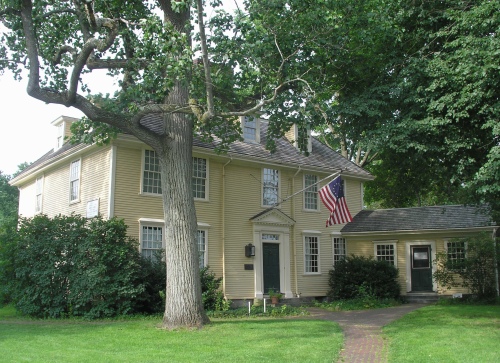
Buckman Tavern (1690)

Buckman Tavern, off Lexington Green, was built in 1690 by Benjamin Muzzey and by a license granted in 1693, it became the first Public House in Lexington. In the coming years it was run by Muzzey‘s son John, then by John’s granddaughter and her husband, John Buckman. By the 1770s, Buckman Tavern had become the favored gathering place for local militia men (members of the Lexington Training Band) on the days they trained on the Green. On April 19, 1775, it was here that the militia gathered before facing the British troops, when the first shot was fired which began the Revolutionary War. The Tavern continued to be Lexington’s busiest after the war and housed the towns first village store and post office. The town of Lexington acquired the Tavern in 1913 and, by a 99-year lease, the Lexington Historical Society undertook the furnishing of the building, which is open to the public as a museum.
The Jonathan Harrington House (1690)

The earliest parts of the Jonathan Harrington House, on Lexington Green, date back to 1690. The house‘s most famous historic association is with the Battle of Lexington, as the historic marker on the house explains: “House of Jonathan Harrington/
who wounded on the Common/ April 19, 1775/ dragged himself to the door/ and died at his wife’s feet.” From 1811 to 1828, the Harrington House was the home of John Augustus, a shoemaker, who in 1841 convinced a judge to allow a man convicted of drunkenness into his custody for rehabilitation, finding him a job and getting him to sign a pledge not to drink. Augustus followed this by offering assistance to other convicted criminals and he is now recognized as the Father of Probation in America. In 1909, pioneering historic preservationist William Sumner Appleton expressed his outrage at modernizations being made to the Harrington House during a refurbishment (possibly by new owner Leroy Sunderland Brown?) The house remains a private home.
The Marrett and Nathan Munroe House (1729)

On Monument street, facing Lexington Battle Green, is the Marrett and Nathan Munroe House, which was a witness to the Battle of April 19, 1775. Built in 1729, the house was owned by Marrett Munroe at the time of the Battle and Nathan Munroe was one of the minutemen who fought in the Battle. According to Lexington, A Hand-Book of its Points Of Interest, Historical and Picturesque (1891), “Towards this house Caleb Harrington was running from the meetinghouse, where he had been to get powder, when he was shot by the British soldiers. A bullet from a British musket passed through the window over the door and lodged in a bureau, where it still remains, in the possession of one of Mr. Munroe’s descendants living in Chicopee, Mass.” The house was moved slightly when it was restored in 1915.