Search
Advertisement
Become a Fan!
Buy My Book! Click Cover Image to Order!
Categories
- Architectural Style (686)
- Art Deco (2)
- Byzantine (3)
- Colonial (157)
- Colonial Revival (59)
- Craftsman (3)
- Egyptian Revival (1)
- Federal (156)
- Foursquare (3)
- Gothic (45)
- Greek Revival (75)
- Italianate (48)
- Mission Revival (1)
- Modern (1)
- Neoclassical (29)
- Octagon (2)
- Postmodern (1)
- Queen Anne (26)
- Renaissance Revival (17)
- Romanesque Revival (33)
- Second Empire (18)
- Shingle Style (9)
- Stick Style (10)
- Tudor Revival (6)
- Vernacular (29)
- Victorian Eclectic (7)
- Building Type (686)
- Apartment Buildings (5)
- Banks (7)
- Churches (82)
- Collegiate (31)
- Commercial (52)
- Hotels (11)
- Houses (403)
- Industrial (10)
- Libraries (12)
- Lighthouses (1)
- Military (13)
- Monuments (1)
- Museums (9)
- Organizations (26)
- Outbuildings (8)
- Public Buildings (33)
- Schools (16)
- Stations (2)
- Synagogues (1)
- Taverns (17)
- Theaters (5)
- Town (686)
- Adams (2)
- Agawam (4)
- Amherst (50)
- Boston (64)
- Cambridge (30)
- Clinton (8)
- Concord (8)
- Cummington (1)
- Danvers (14)
- Deerfield (31)
- Granville (10)
- Hadley (7)
- Hancock (6)
- Holyoke (19)
- Lenox (5)
- Lexington (8)
- Longmeadow (31)
- Marblehead (40)
- Marlborough (4)
- Natick (22)
- Newton (2)
- Northampton (40)
- Peabody (4)
- Pittsfield (5)
- Salem (97)
- Saugus (4)
- South Hadley (8)
- Southborough (8)
- Southwick (3)
- Springfield (50)
- Stockbridge (10)
- Stow (1)
- Sturbridge (18)
- Sudbury (7)
- Waltham (10)
- Watertown (1)
- Wayland (8)
- West Springfield (14)
- Westfield (19)
- Weston (2)
- Worcester (11)
- Uncategorized (1)
- Architectural Style (686)
Recent Comments
- peter hiller on Boston
- Pat Barnes on Springfield Municipal Group (1913)
- Paul A. Doucette on The Joseph Burnett House (1850)
- Judith on The Joseph Burnett House (1850)
- PCL on Hotel Vendome (1871)
Tags
Alcott Amherst College Asher Benjamin Back Bay Baptist Beacon Hill Big E Black Heritage Trail bowfront Bulfinch Catholic Congregational Episcopal Freedom Trail Gambrel H.H. Richardson Harvard Hawthorne Historic Deerfield Isaac Damon lit Longfellow mansard Methodist Mount Holyoke Museum Museums NPS Old Sturbridge Village PEM Revolutionary War row houses saltbox Samuel McIntire Shakers Shingle SPNEA Springfield Armory Stick Style Storrowton Underground Railroad UU Washington William Fenno Pratt Witch Trials-

Centers And SquaresBlogroll
Links
- Boston Preservation Alliance
- Cape Cod Modern House Trust
- Digital Treasures
- Historic Boston Inc.
- Historic Deerfield
- Historic New England
- Historic Salem Inc.
- Image Museum
- Old Sturbridge Village
- Preservation Massachusetts
- Preservation Worcester
- Salem Preservation, Inc.
- Springfield Preservation Trust
- The Trustees of Reservations
-
Recent Posts
- Hotel Northampton (1927)
- Berkshire Life Insurance Company (1868)
- Friends Meeting House, Adams (1782)
- Meetinghouse, Hancock Shaker Village (1793)
- Trustees’ Office and Store, Hancock Shaker Village (1813)
- Sisters’ Dairy and Weave Shop (1790)
- Brethren’s Shop, Hancock Shaker Village (1813)
- Brick Poultry House, Hancock Shaker Village (1878)
- Brick Dwelling, Hancock Shaker Village (1830)
- Round Stone Barn, Hancock Shaker Village (1826)
- First Baptist Church, Pittsfield (1927)
- Old Berkshire Athenaeum (1876)
- Susan B. Anthony Birthplace (1817)
- William Cullen Bryant Homestead (1785)
- Bray-Hoadley House (1873)
Archives
- May 2013
- April 2013
- March 2013
- February 2013
- January 2013
- December 2012
- November 2012
- October 2012
- September 2012
- August 2012
- July 2012
- June 2012
- May 2012
- April 2012
- March 2012
- February 2012
- January 2012
- December 2011
- November 2011
- October 2011
- September 2011
- August 2011
- July 2011
- June 2011
- May 2011
- April 2011
- March 2011
- February 2011
- January 2011
- December 2010
- November 2010
- October 2010
- September 2010
- August 2010
- July 2010
- June 2010
- May 2010
- April 2010
- March 2010
- February 2010
- January 2010
- December 2009
- November 2009
- October 2009
- September 2009
- August 2009
- July 2009
- June 2009
- May 2009
- April 2009
- March 2009
- February 2009
- January 2009
- December 2008
- November 2008
- October 2008
- July 2008
- June 2008
- May 2008
- April 2008
- March 2008
-

Pages
- Towns
- Adams
- Agawam
- Amherst
- Boston
- Burlington
- Cambridge
- Clinton
- Concord
- Cummington
- Danvers
- Deerfield
- Granville
- Hadley
- Hancock
- Hatfield
- Holyoke
- Lenox
- Lexington
- Longmeadow
- Marblehead
- Marlborough
- Natick
- Newton
- Northampton
- Peabody
- Pittsfield
- Salem
- Saugus
- South Hadley
- Southborough
- Southwick
- Springfield
- Stockbridge
- Stow
- Sturbridge
- Sudbury
- Waltham
- Watertown
- Wayland
- West Springfield
- Westfield
- Weston
- Worcester
- Towns
Meta
Monthly Archives: April 2010
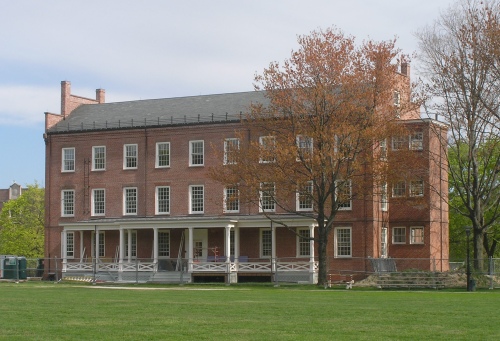
Middle Arsenal, Springfield Armory (1830)
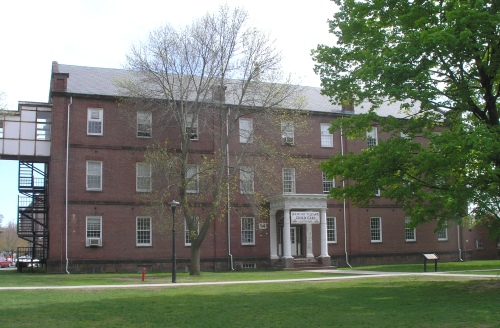
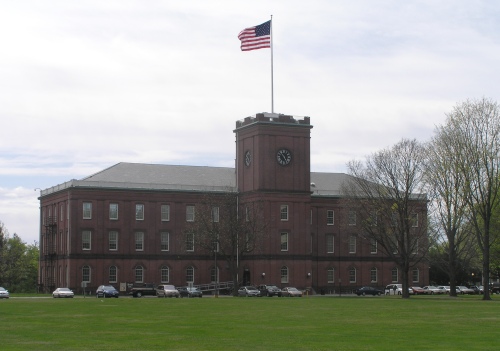
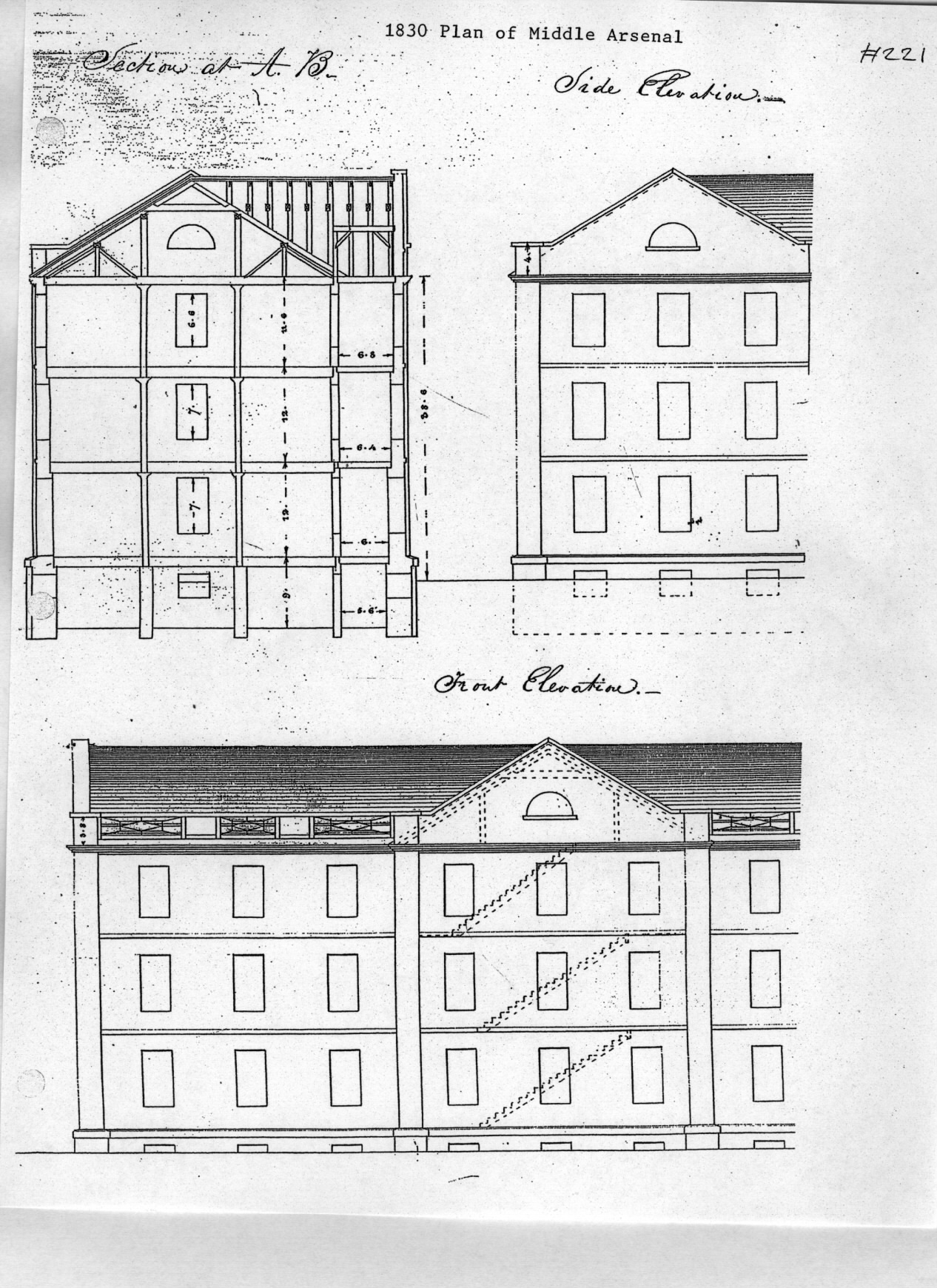
The Middle Arsenal at the Springfield Armory was constructed in 1830 and was the first three-story building on the Armory grounds. Used to store arms, it was here that Henry Wadsworth Longfellow visited during his second honeymoon in 1843 and that his wife, Fanny, compared the stored arms in their racks to a pipe organ. Encouraged to write an anti-war poem by his wife, Longfellow was inspired to use her imagery and write the poem, “The Arsenal at Springfield” (1845). After the completion of the Main Arsenal, in 1851, the Middle Arsenal was converted to other purposes, including being used during the Civil War, along with other earlier arsenal buildings, as part of an assembly line, leading to the Main Arsenal, where finished weapons were stored. The building is now part of the campus of Springfield Technical Community College.
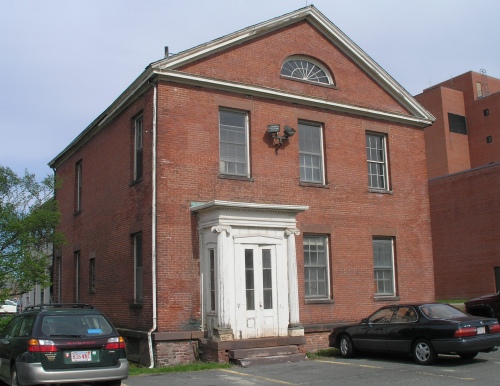
West Arsenal, Springfield Armory (1808)

The oldest surviving building at the Springfield Armory is the West Arsenal, the first two floors of which were constructed in 1808 as a storehouse for completed weapons. The third floor was added in 1863. After the completion of the Main Arsenal, in 1851, the West Arsenal served other purposes over the years, becoming a barrel house, storehouse, recreation building, barracks and, during World War Two, an officer’s club. Today it is part of the campus of Springfield Technical Community College.
Master Armorer’s House, Springfield Armory (1833)

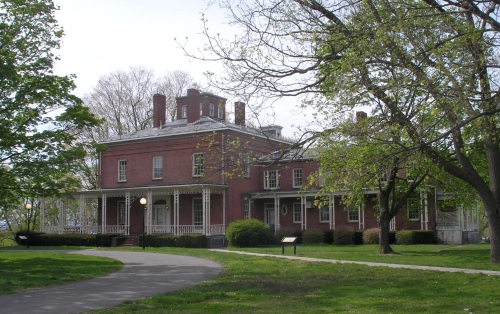
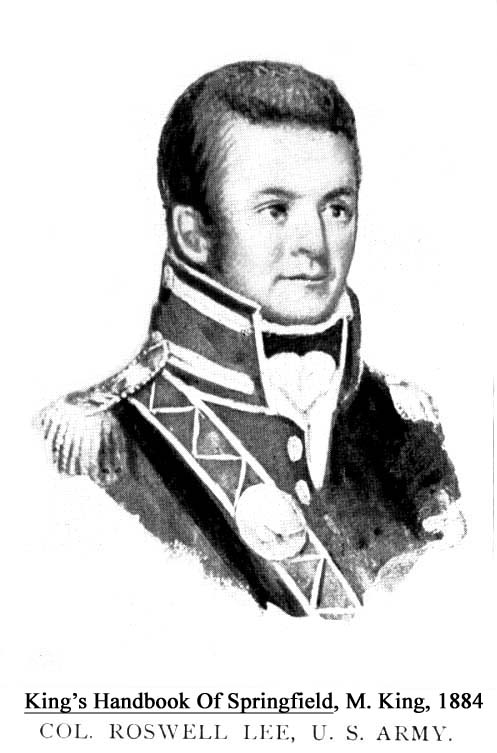
When the Main Arsenal at the Springfield Armory was completed in 1851, it was flanked by two houses, both built earlier: the Paymaster’s House, to the south, and the Master Armorer’s House, to the north. Both of these residences were relocated around 1880. The Paymaster’s House was eventually demolished, but the Master Armorer’s House has survived. It was relocated about 300 feet north of its original site and was rotated and placed on the opposite side of the street. The house was built in 1833, during the tenure of Lt. Col. Roswell Lee as superintendent of the Armory. It later served as an infirmary and as officers’ quarters. The building lost its rear section by the start of the twentieth century and was remodeled by the WPA in 1937.
Posted in Greek Revival, Houses, Military, Springfield
Tagged NPS, Springfield Armory
Leave a comment
Commanding Officer’s House, Springfield Armory (1846)

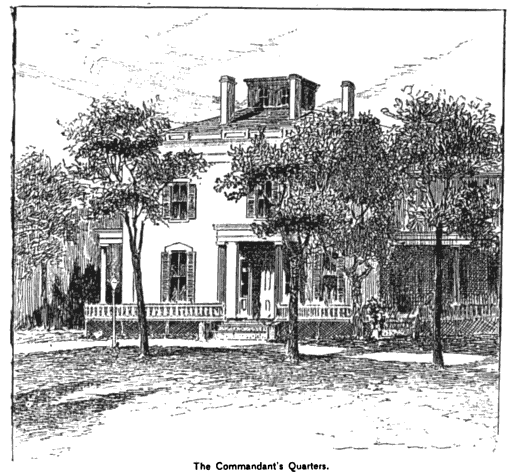
Maj. James W. Ripley became superintendent of the Springfield Armory in 1841 and soon initiated an ambitious building program. The first structure to be completed was the Commanding Officer’s Quarters. He had demolished an earlier Commanding Officer‘s House on the site where the new Main Arsenal was to be built. To replace it, he constructed a fine new CO.’s residence, begun in 1845 and completed in 1847. There were many who opposed Ripley’s reforms of the Armory and he faced much controversy during his tenure. Some considered his new residence to be too extravagant. A series of investigations led to a military court of inquiry in which a major complaint was that he was wasting government funds, but Ripley was eventually exonerated. The house is now used as administrative offices for the Springfield Armory National Historic Site.
Posted in Greek Revival, Houses, Military, Springfield
Tagged NPS, Springfield Armory
Leave a comment
Main Arsenal, Springfield (1847)

It’s Springfield Armory Week!! This week, we’ll be looking at some nineteenth century buildings on the grounds of the Springfield Armory. First up is the Main Arsenal, built in 1847-1851 at the west end of Armory Square. Established in 1794, the Armory was the primary center for the manufacture of small arms for the United States military until its closure in 1968. A number of important buildings on the Armory grounds, including the Arsenal, were built during the tenure of Major James W. Ripley as superintendent (1841-1854). Maj. Ripley oversaw a revitalization of manufacturing operations at the Armory and a significant construction program that began with a new Commanding Officer’s Quarters and continued with the Arsenal. The imposing structure’s purpose was to store the weapons manufactured in the neighboring Armory buildings. Only minor alterations have been made to the building since it was finished. The Springfield Armory National Historic Site was established in 1974 and the Arsenal now houses the Armory’s Museum and archives. Springfield became a city in 1852 and the Main Arsenal is featured on the city’s seal The above picture shows the west-facing side of the building. See below is the east facing side: (more…)
The Henry Sterns House (1827)

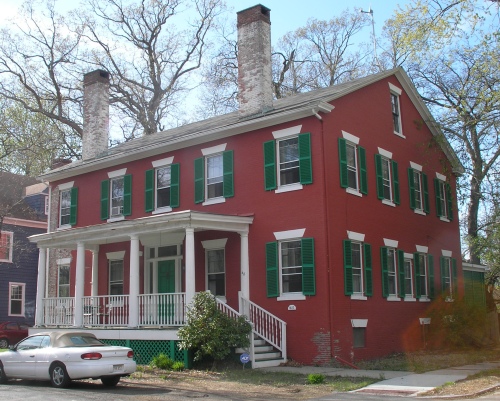
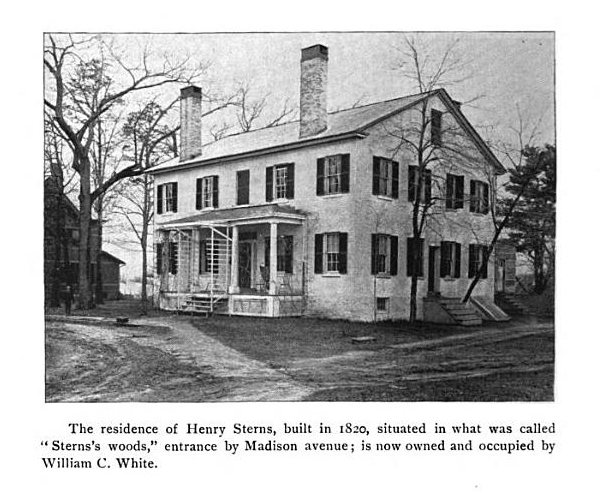
At 48 Madison Avenue in Springfield is a brick home built in 1827. It is located on Sterns Hill which, according to An Historical Address, delivered by Charles H. Barrows in 1911:
is bounded south and east by the Springfield Cemetery, west by Central street and north by Thompson’s Dingle. The brick house, No. 48 Madison avenue, afterward removed easterly to make room for the great mansion of Charles L. Goodhue, now occupying the center, was in the middle nineteenth century the residence of Henry Sterns, Treasurer of the Springfield Institution for Savings. Of his three daughters, two joined the Roman Catholic communion and made their permanent abode in the Eternal City.
According to Charles Wells Chapin, in Sketches of the Old Inhabitants and Other Citizens of Old Springfield of the Old Springfield of the Present Century, and its Historic Mansions of “Ye Olden Time,” Henry Sterns (1794-1859) was
[a] merchant, was born at Halifax, Nova Scotia, May 11, 1794. He came to Springfield about the year 1803, and for many years was a merchant on Main street opposite Court Square, having formed a copartnership with William Sparhawk, under the firm name of William Sparhawk & Co. On the death of Mr. Sparhawk, June 27, 1834, the late Joseph C. Parsons became a partner under the firm name of Sterns & Parsons. [...] He was treasurer of the Springfield Institution for Savings, from December 24, 1849, until May, 1858.
Posted in Federal, Houses, Springfield
Leave a comment